


Tareq Abadl/LinkedIn
Mar 15, 2026, 13:45
Tareq Abadl: Has Anyone Here Ever Taken an ALP Test Before?
Tareq Abadl, Medical Laboratory Specialist and Director of the Blood Bank at Dr. Abdelkader Al-Mutawakkil Hospital, shared a post on LinkedIn:
“Has anyone here ever done an ALP (Alkaline Phosphatase) test before?
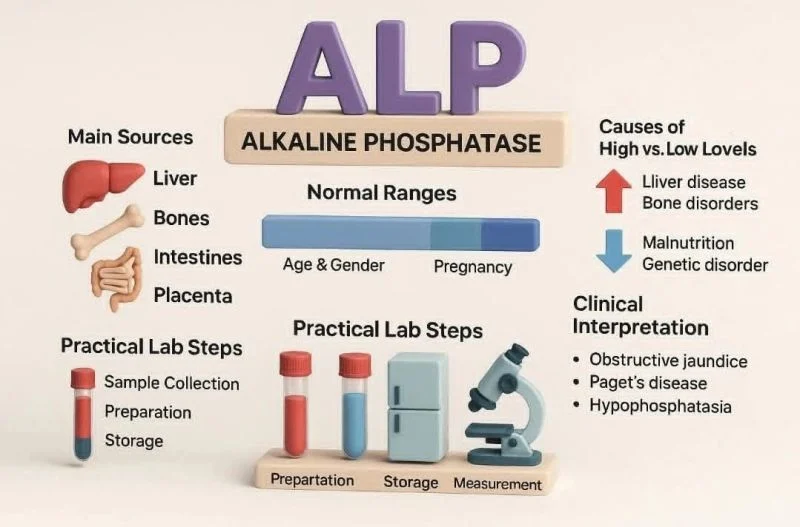
This enzyme is measured in the blood and is mainly found in:
- Liver
- Bones
- Intestines
- Placenta during pregnancy
The normal range isn’t a single fixed number, it varies depending on:
Age: Children usually have higher levels because of bone growth.
Gender: Slight differences between men and women.
Pregnancy: Levels can be higher due to the placenta.
Labs also set ranges depending on the devices and methods used.
Practical steps of the test in the lab:
- Sample collection: Venous blood (Serum or Plasma).
- Preparation: The sample must be free of hemolysis to avoid false results.
- Storage: If not analyzed immediately, keep at 2–8°C.
- Measurement: Automated chemistry analyzers measure enzyme activity at alkaline pH.
- Result: A number compared to the reference range for age and gender.
- Interpretation: The number alone isn’t enough; it must be compared with other tests like LFTs or Bone profile.
High ALP may indicate:
- Blocked bile ducts or liver diseases like hepatitis, cirrhosis, liver tumors.
- Bone diseases like osteomalacia, fractures, bone tumors, or Paget’s disease.
- Normal in children during growth or after bone healing.
- Can rise with certain medications (e.g., anti-epileptics, contraceptives).
- May increase in pregnancy due to the placenta.
Low ALP may be linked to:
- Malnutrition or deficiency of zinc and magnesium.
- Genetic hypophosphatasia.
- Severe anemia or thyroid problems.
- Sometimes after blood transfusion or in rare conditions.
Examples for practical interpretation:
- Patient with high ALP plus jaundice/itching – think liver.
- Patient with bone pain or repeated fractures – think bones.
- Child – often normal due to growth.
- Pregnant woman – may be normal due to placenta.
- If unclear – order extra tests like GGT, Calcium, Vitamin D.”
More posts featuring Tareq Abadl on Hemostasis Today.
-
Sep 30, 2026, 10:55Rana Al Hrout: Diagnostic Approach to Hypochromic Microcytic Anemia
-
Sep 30, 2026, 01:52Javed Anees: DADA2 – When a Young Stroke Is More Than a Stroke
-
Sep 30, 2026, 01:51How a Venous Thrombus Becomes Revascularized – ISTH
-
Sep 29, 2026, 22:45Victor Agunyego: Paracetamol – The Most Common Drug We Underestimate
-
Sep 29, 2026, 22:42Nova Sinclair: Advancing the Future of Hematology – Meet Our 2027 Organizing Committee
-
Sep 29, 2026, 22:41Lorenz Räber: Intracoronary Imaging in PCI – Why, When, How, and Which Modality?
-
Sep 29, 2026, 22:31Selma Turkovic: Pleased to Deliver the Opening Presentation at Kingston Hospital
-
Sep 29, 2026, 22:31Miguel Teran: Ultrasound and Simulation in Arterial Blood Sampling
-
Sep 29, 2026, 22:28Mohammad Refaei: Navigating Your Career in Hematology From Training to Practice