

Yves Bikorimana: How a Simple Temperature Change Can Trigger Antibody-Mediated Destruction of RBCs
Yves Bikorimana, CEO at MedData – Rwanda and Lab Scientist at The University Teaching Hospital of Kigali – Chuk, shared a post on LinkedIn:
“Cold Agglutinin
1. Introduction
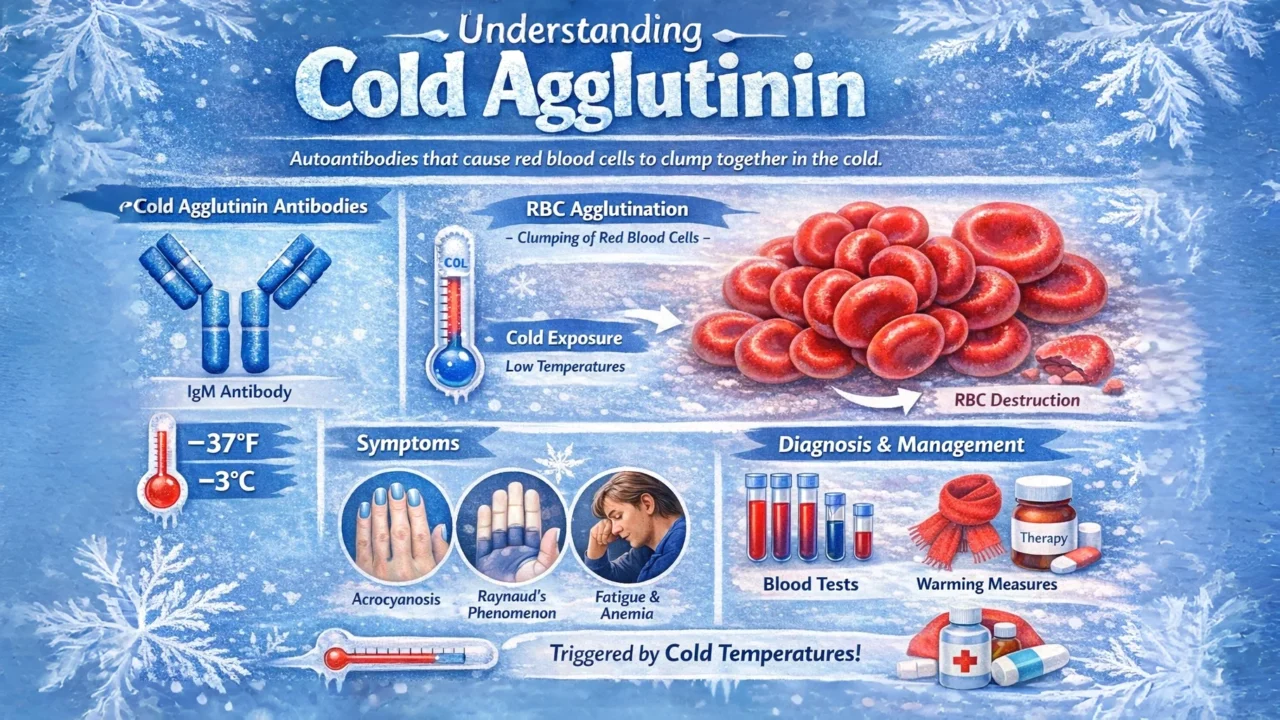
Cold agglutinins are autoantibodies (usually IgM) that bind to red blood cells (RBCs) when the body is exposed to cold temperatures.
When this happens, the red blood cells clump together (agglutinate) and may be destroyed, leading to a condition called Cold Agglutinin Disease (CAD), a type of autoimmune hemolytic anemia.
In simple words:
When the body gets cold, certain antibodies mistakenly attack red blood cells.
2. Clinical Significance
Cold agglutinins are important because they can cause:
- Acrocyanosis (bluish fingers, toes, ears)
- Symptoms worse in cold weather
- Fatigue
- Anemia
- Shortness of breath
- Jaundice (in severe hemolysis)
In laboratory practice, cold agglutinins can also:
- Interfere with blood grouping
- Affect complete blood count (CBC) results
- Cause false laboratory values if samples are not kept warm.
3. Physiopathology (What Happens in the Body)
Let’s break it down gently:
- In cold temperatures (usually below 30–32°C), IgM antibodies bind to RBC surface antigens (commonly the I antigen).
- This causes RBCs to clump together.
- The complement system gets activated.
- Red blood cells are destroyed (hemolysis), mainly in the liver.
- The patient develops anemia.
Key idea:
Cold – IgM binds RBC – Complement activation – Hemolysis – Anemia
4. Causes
Cold agglutinin production may occur due to:
Primary (Idiopathic)
- No clear underlying disease
- Often chronic
Secondary Causes
- Infections: such as Mycoplasma pneumoniae, Epstein-Barr virus (EBV),
- Lymphoproliferative disorders: Non-Hodgkin lymphoma, Chronic lymphocytic leukemia (CLL).
Autoimmune conditions:
It can be temporary (after infection) or chronic (especially in older adults).
5. How to Manage / Solve It
Management focuses on reducing symptoms and preventing hemolysis:
1. Avoid Cold Exposure
- Wear warm clothes
- Avoid cold drinks
- Keep IV fluids and blood warm
This is the most important step.
2. Treat the Underlying Cause
- Treat infection
- Manage lymphoma or autoimmune disease
3. Medical Treatment (in severe cases)
- Rituximab
- Immunotherapy
- Blood transfusion (with warmed blood if needed)
Note: Steroids are usually less effective compared to warm autoimmune hemolytic anemia.
Final Take-Home Message
Cold agglutinin disease reminds us how delicate the immune system is.
A simple temperature change can trigger antibody-mediated destruction of red blood cells.
Understanding it helps:
- Improve laboratory accuracy
- Prevent misdiagnosis
- Protect patients from complications”
Other posts featuring Yves Bikorimana on Hemostasis Today.
-
Sep 25, 2026, 12:43Thomas Dayspring: Reshaping the Biology of Atherosclerotic Plaques with New Therapies
-
Sep 25, 2026, 12:14Garima Sharma: Community Clinical Linkages for Better Postpartum Cardiovascular Care
-
Sep 25, 2026, 10:49Shefina S: From Presenting to Hosting at TRANSCON 2026
-
Sep 25, 2026, 10:37Michelle Leona Cecil: Hemophilia Advocacy and the Power of Community
-
Sep 25, 2026, 10:13Michael Baria: Platelet Concentration and PRP Outcomes in Partial Rotator Cuff Tears
-
Sep 25, 2026, 09:49Haley Coleman: Volunteering to Support Hemophilia Awareness
-
Sep 25, 2026, 08:55Hitarth Mehta: BHMS Students Gain Practical Exposure to Haemophilia Diagnosis
-
Sep 25, 2026, 07:25Varun Capoor: How Therapeutic Apheresis and Transfusion Medicine Can Complement Clinical Management in SCD
-
Sep 25, 2026, 07:14Manshi Kesharwani: SAK-GQDs Modulate Thrombus Burden and Endothelial Function in Deep Vein Thrombosis