


Augustina Isioma Ikusemoro: Kell vs RhD Sensitization – The Difference in RBC Destruction
Augustina Isioma Ikusemoro, Hematology and Transfusion Medicine Specialist at Sharjah Blood Transfusion and Research Center, shared a post on LinkedIn:
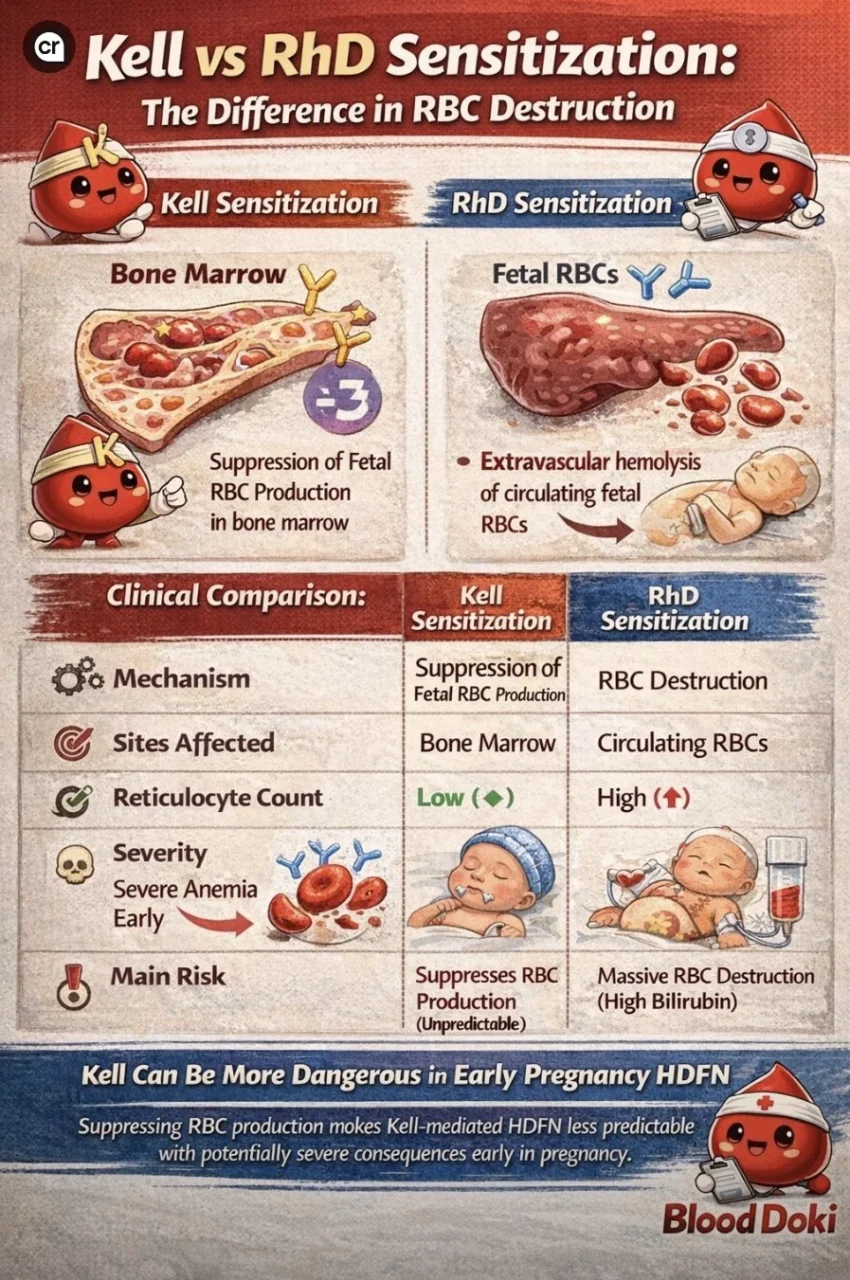
“Anti-D destroys red cells.
Anti-K stops them from being made.
That difference can change everything in fetal survival.
Most clinicians are trained to recognize RhD sensitization as a major cause of Hemolytic Disease of the Fetus and Newborn (HDFN).
But fewer appreciate that Kell sensitization can be equally — and sometimes more — dangerous.
Here’s why this matters
While RhD antibodies destroy circulating fetal red blood cells, Anti-K antibodies suppress fetal red cell production at the bone marrow level.
This means:
- RhD sensitization leads to hemolysis
- Kell sensitization leads to erythropoiesis suppression
And clinically, that distinction is critical.
In RhD HDFN, anemia develops because red cells are destroyed in the fetal spleen.
In Kell-mediated HDFN, anemia develops because red cells are never produced in adequate numbers in the first place.
The result?
- Earlier onset anemia
- Lower reticulocyte counts
- Less predictable disease progression
- Severe fetal compromise even with low antibody titers
Unlike RhD disease — where bilirubin levels often reflect severity — Kell disease can progress silently until fetal anemia becomes critical.
This is why Anti-K detection during pregnancy must always trigger enhanced fetal surveillance.
And why transfusion services must prioritize:
- K- antigen matching for sensitized patients
- Prevention of alloimmunization in women of child-bearing age
- Extended phenotype awareness beyond ABO and RhD
Because transfusion safety doesn’t stop at compatibility.
It continues with anticipation.
Blood Doki
Advancing transfusion safety through education, systems awareness, and clinical insight.”
Stay updated with Hemostasis Today.
-
Oct 6, 2026, 22:43Alessandra Bosch: Pediatric GTH Opens with Regional Experts Convening on Pediatric Hemostasis and Thrombosis
-
Oct 6, 2026, 22:39Managing Thrombotic Risk in Pregnancy – How the Lab May Help – Sysmex Europe
-
Oct 6, 2026, 22:33Ahmet Davut Aksu: A Multi-Objective Approach to Enhance Fibrinolysis, Selectivity, and Inhibition Resistance
-
Oct 6, 2026, 22:29Muhammad Abubakar: New Study on Iron Biology to Be Presented at ASH 2026 and Published in Blood
-
Oct 6, 2026, 22:24David McIntosh: Calling On Decision-Makers to Prioritize Donors and Clinical Access During IPAW 2026
-
Oct 6, 2026, 22:21Zoltan Nagy: With All Eyes on Optogenetics Today, What Can It Do in Megakaryocytes and Platelets?
-
Oct 6, 2026, 22:13Khalid A. Fakhro: Sidra Medicine Hosts RAPID 2026 Advancing Diagnostics and Treatments for Inborn Errors of Immunity
-
Oct 6, 2026, 22:04Denis Oduor: Preparedness for Postpartum Haemorrhage Must Include Preparedness for Blood
-
Oct 6, 2026, 21:57Farhad Moradpour: Health Equity and Public Health – What Drives Anemia Disparities in Ethnic Minority Populations?