

Hisam Siddiqi: Understanding Bone Marrow Trephine Morphology in MPNs
Hisam Siddiqi, Consultant Haematologist at LycaHealth, The Blackheath Hospital, Dartford and Gravesham NHS Trust, shared a post on LinkedIn:
“Understanding Bone Marrow Trephine Morphology in MPNs – A Simple Breakdown
Myeloproliferative neoplasms (MPNs) can often look similar clinically, but the bone marrow trephine provides important clues that help us distinguish between them.
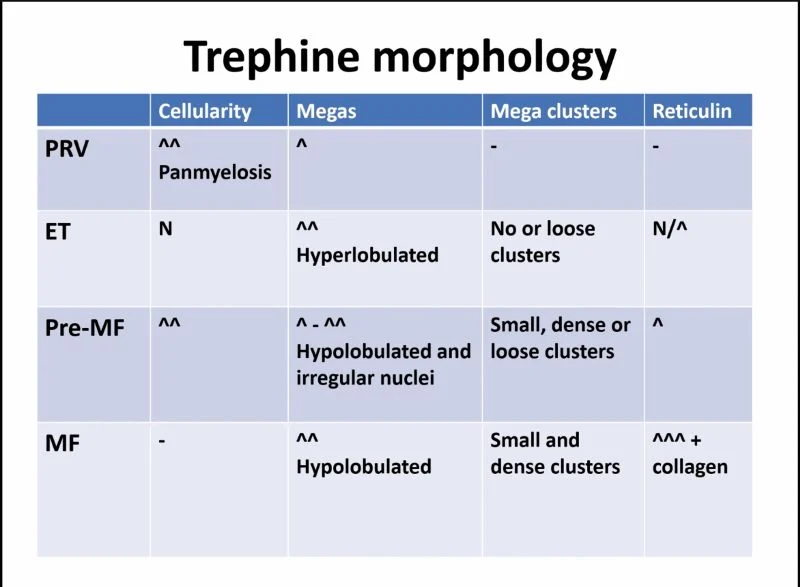
Here’s a quick, simplified guide to typical findings across the main MPN subtypes, based on key features: cellularity, megakaryocyte morphology, clustering patterns, and reticulin fibrosis.
Polycythaemia Vera (PRV)
- Cellularity: Very high (panmyelosis – all cell lines increased)
- Megakaryocytes: Mildly increased
- Clusters: Usually absent
- Reticulin: Normal or slightly up
- Think: a busy marrow with everything ‘turned up.’
Essential Thrombocythaemia (ET)
- Cellularity: Normal
- Megakaryocytes: Markedly increased, hyperlobulated (‘staghorn’)
- Clusters: None or loose
- Reticulin: Normal or slightly up
- Think: lots of large, mature megakaryocytes with big, multilobed nuclei.
Pre‑Fibrotic Myelofibrosis (pre‑MF)
- Cellularity: Increased
- Megakaryocytes: Variable up; abnormally shaped, atypical, hypolobulated
- Clusters: Small, dense or loose
- Reticulin: Mildly up
- Think: dysplastic megakaryocytes plus early scarring.
Overt Myelofibrosis (MF)
- Cellularity: Often reduced
- Megakaryocytes: Increased, hypolobulated / atypical
- Clusters: Dense, tight clusters
- Reticulin: Marked fibrosis with collagen deposition
- Think: fibrotic, scarred marrow with abnormal megakaryocyte clusters.
Why this matters:
Trephine morphology remains central to accurate MPN diagnosis and helps guide prognosis and treatment decisions. Recognising these hallmark patterns can refine our diagnostic confidence and improve patient care.”
More posts featuring Hisam Siddiqi on Hemostasis Today.
-
Oct 10, 2026, 17:58Archo Farzana Batool: Exploring Medical Writing Through an Article on Iron Deficiency Anemia
-
Oct 10, 2026, 17:53Assessing Frailty in Adults With Hemophilia – JTH
-
Oct 10, 2026, 17:52Fatma Sadeghi: Reducing Maternal Health Inequalities Through Nursing Advocacy
-
Oct 10, 2026, 17:50Grzegorz Hensler: How Apheresis Transformed Blood Cell Separation and Collection
-
Oct 10, 2026, 17:47Hemant K Sharma: Japan’s Universal Artificial Blood Research – A Potential Breakthrough in Transfusion Medicine
-
Oct 10, 2026, 17:40John Strouse: Learning About Bleeding Disorders and Sickle Cell Disease at FWGBD
-
Oct 10, 2026, 17:34Mae Caime: Speaking at the Annual Women’s Retreat for the Hemophilia Community in Florida
-
Oct 10, 2026, 17:30Chokri Ben Lamine: PNH beyond the Textbook Triad
-
Oct 10, 2026, 17:29Ruah Alyamany: Thrombosis and Anticoagulation in Hematological Malignancies at SOHO KSA 2026