


Enrico Ferro: Comparative Study Raises Questions on PFA Safety in AF at EHRA 2026
Enrico Ferro, Electrophysiology Fellow at Beth Israel Lahey Health, Clinical Investigator at Richard A. and Susan F. Smith Center for Outcomes Research, shared on LinkedIn:
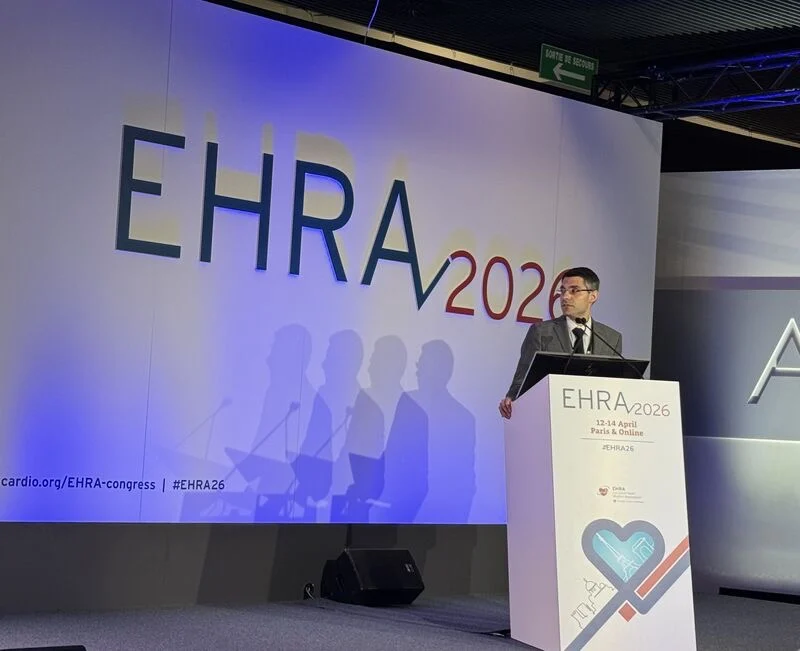
”It was great to present our latest study at EHRA 2026 in Paris for the Young Investigator Award.
We ran one of the largest comparative safety analyses of PFA vs radiofrequency ablation for AF, performed at Beth Israel Deaconess Medical Center (large volume, tertiary care center, >1,500 PVI per year).
- Large study cohort of ~4,000 patients (2,000 PFA vs 2,000 RF);
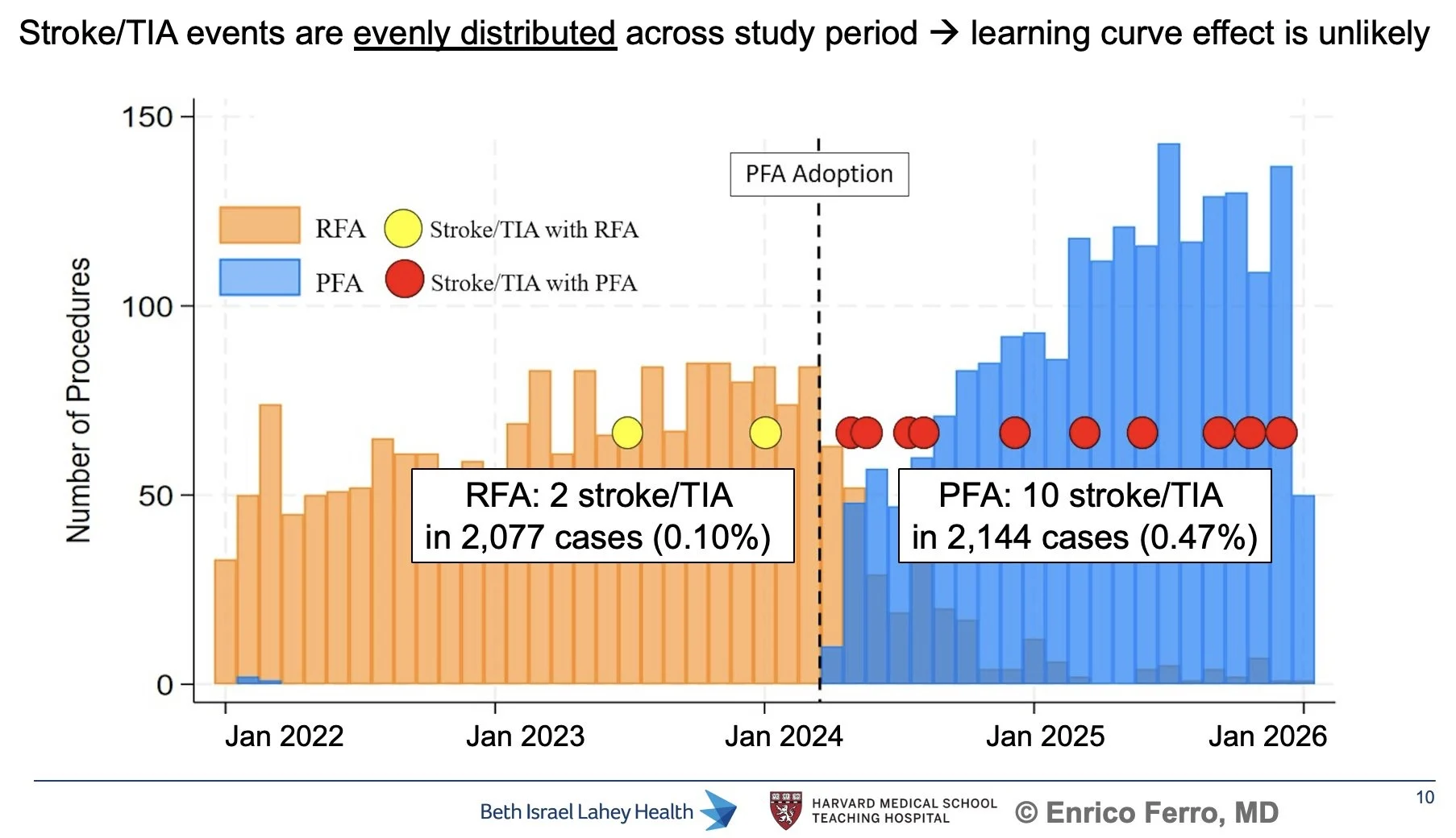
- 2 strokes (0.1%) in the RF arm (2022-2024);
- 10 strokes (0.5%) in the PF arm (2024-2026);
- Strokes were not clustered at the time of PF adoption. They were evenly distributed throughout the study period;
- There was no correlation between strokes and physician experience or procedural volume – there was no learning curve effect;
- We report stroke rates with other commercial PFA platforms beyond Farapulse, with a sizable amount of Sphere 9 cases (~500 pts);
- These data show a uniform stroke rate across PFA platforms (~0.4%) and preliminarily suggest a possible PFA class effect.
- Of note, posterior wall isolation was performed in 60% of PF cases, vs only 30% of RF cases. As expected, there is more extensive ablation with PFA, and we need to accrue more stroke events to power a mediator model and understand if more extensive ablation may explain the higher stroke rate.
In summary, our study found that the modern ‘PFA strategy’ seems associated with a significantly higher stroke risk, compared to the ‘RF strategy’.
As we accrue events and increase power, we will re-run the model to understand which specific element(s) of the PFA strategy may explain the high observed stroke rate.
Stay tuned!”
Stay updated with Hemostasis Today.
-
Oct 21, 2026, 00:58Anees Ur Rahman: Completing a Two-Week Clinical Rotation at Haemophilia Treatment Centre Rawalpindi
-
Oct 21, 2026, 00:56Caitlyn Mooney: Pulmonary Embolism in Athletes, Recognition and Return to Sport
-
Oct 21, 2026, 00:54Hani Karrar: Pleased to Share Our Review on Emicizumab in Hemophilia A Management
-
Oct 21, 2026, 00:53Akshay Sharma: HSCT Leads to Sustained Improvements in Sickle Cell Cardiomyopathy for Up to 3 Years
-
Oct 21, 2026, 00:51Prateek Meena: The F. A. T. R. N. Mnemonic for Recognizing TTP
-
Oct 20, 2026, 23:51Registration Is Open for WFH CCS 2027 – World Federation of Hemophilia
-
Oct 20, 2026, 23:44Edward Lee Carter: AF in Nursing Homes – When Stroke Risk Scores Tell Only Part of the Story
-
Oct 20, 2026, 22:59Building Effective Patient Advocacy Through Collaboration Between Patients and Clinicians – EHC
-
Oct 20, 2026, 21:22Intezar Mehdi: When Prolonged Bleeding May Indicate an Underlying Bleeding Disorder