

AI Generated
Apr 15, 2026, 16:55
Chokri Ben Lamine: VA-ECMO vs VV-ECMO Thromboembolic Events – Key Clinical Pearls
Chokri Ben Lamine, Adult Hematology and SCT Assistant Consultant at Oncology Center of Excellence at King Faisal Specialist Hospital and Research Center, shared a post on X:
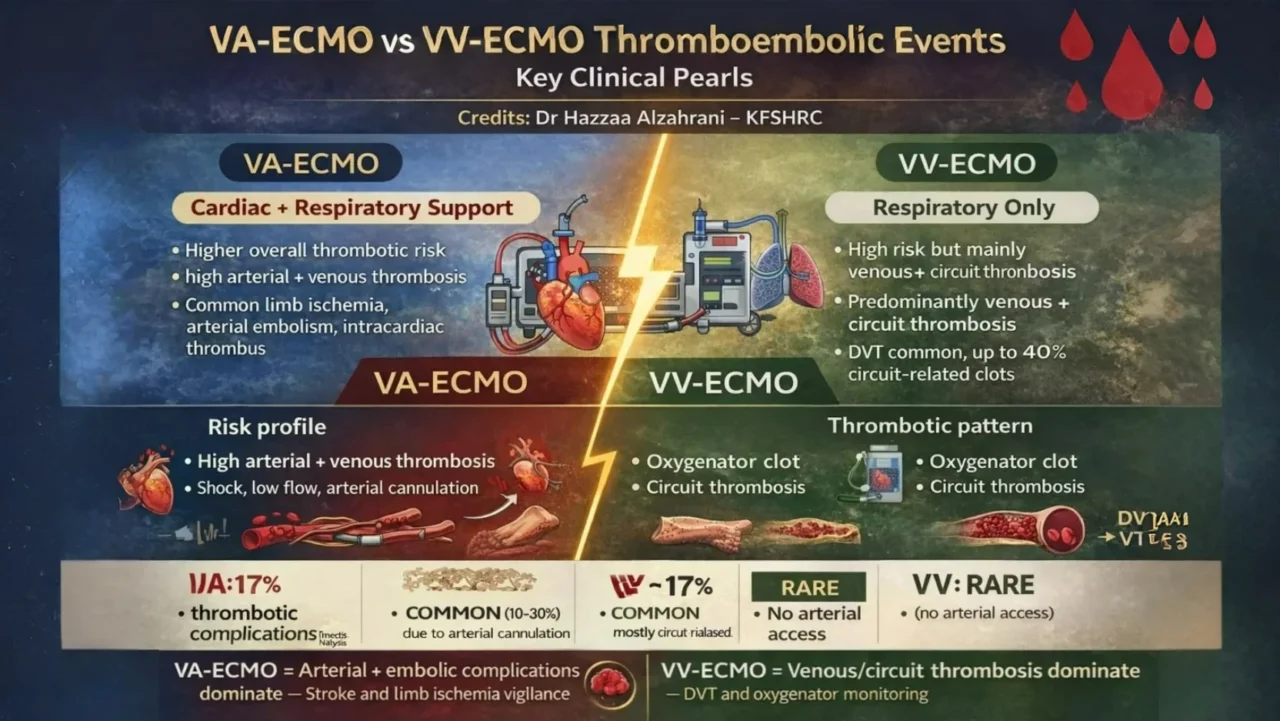
“VA-ECMO vs VV-ECMO Thromboembolic Events – Key Clinical Pearls
Credits: Dr Hazzaa Alzahrani – KFSHRC
VA-ECMO equals Cardiac plus Respiratory support – higher overall thrombotic risk
VV-ECMO equals Respiratory only – high risk but mainly venous/circuit-related
Risk profile
- VA-ECMO – high arterial plus venous thrombosis (shock, low flow, arterial cannulation)
- VV-ECMO – predominantly venous plus circuit thrombosis (less arterial)
Thrombotic pattern
- VA – arterial embolism, stroke, limb ischemia, intracardiac thrombus
- VV – oxygenator clot, circuit thrombosis, cannula-related DVT, VTE
Incidence
- VA – ~17% thrombotic complications (meta-analysis)
- VV – up to ~40% reported (mostly circuit-related)
Limb ischemia
- VA – COMMON (10–30%) due to arterial cannulation major complication
- VV – RARE (no arterial access)
Stroke / systemic embolism
- VA – HIGH risk – thrombus forms in heart/aorta – embolizes systemically
- VV – LOWER – mainly venous events, less arterial embolism
Intracardiac thrombosis
- VA – typical (LV stasis, poor ejection, inadequate unloading)
- VV – NOT typical
Cannula-associated DVT (post-decannulation)
- VV – COMMON, often underdiagnosed
- VA – occurs but less emphasized
Why different?
- VA – shock, low pulsatility, arterial cannulation, LV stasis, endothelial injury
- VV – large venous cannulas, long runs, inflammation, hemolysis, circuit shear stress
Clinical takeaway
- VA-ECMO equals arterial plus embolic complications dominate – stroke and limb ischemia vigilance
- VV-ECMO equals venous/circuit thrombosis dominate – DVT and oxygenator monitoring”
More posts featuring Chokri Ben Lamine on Hemostasis Today.
-
Oct 21, 2026, 00:58Anees Ur Rahman: Completing a Two-Week Clinical Rotation at Haemophilia Treatment Centre Rawalpindi
-
Oct 21, 2026, 00:56Caitlyn Mooney: Pulmonary Embolism in Athletes, Recognition and Return to Sport
-
Oct 21, 2026, 00:54Hani Karrar: Pleased to Share Our Review on Emicizumab in Hemophilia A Management
-
Oct 21, 2026, 00:53Akshay Sharma: HSCT Leads to Sustained Improvements in Sickle Cell Cardiomyopathy for Up to 3 Years
-
Oct 21, 2026, 00:51Prateek Meena: The F. A. T. R. N. Mnemonic for Recognizing TTP
-
Oct 20, 2026, 23:51Registration Is Open for WFH CCS 2027 – World Federation of Hemophilia
-
Oct 20, 2026, 23:44Edward Lee Carter: AF in Nursing Homes – When Stroke Risk Scores Tell Only Part of the Story
-
Oct 20, 2026, 22:59Building Effective Patient Advocacy Through Collaboration Between Patients and Clinicians – EHC
-
Oct 20, 2026, 21:22Intezar Mehdi: When Prolonged Bleeding May Indicate an Underlying Bleeding Disorder