

Andrew Shaw: Long COVID First Diagnostic Classification with 69% Accuracy
Andrew Shaw, CEO and Founder of Attomarker Ltd, shared a post on LinkedIn:
“Long COVID – first diagnostic classification – 69% accuracy.
We have been looking at over 500 long COVID patients using the COVID Antibody Spectrum Test from Attomarker and there are some clear different types of patients – endotypes.
In our recent paper, we show there are three types of patient or endotypes:
- one type has gaps in their antibody spectrum that could lead to persistent virus;
- one type has a very large immune response some associated with a vaccine
- and a final type that looks normal.
For the first time, we have put a test through a diagnosis accuracy study and found that overall it is 69% accurate a predicting long COVID.
This is a great start given the full set of symptoms that may or may not describe long COVID.
The two endotypes, hypo-immune (65% of patients) and hyper-immune (10% of patients) point to causes of the long COVID and potential treatments.
The Long COVID is fundamentally heterogenous, not all patients are the same – does this explain why all interventional trials are struggling to get good results?
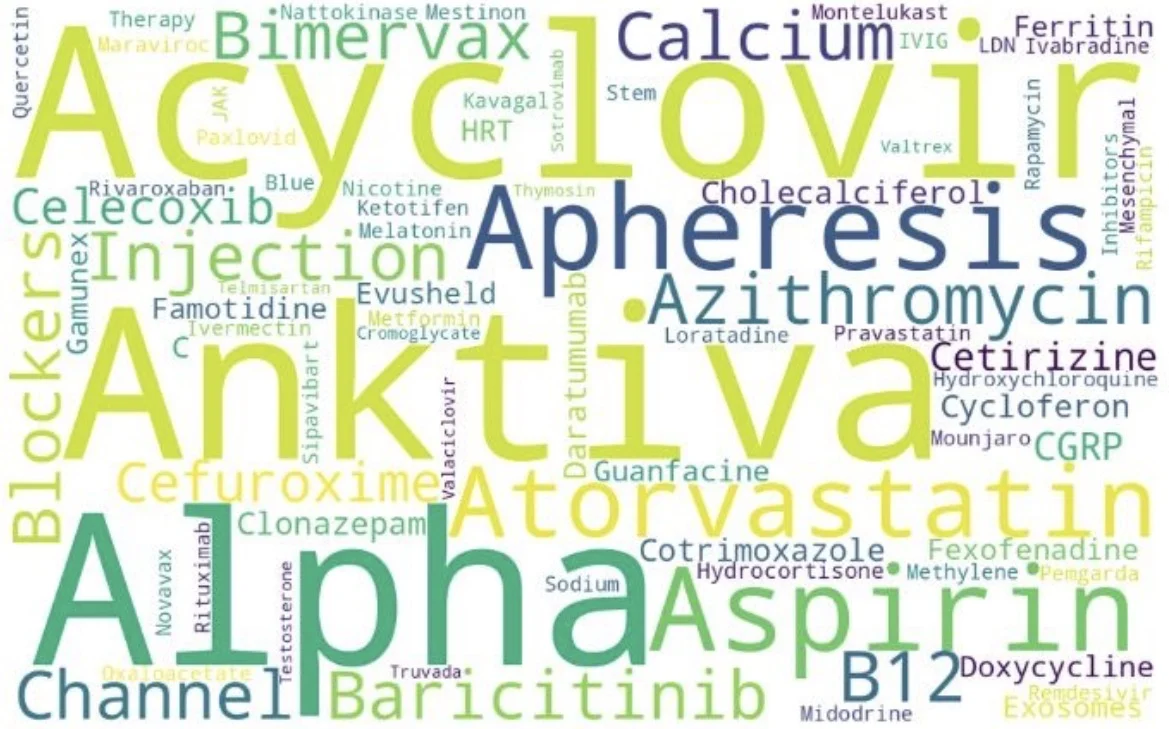
Below is a list of drugs and interventions mentioned on our WhatsApp group but can the right intervention for all endotypes?
Indeed, it may be dangerous to give monoclonal antibodies to patients who have a hyper-immune endotype. Some clinicians are now using the antibody spectrum to target interventions but is it getting better results.
But the journey to recovery is complex especially for the patients who have had symptoms for 5 years now. Maybe it is important to catch patients early with the first signs long COVID symptoms – about 3%-5% of recent infections are still leaving patients with Long COVID.
The test is available worldwide with a number of regulatory hurdles to full adoptions but with a cohort of now more than 500 patients tested, the results are beginning to look promising scientifically.
We need the clinicians to turn the science into medicine.”
Stay updated with Hemostasis Today.
-
Sep 30, 2026, 01:52Javed Anees: DADA2 – When a Young Stroke Is More Than a Stroke
-
Sep 30, 2026, 01:51How a Venous Thrombus Becomes Revascularized – ISTH
-
Sep 29, 2026, 22:45Victor Agunyego: Paracetamol – The Most Common Drug We Underestimate
-
Sep 29, 2026, 22:42Nova Sinclair: Advancing the Future of Hematology – Meet Our 2027 Organizing Committee
-
Sep 29, 2026, 22:41Lorenz Räber: Intracoronary Imaging in PCI – Why, When, How, and Which Modality?
-
Sep 29, 2026, 22:31Selma Turkovic: Pleased to Deliver the Opening Presentation at Kingston Hospital
-
Sep 29, 2026, 22:31Miguel Teran: Ultrasound and Simulation in Arterial Blood Sampling
-
Sep 29, 2026, 22:28Mohammad Refaei: Navigating Your Career in Hematology From Training to Practice
-
Sep 29, 2026, 22:27Matteo Foschi: 10 Clinical Pearls for Antithrombotic Therapy in Secondary Stroke Prevention