


Ahvie Herskowitz: Is It Iron or ‘Oxidized Rust’? – A New Predictor of Aging
Ahvie Herskowitz, Founder and Medical Director at Anatara Medicine, President at American College for Advancement in Medicine, shared a post on LinkedIn:
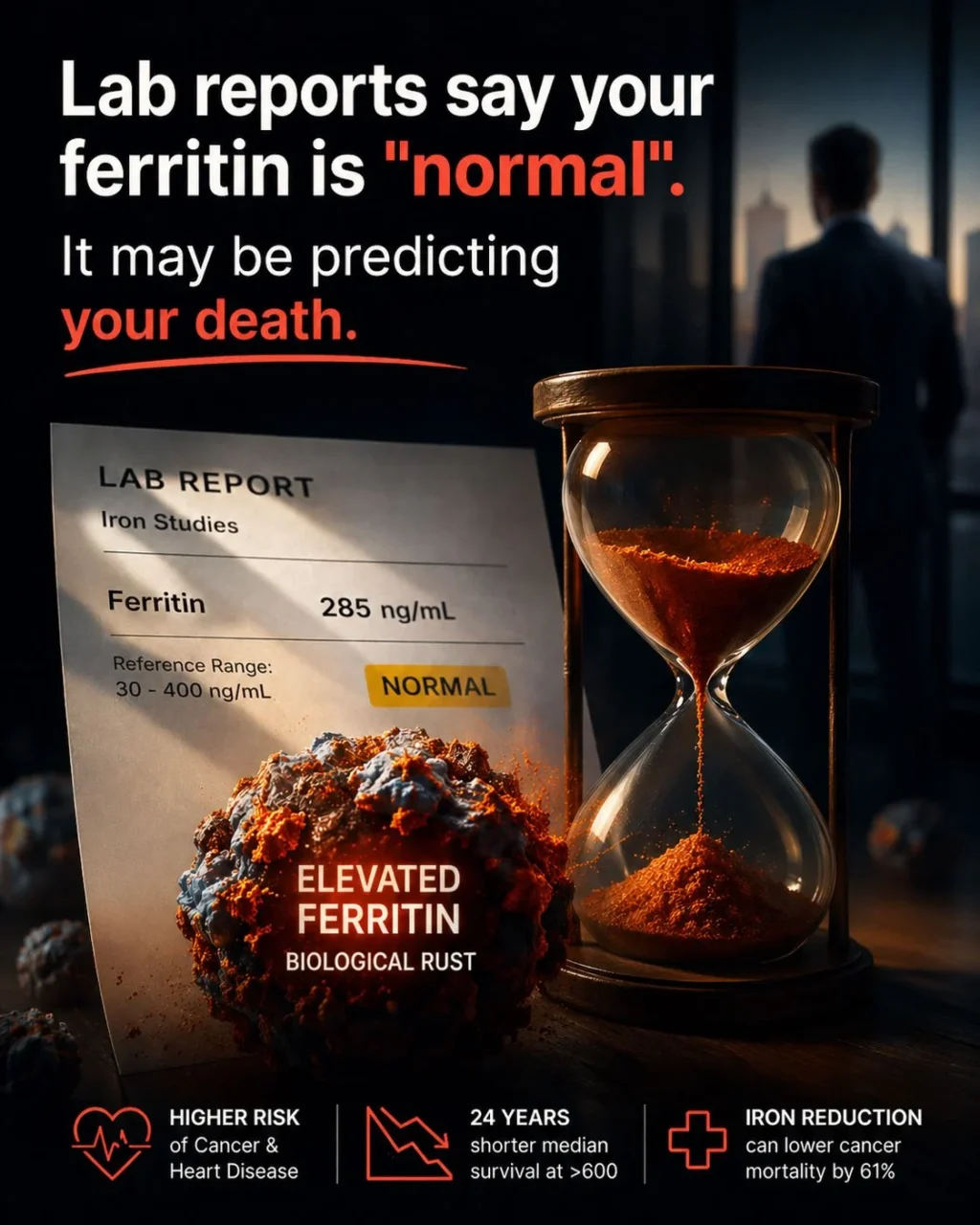
“Is it iron, or is it ‘oxidized rust’? – A new predictor of aging.
In high-functioning individuals, this distinction matters.
Ferritin cannot be interpreted in a single dimension: high means excess iron, low means deficiency.
The clinical reality is considerably more nuanced.
When ferritin rises in the absence of hemochromatosis or acute infection, what you are seeing is not iron excess – it is measuring overall inflammatory load, vis-à-vis, oxidized iron.
This ‘biological rust’ is not inert. It is metabolically active, pro-inflammatory and can also feed cancer cells.
Through Fenton chemistry, oxidized iron generates reactive oxygen species that damage DNA, lipids, and proteins, impair cellular integrity, and shift the internal terrain toward inflammation, accelerated aging, and disease progression – including a microenvironment favorable to cancer development.
Ferritin sits at the intersection of iron metabolism, inflammation, immune function, and oxidative stress.
It is one of the most clinically actionable and under-leveraged biomarkers we have – and increasingly, one of the most relevant to longevity.
The ‘normal’ reference range on your lab report goes up to 300, 400, sometimes 500 ng/mL
That range was designed to detect iron deficiency anemia – not to optimize lifespan.
Based on published medical literature the evidence-based optimal range for reducing mortality risk: 20–100 ng/mL
In the Copenhagen City Heart Study (8,988 individuals, 23 years of follow-up), ferritin levels showed a clear, dose-dependent relationship with mortality:
- low than 200 ng/mL – median survival: 79 years
- 200–399 ng/mL – 76 years
- 400–599 ng/mL – 72 years
- more than 600 ng/mL – 55 years
A 24-year difference in lifespan.
Linear.
Statistically profound.
At ferritin ≥600 ng/mL (hazard ratio):
- All-cause mortality increased 1.5×
- Cancer mortality increased 1.6×
- Cardiovascular mortality increased 1.5×
Importantly, risk begins to rise above nearly 200 ng/mL – a level most laboratories still consider entirely ‘normal.’
In the FeAST trial randomized 1,277 patients with cardiovascular disease to iron reduction demonstrated:
- 61% reduction in cancer-specific mortality
- 35% reduction in new cancer diagnoses
- Number needed to treat: 13 over 10 years
Clinically, I target ferritin ranges of approximately 30–60 ng/mL in men, with individualized targets for women based on physiology and clinical context.
Above nearly 80–100 ng/mL without explanation, you are no longer looking at simple storage – you are looking at oxidative burden.
Below nearly 40 ng/mL in menstruating women, iron deficiency must be considered.
Context matters.
The question is not whether your ferritin is ‘normal’.
The question is whether it is optimal – and what it is signaling about your internal environment.”
Stay updated with Hemostasis Today.
-
Sep 30, 2026, 01:52Javed Anees: DADA2 – When a Young Stroke Is More Than a Stroke
-
Sep 30, 2026, 01:51How a Venous Thrombus Becomes Revascularized – ISTH
-
Sep 29, 2026, 22:45Victor Agunyego: Paracetamol – The Most Common Drug We Underestimate
-
Sep 29, 2026, 22:42Nova Sinclair: Advancing the Future of Hematology – Meet Our 2027 Organizing Committee
-
Sep 29, 2026, 22:41Lorenz Räber: Intracoronary Imaging in PCI – Why, When, How, and Which Modality?
-
Sep 29, 2026, 22:31Selma Turkovic: Pleased to Deliver the Opening Presentation at Kingston Hospital
-
Sep 29, 2026, 22:31Miguel Teran: Ultrasound and Simulation in Arterial Blood Sampling
-
Sep 29, 2026, 22:28Mohammad Refaei: Navigating Your Career in Hematology From Training to Practice
-
Sep 29, 2026, 22:27Matteo Foschi: 10 Clinical Pearls for Antithrombotic Therapy in Secondary Stroke Prevention