

Vera Ghali: A Predictive Model for Chronic ITP in Pediatric Patients
Vera Ghali, Pediatrician at Middle East institute Of Health, shared Blood Journals Portfolio‘s post on X:
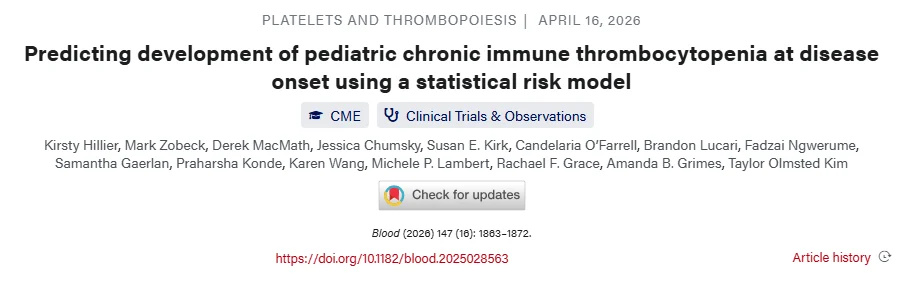
“A multivariable logistic regression model was successfully used to predict chronic pediatric Immune Thrombocytopenia (ITP): Age, sex, IgG, IgA, IgM levels, presenting platelets and lymphocyte counts, known secondary cause at diagnosis, and Direct Antiglobulin Test (DAT) positivity were found to be important factors in predicting the development of chronic pediatric ITP.”
Blood Journals Portfolio shared a post on X about a recent article by Kirsty Hillier et al., published in Blood:
“Age, sex, IgG, IgA, IgM, platelet and lymphocyte counts, known secondary cause, and positive direct antiglobulin tests predicted chronic ITP.
Read the full study in Blood.”
Title: Predicting development of pediatric chronic immune thrombocytopenia at disease onset using a statistical risk model
Authors: Kirsty Hillier, Mark Zobeck, Derek MacMath, Jessica Chumsky, Susan E. Kirk, Candelaria O’Farrell, Brandon Lucari, Fadzai Ngwerume, Samantha Gaerlan, Praharsha Konde, Karen Wang, Michele P. Lambert, Rachael F. Grace, Amanda B. Grimes, Taylor Olmsted Kim
Stay updated on all scientific advances with Hemostasis Today.
-
Sep 25, 2026, 14:54James Fildes: Modeling Device Related Thrombosis in Multi Organ Systems
-
Sep 25, 2026, 14:51Platelet Metabolic Reprogramming: How Cellular Energy Drives Thrombosis
-
Sep 25, 2026, 14:46Thomas Maxwell: From Hemophilia Shame to Strength – Walking for Bleeding Disorders
-
Sep 25, 2026, 14:35Sarita Rani Jaiswal: Sharing Basic Science Insights at EBMT HWP 2026
-
Sep 25, 2026, 14:12Managing Breakthrough Bleeds in Hemophilia – National Bleeding Disorders Foundation
-
Sep 25, 2026, 13:50Alejandro González Veliz: Beyond the Golden Hour in Stroke Care
-
Sep 25, 2026, 13:32Gevorg Yaghjyan: Low Drug Levels, Higher Cardiovascular Risk in Lupus
-
Sep 25, 2026, 12:53Bastu Odoka: What Happened to Blood Donation?
-
Sep 25, 2026, 12:43Thomas Dayspring: Reshaping the Biology of Atherosclerotic Plaques with New Therapies