


Krishna Kumar Dhakchinamoorthi: Artificial Intelligence in Deep Vein Thrombosis
Krishna Kumar Dhakchinamoorthi, Professor and Head at SNS Institutions, shred a post on LinkedIn:
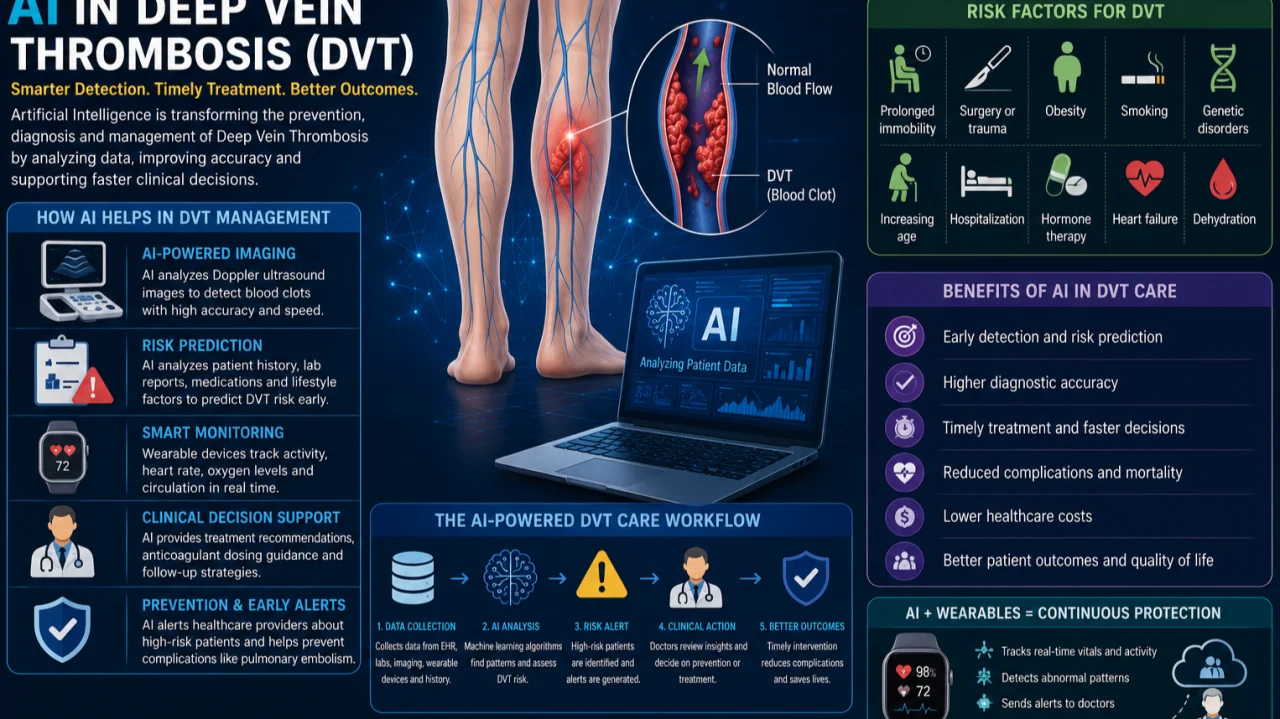
“Artificial Intelligence (AI) is rapidly transforming healthcare by improving the diagnosis, prevention, and management of deep vein thrombosis (DVT).
Deep vein thrombosis is a medical condition in which a blood clot forms in the deep veins, usually in the legs. If untreated, the clot can travel to the lungs and cause pulmonary embolism, a life-threatening complication. Early detection and prompt treatment are essential, and AI is helping healthcare professionals achieve better patient outcomes.
AI systems use machine learning algorithms to analyze large amounts of medical data, including patient history, laboratory reports, ultrasound images, vital signs, and risk factors such as obesity, prolonged immobility, surgery, smoking, and genetic disorders.
By identifying hidden patterns in these data, AI can predict patients who are at high risk of developing DVT. This enables doctors to take preventive measures before serious complications occur.
One of the major applications of AI in DVT management is medical imaging analysis. AI-powered software can assist radiologists in examining Doppler ultrasound scans and detecting blood clots with high accuracy and speed.
These tools reduce diagnostic errors and support faster clinical decisions, especially during emergency situations. AI can also prioritize severe cases, ensuring timely treatment for high-risk patients.
Wearable devices and remote monitoring systems integrated with AI are becoming increasingly useful in DVT prevention. Smart devices can monitor physical activity, blood circulation, heart rate, and oxygen levels in real time.
AI algorithms analyze these parameters and alert healthcare providers when abnormalities are detected. This continuous monitoring is especially beneficial for hospitalized patients and individuals recovering after surgery.
AI also supports personalized treatment planning. By evaluating patient-specific factors such as age, clot size, bleeding risk, and medical history, AI can recommend suitable anticoagulant therapy and follow-up strategies. Clinical decision support systems help healthcare professionals provide safer and more effective care.
Despite its benefits, AI faces challenges including data privacy concerns, high technology costs, and the need for proper clinical validation. However, ongoing research and advancements continue to improve the reliability and accessibility of AI in vascular healthcare.
In conclusion, artificial intelligence is revolutionizing the prevention and treatment of deep vein thrombosis through early detection, accurate diagnosis, continuous monitoring, and personalized medical care. AI has the potential to reduce complications, save lives, and improve the quality of patient care worldwide.”
Stay updated with Hemostasis Today.
-
May 17, 2026, 18:50Tony Cambridge: Exploring the Pros and Cons of POCT D-Dimer in Diagnosing DVT
-
May 17, 2026, 18:44Javed Anees: Megaloblastic Anemia – Biochemical Basis and Clinical Approach
-
May 17, 2026, 18:42Kishanlal Munshi: EC Approves Pfizer’s HYMPAVZI for Hemophilia A and B With Inhibitors
-
May 17, 2026, 18:15Shayan Mohammadmoradi: Interesting Global Study with Insightful Points on Women’s Awareness of VTE
-
May 17, 2026, 18:07Mae Galang: Apply for the Position of Rare Blood Disorder Account and Community Manager
-
May 17, 2026, 17:41Wolfgang Miesbach: What Does Acquired Haemophilia A Truly cost, Clinically and Economically?
-
May 17, 2026, 17:35Femi Ogunleye: New PhD Publication on Targeted Thrombolysis
-
May 17, 2026, 16:34Abdul Mannan: A Normal Factor Level Can Still Miss the Story
-
May 17, 2026, 16:12Double Your Impact Help Close the Hemophilia Diagnosis Gap and Expand Access to Life Saving Care – WFH