


Kalyan Roy: Precision Blood Matching in Transfusion-Dependent Thalassaemia
Kalyan Roy, Transfusion Medicine Specialist at Square Hospitals LTD, shared a post on LinkedIn:
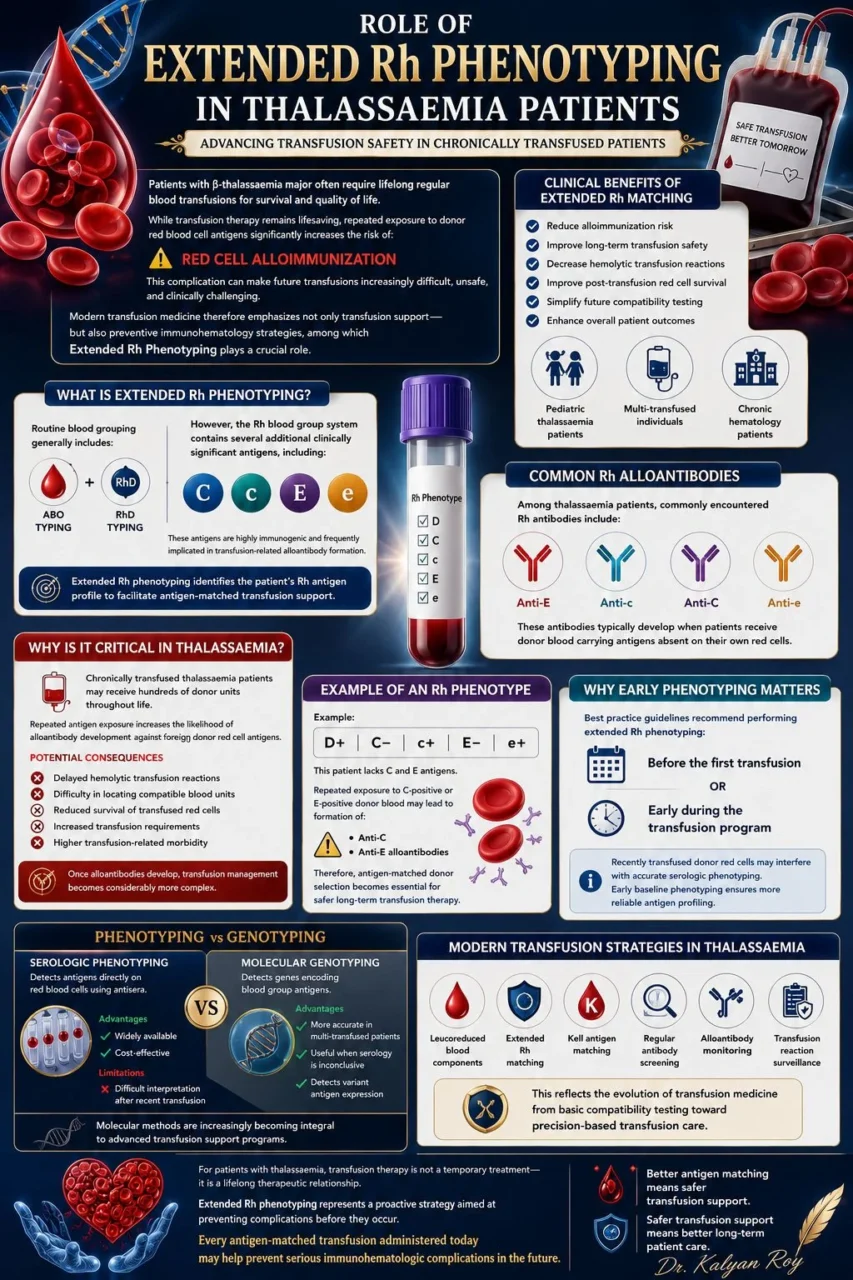
“Extended Rh Phenotyping in Thalassaemia
Enhancing Transfusion Safety in Chronically Transfused Patients
Patients with thalassaemia often require lifelong regular blood transfusions. Repeated exposure to donor red cell antigens increases the risk of:
Red Cell Alloimmunization
This can lead to:
- Delayed hemolytic transfusion reactions
- Difficulty finding compatible blood
- Reduced survival of transfused RBCs
- Increased transfusion complications
What Is Extended Rh Phenotyping?
Beyond routine ABO and RhD typing, the Rh system includes clinically important antigens:
- C
- c
- E
- e
Extended Rh phenotyping identifies these antigens to provide better antigen-matched transfusion support.
Why Is It Important?
Repeated transfusions may stimulate formation of antibodies such as:
- Anti-E
- Anti-c
- Anti-C
- Anti-e
These antibodies complicate future transfusions and increase transfusion-related morbidity.
Benefits of Extended Rh Matching:
- Reduces alloimmunization risk
- Improves transfusion safety
- Decreases hemolytic reactions
- Improves red cell survival
- Simplifies future compatibility testing
- Enhances long-term patient outcomes
Example:
D Positive | C Negative | c Positive | E Negative | e Positive
A patient lacking C and E antigens may develop:
- Anti-C
- Anti-E antibodies
after exposure to antigen-positive donor blood.
Therefore, antigen-matched transfusion becomes essential.
Why Early Phenotyping Matters:
Best practice recommends performing extended Rh phenotyping:
- Before the first transfusion
or
- Early in the transfusion program
Early testing provides more accurate antigen profiling and helps prevent future complications.
Modern Transfusion Strategies:
Current best practices include:
- Leucoreduced blood components
- Extended Rh matching
- Kell antigen matching
- Antibody screening and monitoring
- Transfusion reaction surveillance
Modern transfusion medicine is evolving toward safer, precision-based patient care.
Final Thought
For thalassaemia patients, transfusion is not temporary — it is lifelong therapy.
Extended Rh phenotyping helps prevent complications before they occur and significantly improves long-term transfusion safety.
Better antigen matching means safer transfusion support.”
Other posts featuring Kalyan Roy on Hemostasis Today.
-
Oct 10, 2026, 17:58Archo Farzana Batool: Exploring Medical Writing Through an Article on Iron Deficiency Anemia
-
Oct 10, 2026, 17:53Assessing Frailty in Adults With Hemophilia – JTH
-
Oct 10, 2026, 17:52Fatma Sadeghi: Reducing Maternal Health Inequalities Through Nursing Advocacy
-
Oct 10, 2026, 17:50Grzegorz Hensler: How Apheresis Transformed Blood Cell Separation and Collection
-
Oct 10, 2026, 17:47Hemant K Sharma: Japan’s Universal Artificial Blood Research – A Potential Breakthrough in Transfusion Medicine
-
Oct 10, 2026, 17:40John Strouse: Learning About Bleeding Disorders and Sickle Cell Disease at FWGBD
-
Oct 10, 2026, 17:34Mae Caime: Speaking at the Annual Women’s Retreat for the Hemophilia Community in Florida
-
Oct 10, 2026, 17:30Chokri Ben Lamine: PNH beyond the Textbook Triad
-
Oct 10, 2026, 17:29Ruah Alyamany: Thrombosis and Anticoagulation in Hematological Malignancies at SOHO KSA 2026