

Thasleena Kayyalikkal: The Diagnostic Power of the Peripheral Blood Smear
Thasleena Kayyalikkal, Medical Laboratory Technologist at Parihar Health Care, shared a post on LinkedIn:
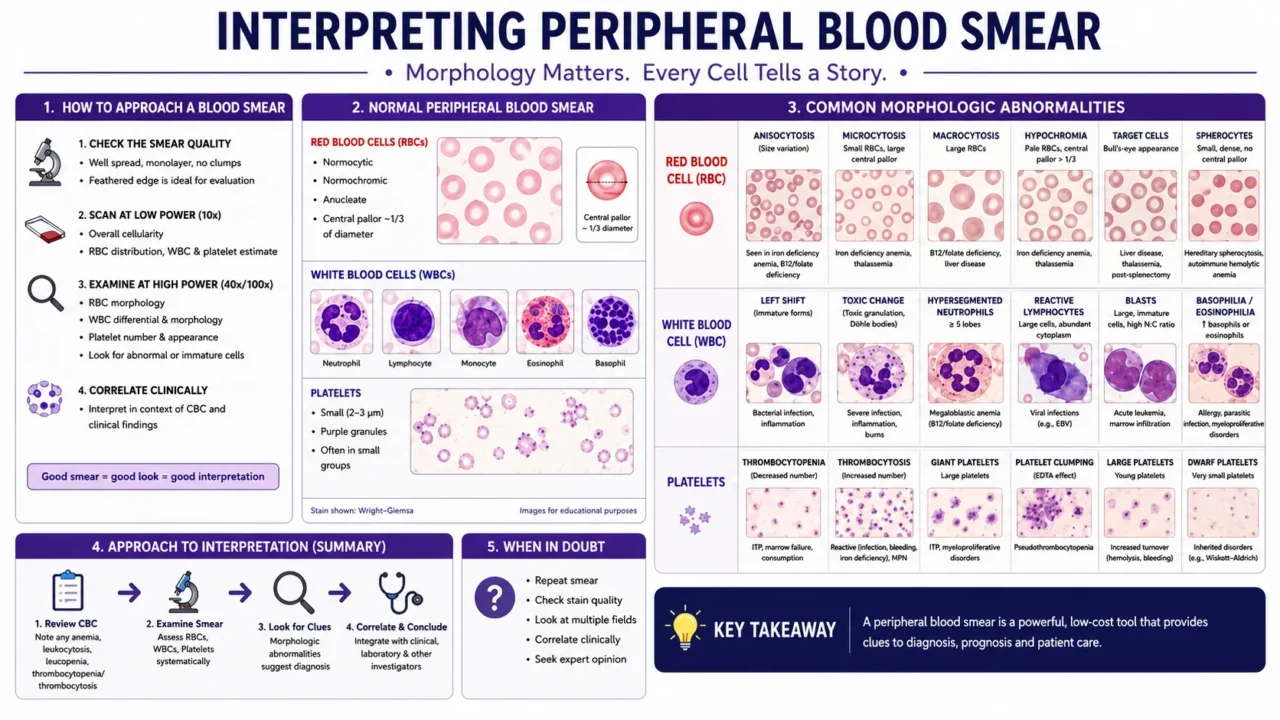
“A Peripheral Blood Smear (PBS) is a microscopic examination of blood cells spread on a glass slide and stained, usually with Wright-Giemsa stain.
It is an essential diagnostic tool that provides valuable information about the morphology and distribution of red blood cells (RBCs), white blood cells (WBCs), and platelets.
Key Steps in Interpretation:
- Assess smear quality – Ensure proper staining and even cell distribution.
- Examine RBC morphology – Evaluate size, shape, color, and inclusions.
- Assess WBCs – Identify different cell types and look for abnormal or immature cells.
- Evaluate platelets – Estimate platelet count and observe morphology.
- Correlate findings with CBC results and clinical history.
Common Findings:
- RBC abnormalities: Anisocytosis, poikilocytosis, microcytosis, macrocytosis, target cells, spherocytes, sickle cells.
- WBC abnormalities: Left shift, toxic granulation, hypersegmented neutrophils, blasts, reactive lymphocytes.
- Platelet abnormalities: Thrombocytopenia, thrombocytosis, giant platelets, platelet clumping.
Clinical Importance:
Peripheral blood smear examination helps diagnose and monitor:
- Anemias
- Leukemias and other hematological malignancies
- Infections and inflammatory disorders
- Platelet disorders
- Hemolytic diseases
- Nutritional deficiencies (iron, vitamin B12, folate)
Key Message: A peripheral blood smear is a simple, cost-effective, and powerful diagnostic tool that reveals important clues about blood cell abnormalities and overall patient health.”
Stay updated with Hemostasis Today.
-
Oct 20, 2026, 16:51Suzan Nakasendwa: A Growing Stroke Challenge in Uganda
-
Oct 20, 2026, 16:38Steve Moon: How Does Smoking Cessation Duration Affect Ischemic Stroke Risk
-
Oct 20, 2026, 16:25Cedrice Mentor: Reducing Platelet Wastage Through Cold Storage
-
Oct 20, 2026, 16:09Thirunavukkarasu Angappan: Can a Purified Fibrinogen Concentrate Replace Cryoprecipitate
-
Oct 20, 2026, 16:01Kalyan Roy: Platelet Conservation Through Evidence-Based Transfusion Practice
-
Oct 20, 2026, 15:28Stacy E. Croteau: 33 Countries, One Mission – Better Bleeding Disorder Care
-
Oct 20, 2026, 15:19Teresa Barnes: What Does a Pulmonary Embolism Mean for Jalen Hurts?
-
Oct 20, 2026, 15:04Laura S.: Could Speaking Up Prevent Maternal Deaths from Thrombosis?
-
Oct 20, 2026, 14:44Pete Stibbs: VTE in Professional Athletes – When Fitness Is Not Enough