


Utsab Raj Panta: Navigating the A–E Classification in Acute Pulmonary Embolism
Utsab Raj Panta, Interventional Cardiologist at Baptist Health, shared a post on LinkedIn:
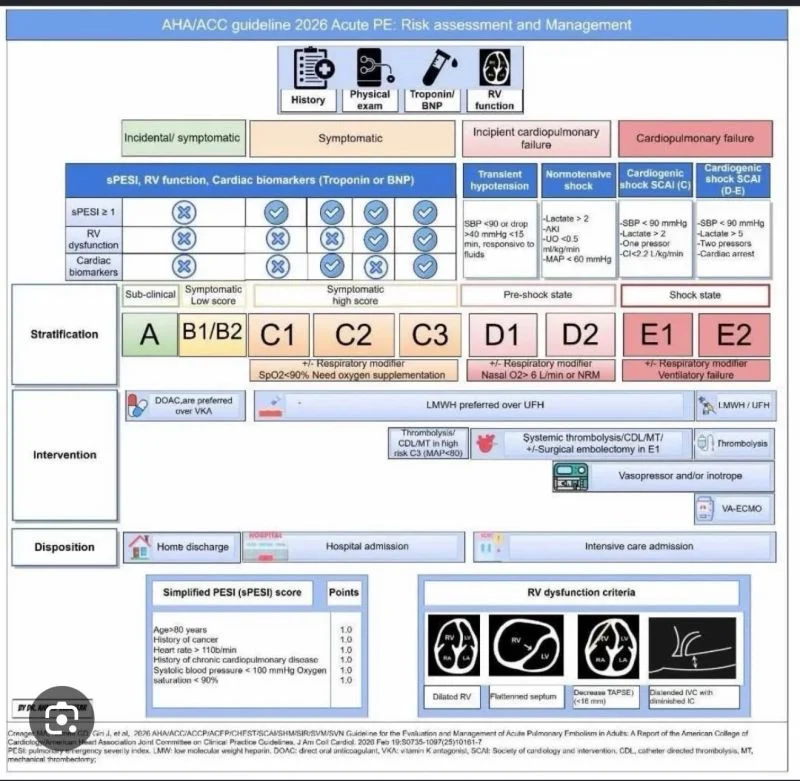
“One of the most impactful updates in the 2026 AHA/ACC Acute Pulmonary Embolism Guidelines is the transition from broad labels to a more granular risk-stratification model.
The new A–E classification incorporates clinical severity, RV dysfunction, biomarkers, respiratory status, and hemodynamic compromise—providing a practical roadmap for escalation of care and advanced PE therapies.
As catheter-based thrombectomy, catheter-directed thrombolysis, and multidisciplinary PE response teams become increasingly integrated into clinical practice, accurate risk assessment is more important than ever.
Understanding not just whether a patient has PE, but how sick that patient is, remains the key to delivering the right therapy at the right time.”
Stay updated on all scientific advances with Hemostasis Today.
-
Sep 14, 2026, 20:53YoonHwa An: Rusfertide in Polycythemia Vera – From Clinical Benefit to Strategic Value
-
Sep 14, 2026, 20:52Andres Alberto Mercado Pompa: External Validation of Prognostic Risk Scores in Cerebral Venous Thrombosis
-
Sep 14, 2026, 20:50Balaji Kirushnan: Advancing Regional Citrate Anticoagulation in CRRT – From Experience to Implementation
-
Sep 14, 2026, 20:48Valerie Dehondt: Nutritional Anemia Is Associated With Increased Risk of Severe COPD Exacerbations
-
Sep 14, 2026, 20:46Nupur Choudhury: Exploring AI-Based Detection of Anemia Using Eye and Fingernail Images
-
Sep 14, 2026, 20:44Shamee Shastry: Chart Before You Chase – Diagnosing Drug-Induced Hemolytic Anemia
-
Sep 14, 2026, 20:43David Reiner: Blood Tests That Can Reveal Nutrition Clues
-
Sep 14, 2026, 20:40Giuseppe Biondi Zoccai: Balancing Thrombosis and Bleeding in Acute MI With Hemophilia A
-
Sep 14, 2026, 20:39Kemal Karaagac: Kounis Syndrome as a Possible Cause of Very Late Stent Thrombosis