


Nihala Sharin E A: The Vital Role of Hematology in the Medical Laboratory
Nihala Sharin E A, Medical Laboratory Technologist at Med7 Healthcare Group, shared a post on LinkedIn:
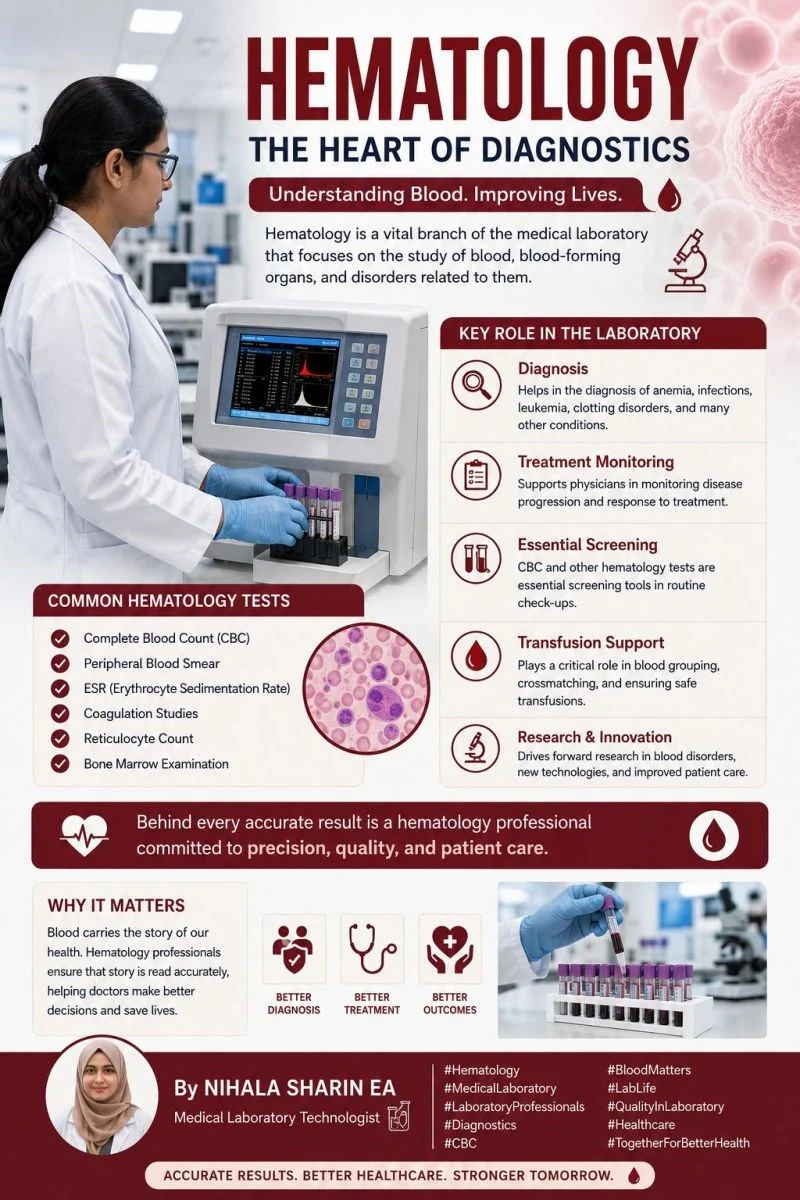
“The Vital Role of Hematology in the Medical Laboratory
Hematology is one of the most important departments in a clinical laboratory, focusing on the study of blood, blood-forming organs, and blood disorders. It plays a crucial role in the diagnosis, monitoring, and management of numerous medical conditions.
Key contributions of hematology in the laboratory include:
- Complete Blood Count (CBC) – Provides valuable information about red blood cells, white blood cells, and platelets.
- Detection of Anemia – Helps identify different types and causes of anemia.
- Diagnosis of Blood Disorders – Assists in detecting conditions such as leukemia, thalassemia, sickle cell disease, and other hematological abnormalities.
- Infection Monitoring – White blood cell counts help evaluate infections and immune responses.
- Coagulation Testing – Assesses blood clotting function and helps manage bleeding and thrombotic disorders.
- Treatment Monitoring – Supports the follow-up of patients undergoing chemotherapy, blood transfusions, and other therapies.
Modern hematology analyzers, combined with microscopic examination and professional expertise, enable accurate and timely diagnosis, ultimately contributing to better patient care and clinical decision-making.
Every blood sample tells a story, and hematology helps uncover it—one cell at a time.”
Stay updated with Hemostasis Today.
-
Sep 29, 2026, 19:00Caitlin Raymond: Can Artificial Blood Solve Blood Supply Shortages?
-
Sep 29, 2026, 18:51Chaza Alaji: Dyslipidemia, Thrombosis and the DIC Diagnostic Trap
-
Sep 29, 2026, 17:31Rajnikant Patel: Bridging Ayurvedic Concepts and Modern Toxin-Mediated Disease
-
Sep 29, 2026, 17:13Nicholas Lang։ A Meaningful Case of Immune Thrombocytopenia
-
Sep 29, 2026, 16:55Ayatullah Gamal Wahab: When the CBC Lies
-
Sep 29, 2026, 16:35Jonathan Douxfils: Navigating the VTE Risk Continuum in Reproductive Medicine
-
Sep 29, 2026, 16:35Chaima Rajeh: Types of Anemia and Their Laboratory Features
-
Sep 29, 2026, 16:27Scott Isaacs: How GLP-1 RAs Target Systemic Inflammation to Drive Cardio, Autoimmune, and Gut Health
-
Sep 29, 2026, 16:21Yitshak Kreiss: From Treating Patients to Defining the Standard of Knowledge