


Samwel Mikaye: The Collapse of Coagulation Control in Disseminated Intravascular Coagulation
Samwel Mikaye, Medical Doctor at MSK, shared a post on LinkedIn:
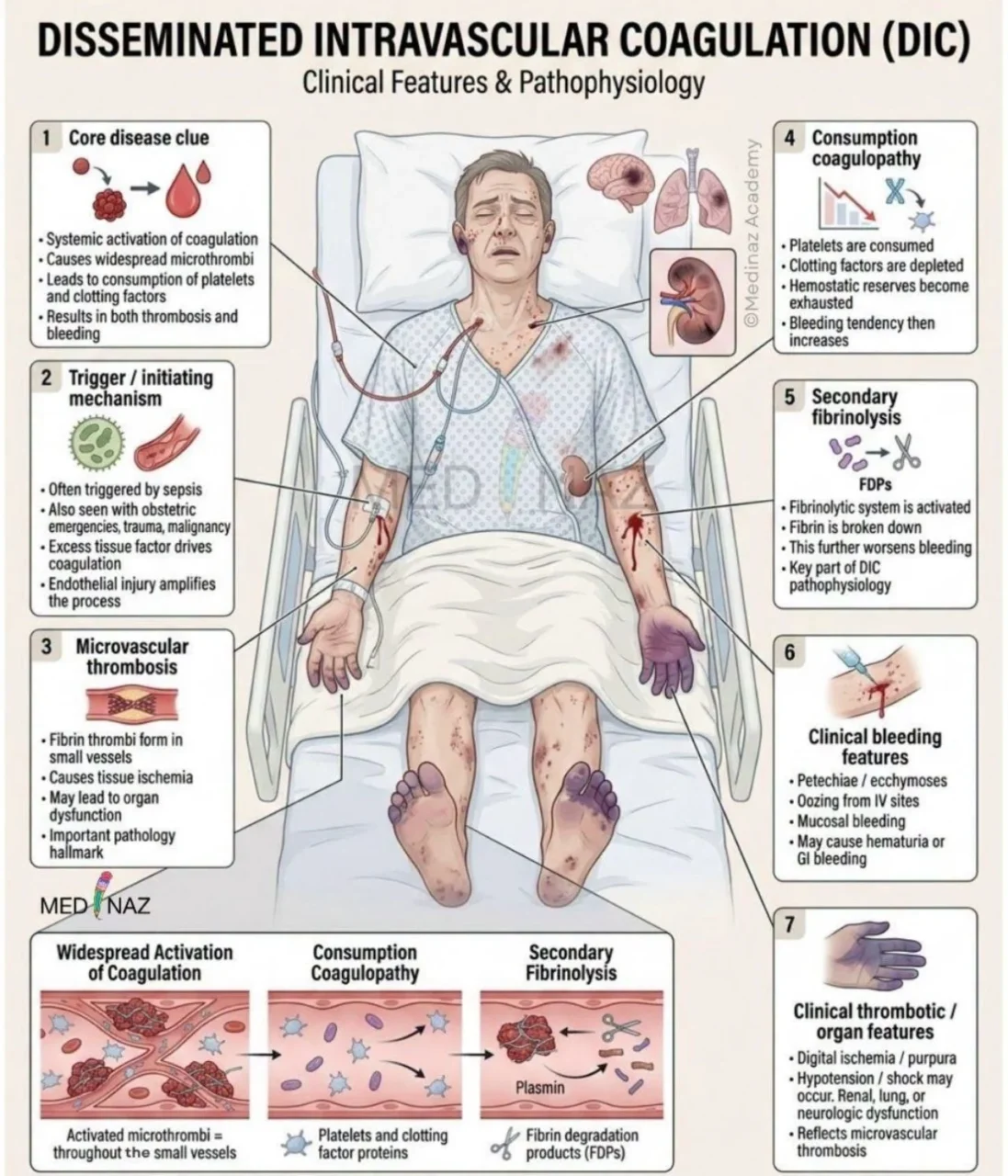
“Disseminated Intravascular Coagulation (DIC)
Definition
Disseminated intravascular coagulation (DIC) is a life-threatening acquired syndrome characterized by systemic activation of coagulation, leading to widespread microvascular thrombosis, consumption of platelets and clotting factors (consumptive coagulopathy), and paradoxical bleeding.
Causes
Sepsis (most common)
- Gram-negative
- Gram-positive bacterial infections
- Severe viral or fungal infection
Obstetric
- Placental abruption
- Amniotic fluid embolism
- Retained dead fetus
- Severe pre-eclampsia/eclampsia
- Postpartum hemorrhage
Malignancy
- Acute promyelocytic leukemia
- Metastatic adenocarcinoma
Trauma
- Major trauma
- Extensive burns
- Head injury
Others
- Severe pancreatitis
- Massive transfusion
- Snake envenomation
- Severe transfusion reactions
Pathophysiology
- Excessive tissue factor activation
- Widespread thrombin generation
- Formation of fibrin microthrombi
- Consumption of platelets and coagulation factors
- Activation of fibrinolysis
- Simultaneous thrombosis and bleeding
- Organ ischemia due to microvascular occlusion
Clinical Features
Bleeding
- Petechiae
- Ecchymoses
- Oozing from IV lines or surgical wounds
- Mucosal bleeding
- Hematuria
- Gastrointestinal bleeding
- Postpartum hemorrhage
Thrombosis
- Digital ischemia
- Deep vein thrombosis
- Pulmonary embolism
- Stroke
- Multi-organ dysfunction
Organ Dysfunction
- Acute kidney injury
- Respiratory distress
- Altered mental status
- Hepatic dysfunction
- Shock
Diagnosis
Laboratory Findings
- Decreased platelet count
- Increased PT/INR
- Increased aPTT
- Decreased fibrinogen
- Increased D-dimer/FDPs
- Blood film: schistocytes (microangiopathic hemolysis)
DIC Scoring
The International Society on Thrombosis and Haemostasis (ISTH) DIC score incorporates:
- Platelet count
- PT prolongation
- D-dimer/FDP
- Fibrinogen level
Differential Diagnosis
- Thrombotic thrombocytopenic purpura
- Hemolytic uremic syndrome
- Liver failure
- Massive hemorrhage
- Anticoagulant overdose
- Dilutional coagulopathy
Management
1. Treat the Underlying Cause (Most Important)
- Prompt antibiotics for sepsis
- Delivery in obstetric causes
- Treat malignancy
- Control trauma or bleeding source
2. Supportive Management
- ABC stabilization
- Oxygen therapy
- Intravenous fluids
- Vasopressors if indicated
- Intensive care monitoring if severe
3. Blood Product Replacement (If Bleeding or Prior to Procedures)
- Platelets if thrombocytopenic with active bleeding or very low platelet count
- Fresh frozen plasma (FFP) for prolonged PT/aPTT with bleeding
- Cryoprecipitate or fibrinogen concentrate if fibrinogen is low
- Packed red blood cells for significant anemia or blood loss
4. Anticoagulation
Consider therapeutic heparin only in selected patients with predominantly thrombotic DIC and low bleeding risk.
Complications
- Massive hemorrhage
- Multi-organ failure
- Acute kidney injury
- Respiratory failure
- Limb ischemia
- Death.”
Other posts featuring Samwel Mikaye on Hemostasis Today.
-
Sep 29, 2026, 19:00Caitlin Raymond: Can Artificial Blood Solve Blood Supply Shortages?
-
Sep 29, 2026, 18:51Chaza Alaji: Dyslipidemia, Thrombosis and the DIC Diagnostic Trap
-
Sep 29, 2026, 17:31Rajnikant Patel: Bridging Ayurvedic Concepts and Modern Toxin-Mediated Disease
-
Sep 29, 2026, 17:13Nicholas Lang։ A Meaningful Case of Immune Thrombocytopenia
-
Sep 29, 2026, 16:55Ayatullah Gamal Wahab: When the CBC Lies
-
Sep 29, 2026, 16:35Jonathan Douxfils: Navigating the VTE Risk Continuum in Reproductive Medicine
-
Sep 29, 2026, 16:35Chaima Rajeh: Types of Anemia and Their Laboratory Features
-
Sep 29, 2026, 16:27Scott Isaacs: How GLP-1 RAs Target Systemic Inflammation to Drive Cardio, Autoimmune, and Gut Health
-
Sep 29, 2026, 16:21Yitshak Kreiss: From Treating Patients to Defining the Standard of Knowledge