

Obstetric Disseminated Intravascular Coagulation: Early Recognition and Life-Saving Management Strategies
Disseminated intravascular coagulation (DIC) in pregnancy is an acute, always secondary hemostatic disorder caused by uncontrolled activation of coagulation and fibrinolysis.
It can progress rapidly from subtle laboratory abnormalities to catastrophic hemorrhage, microvascular thrombosis and multiorgan failure.
In obstetric practice, DIC is most often triggered by placental abruption, postpartum hemorrhage, hypertensive disorders, amniotic fluid embolism, acute fatty liver of pregnancy or sepsis.
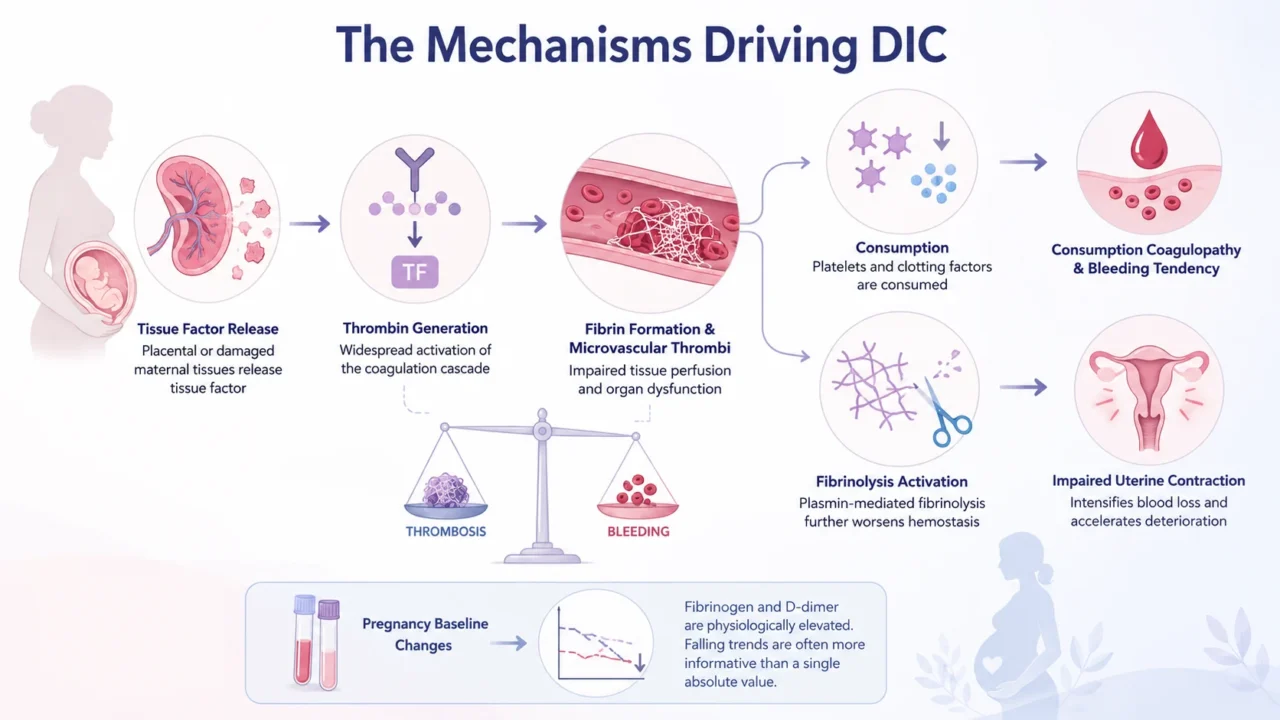
The Mechanisms Driving DIC
The central event in DIC is tissue factor–driven thrombin generation.
In pregnancy, placental or damaged maternal tissues may release tissue factor and initiate widespread activation of the coagulation cascade. This leads to fibrin formation, microvascular thrombi and impaired tissue perfusion.
At the same time, platelets and clotting factors are consumed, creating a consumption coagulopathy and a bleeding tendency.
Fibrinolysis may also be activated, further worsening hemostatic failure. In obstetric hemorrhage, impaired uterine contraction can intensify blood loss and accelerate clinical deterioration.
Pregnancy itself complicates recognition because baseline fibrinogen and D-dimer are physiologically elevated, so falling trends are often more informative than a single absolute value.
What Triggers DIC in Pregnancy?
DIC in pregnancy is always secondary to an underlying obstetric or systemic disorder. The most common triggers are placental abruption and severe postpartum hemorrhage.
Other important causes include preeclampsia, eclampsia, HELLP syndrome, amniotic fluid embolism, acute fatty liver of pregnancy, and pregnancy-related sepsis such as chorioamnionitis, septic abortion or postpartum endometritis.
A practical point is that severe postpartum hemorrhage may produce a picture that overlaps with true DIC, dilutional coagulopathy, and factor consumption from massive blood loss.
In real-world practice, these mechanisms often coexist, which is why rapid recognition and simultaneous treatment matter more than strict categorization at the bedside.
Clinical Features of DIC in Pregnancy
DIC in pregnancy may appear as either overt or compensated disease.
Overt DIC is the most dramatic form and typically presents with heavy vaginal bleeding, diffuse oozing from puncture sites or mucosal surfaces, hypotension, tachycardia, altered mental status, and signs of organ dysfunction.
Bleeding may be concealed early in placental abruption or intra-abdominal hemorrhage, so absence of obvious external bleeding does not exclude DIC.
Compensated or latent DIC is less obvious.
It reflects ongoing coagulation activation without major bleeding at first, but it can deteriorate quickly if the triggering disorder is not controlled.
This form is especially important because early intervention may prevent progression to fulminant hemorrhage.
Laboratory Findings
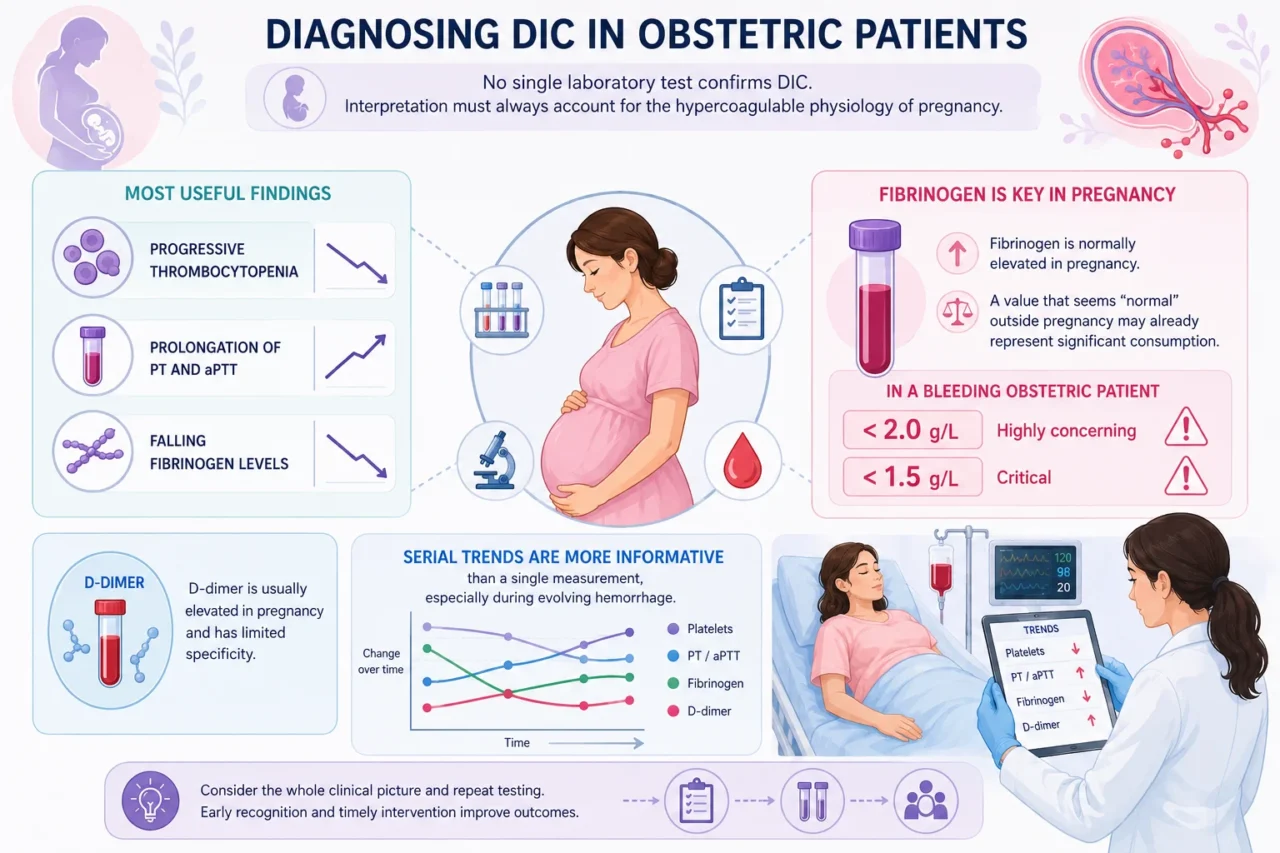
No single laboratory test confirms DIC and interpretation must always account for the hypercoagulable physiology of pregnancy.
The most useful findings are progressive thrombocytopenia, prolongation of PT and aPTT, falling fibrinogen levels.
Fibrinogen is particularly important because it is normally elevated in pregnancy; therefore, a value that seems “normal” outside pregnancy may already represent significant consumption.
In a bleeding obstetric patient, fibrinogen below 2.0 g/L is highly concerning and values below 1.5 g/L are critical. D-dimer is usually elevated in pregnancy and has limited specificity.
Serial trends are more informative than a single measurement, especially during evolving hemorrhage.
Real-Time Coagulation Insights in Obstetric Emergencies
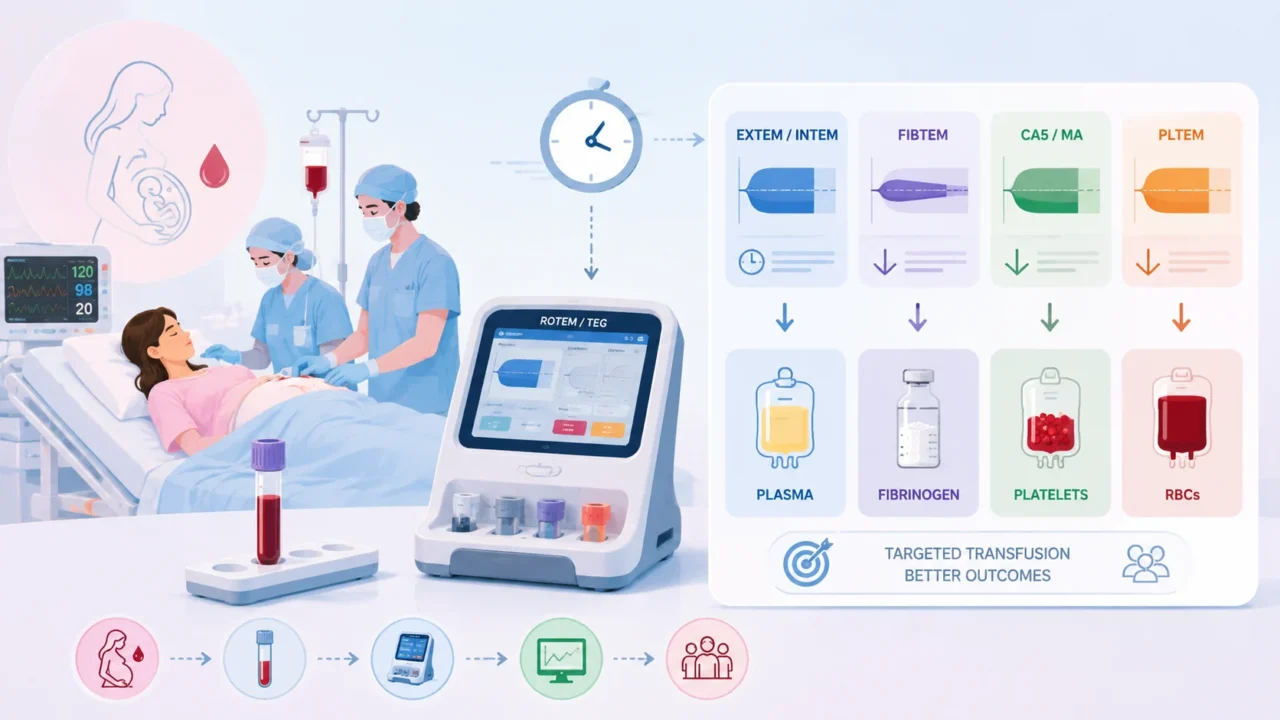
Point-of-care viscoelastic tests such as ROTEM and TEG have become increasingly useful in obstetric hemorrhage.
They provide rapid, dynamic assessment of clot formation and strength, which helps guide targeted transfusion more quickly than standard laboratory testing.
A low FIBTEM result suggests hypofibrinogenemia and supports urgent fibrinogen replacement, while abnormal clotting times or reduced clot firmness may indicate the need for additional plasma or platelet support.
These assays are especially valuable when the situation is changing quickly and laboratory turnaround is slow.
In practice, serial ROTEM or TEG results can guide therapy more precisely than isolated conventional coagulation tests.
Diagnostic Approach
Diagnosis is based on the combination of clinical context, laboratory evidence of consumption, and evidence of ongoing coagulation activation. In unstable patients, investigation and treatment should proceed in parallel.
Initial testing should include complete blood count, PT, aPTT, fibrinogen, D-dimer, renal and liver function tests and microbiological studies if infection is suspected.
Because DIC evolves over time, repeat testing is essential.
A single normal result does not exclude the diagnosis, particularly early in the course of obstetric hemorrhage or sepsis. Serial monitoring is often the most reliable way to detect deterioration.
Key Differential Diagnoses in Pregnancy-Associated Coagulopathy
Several conditions can mimic DIC in pregnancy and should be considered carefully.
These include dilutional coagulopathy after massive transfusion, thrombotic microangiopathies such as thrombotic thrombocytopenic purpura or hemolytic uremic syndrome, antiphospholipid syndrome, severe hepatic dysfunction, heparin-induced thrombocytopenia and inherited bleeding disorders.
The pattern of laboratory abnormalities helps distinguish them.
Marked hypofibrinogenemia, prolonged PT/aPTT, thrombocytopenia and a clear obstetric trigger strongly favor DIC.
In contrast, thrombotic microangiopathies usually present with prominent hemolysis and thrombocytopenia, but without the same degree of global factor consumption.
Core Principles in the Management of Obstetric DIC
Management begins with immediate treatment of the underlying cause.
Control of hemorrhage, delivery when indicated, treatment of sepsis and management of placental or hepatic complications are the foundation of care.
At the same time, hemostatic resuscitation should be started early, ideally within a multidisciplinary hemorrhage protocol.
Fibrinogen replacement is a priority when fibrinogen is low. Where available, fibrinogen concentrate offers rapid correction; cryoprecipitate remains a widely used alternative in many settings.
Tranexamic acid should be administered early in postpartum hemorrhage according to institutional protocol, as timely use can reduce bleeding-related mortality.
Platelets and plasma should be given according to bleeding severity, laboratory results and viscoelastic findings.
Routine anticoagulation is not part of the management of hemorrhagic obstetric DIC. Its use is limited to selected situations with predominantly thrombotic features and should be guided by specialist input.
Key Clinical Implication
DIC in pregnancy is a rapidly evolving secondary hemostatic emergency.
Early recognition depends on a high index of suspicion, serial laboratory assessment, and careful interpretation within the physiological context of pregnancy. The most important interventions are rapid control of the underlying trigger, prompt correction of fibrinogen deficiency, targeted transfusion support, and multidisciplinary escalation.
FAQ
1. What is disseminated intravascular coagulation (DIC) in pregnancy?
DIC in pregnancy is an acquired, life-threatening hemostatic disorder characterized by uncontrolled activation of coagulation and fibrinolysis. It always occurs secondary to an underlying obstetric or systemic condition.
2. What are the most common causes of DIC in pregnancy?
The most common triggers include placental abruption, postpartum hemorrhage, severe preeclampsia or HELLP syndrome, amniotic fluid embolism, acute fatty liver of pregnancy, and sepsis.
3. How does DIC develop at the pathophysiologic level?
Pregnancy-related tissue injury leads to exposure of tissue factor, which triggers massive thrombin generation and fibrin formation. This process consumes platelets and coagulation factors and may also activate fibrinolysis, resulting in simultaneous thrombosis and bleeding.
4. What are the early clinical signs of DIC in obstetric patients?
Early signs may include excessive vaginal bleeding, diffuse oozing from puncture or surgical sites, tachycardia, hypotension, and features of shock. In some cases, bleeding may initially be concealed.
5. Which laboratory tests are most useful for diagnosing DIC in pregnancy?
Key tests include platelet count, PT, aPTT, fibrinogen and D-dimer. Interpretation should always be in the clinical context and serial measurements are often more informative than a single result.
6. Why is fibrinogen so important in obstetric DIC?
Fibrinogen is normally elevated in pregnancy; therefore, a falling level is an early and sensitive marker of severe coagulopathy. Low fibrinogen strongly correlates with severe obstetric hemorrhage.
7. What is the role of ROTEM, TEG, and FIBTEM in managing obstetric bleeding?
These point-of-care viscoelastic tests provide rapid, real-time assessment of clot formation and stability. FIBTEM is particularly useful for detecting hypofibrinogenemia and guiding targeted fibrinogen replacement.
8. How is DIC in pregnancy treated?
Management requires immediate treatment of the underlying cause alongside correction of coagulopathy. This includes blood product transfusion, fibrinogen replacement, tranexamic acid in postpartum hemorrhage and urgent multidisciplinary management.
9. How do you distinguish DIC from other pregnancy-related coagulopathies?
DIC typically presents with thrombocytopenia, prolonged PT/aPTT, low fibrinogen, and a clear triggering condition. Other disorders such as TTP or dilutional coagulopathy show different clinical and laboratory patterns.
10. Why is early recognition of DIC so important for maternal outcomes?
DIC can rapidly progress to massive hemorrhage, multiorgan failure, and death. Early recognition and immediate control of the underlying cause are critical for improving maternal outcomes.
Written by Elen Avetisyan, MD
Stay updated with Hemostasis Today.
-
Oct 2, 2026, 13:50Arnav Garcha: New Insights Into Platelet Transport in Arterial Flow
-
Oct 2, 2026, 13:49Alessandro Lucchesi: RiseMPN 2026 – Shaping the Future of MPN Treatment
-
Oct 2, 2026, 13:43Ronald Mahomane: Bangladesh Moves Toward Sustainable Hemophilia Treatment Access
-
Oct 2, 2026, 13:38Sathya-Prasad Burjonrappa: Pediatric Trauma and Deep Venous Thrombosis
-
Oct 2, 2026, 12:50Ravi C Dara: ADHAR 2026 – Red Cell Exchange in Sickle Cell Disease
-
Oct 2, 2026, 12:37David McIntosh: WeDonate Partners with Dr. Martens to Reward UK Blood Donors
-
Oct 2, 2026, 12:31Ahmed Salah El-Deen: HELLP Syndrome – An Obstetric Emergency
-
Oct 2, 2026, 12:28Swapnil Hiremath: Transitioning from Idiopathic Thrombocytopenia to Antiphospholipid Syndrome in Recurrent Severe Preeclampsia
-
Oct 2, 2026, 12:08Austin Camp: Learn How to Treat HIT from an ICU Pharmacist in 60 Seconds!