

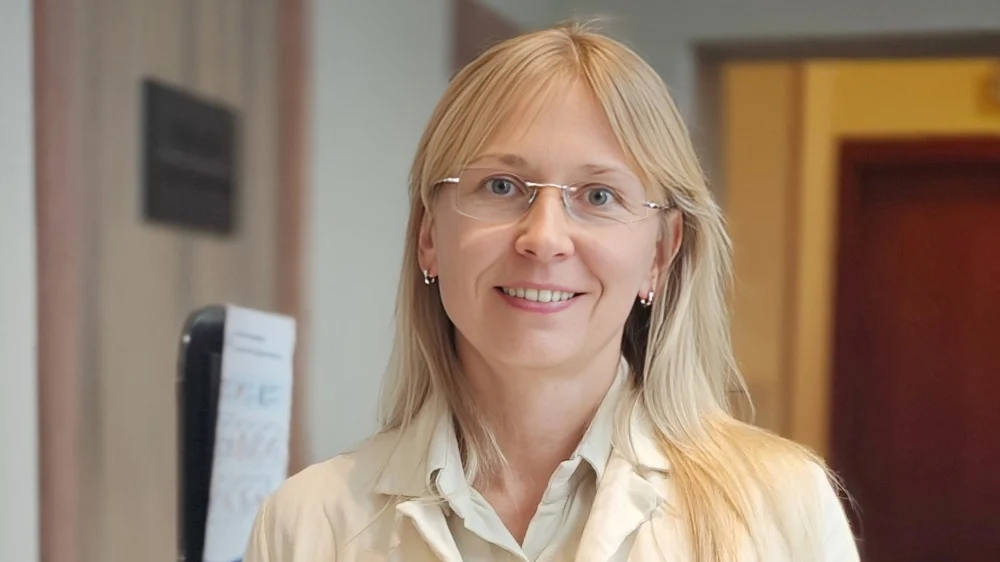
Maria Cherska: Can Cardiovascular Prevention Become Truly Personalized If We Ignore Ethnicity?
Maria Cherska, The Head of Cardiology Department at The State Institution «V.P. Komisarenko Institute of Endocrinology and Metabolism», shared a post on LinkedIn about a recent article by Alejandra Pérez-Montes de Oca et al. published in Lipids in Health and Disease, adding:
“Can cardiovascular prevention become truly personalized if we ignore ethnicity?
For decades, cardiovascular risk assessment has relied on the assumption that ‘one size fits all.’
A new population-based study of more than 806,000 individuals from Catalonia challenges that assumption. It demonstrates that lipid profiles and cardiometabolic risk differ substantially across ethnic groups—even among people living within the same healthcare system.
Some of the key observations:
- Individuals of Asian origin showed the most atherogenic lipid profile and the highest prevalence of type 2 diabetes.
- Central and South African populations demonstrated the most favorable lipid profile.
- Latin American and North African populations had higher rates of obesity, while Southern Europeans had the highest prevalence of smoking and hypertension.
The important message is not that ethnicity determines destiny.
The message is that cardiovascular prevention should move beyond average populations toward precision prevention.
If two patients have the same LDL-C but very different metabolic backgrounds, insulin resistance, triglyceride-rich lipoproteins, or remnant cholesterol, should they really receive identical risk assessment?
As cardiometabolic medicine continues to evolve, incorporating ethnicity, metabolic phenotype, and individualized risk profiles may help us identify high-risk patients earlier and deliver more effective prevention.
Precision medicine begins with recognizing that populations are not identical.”
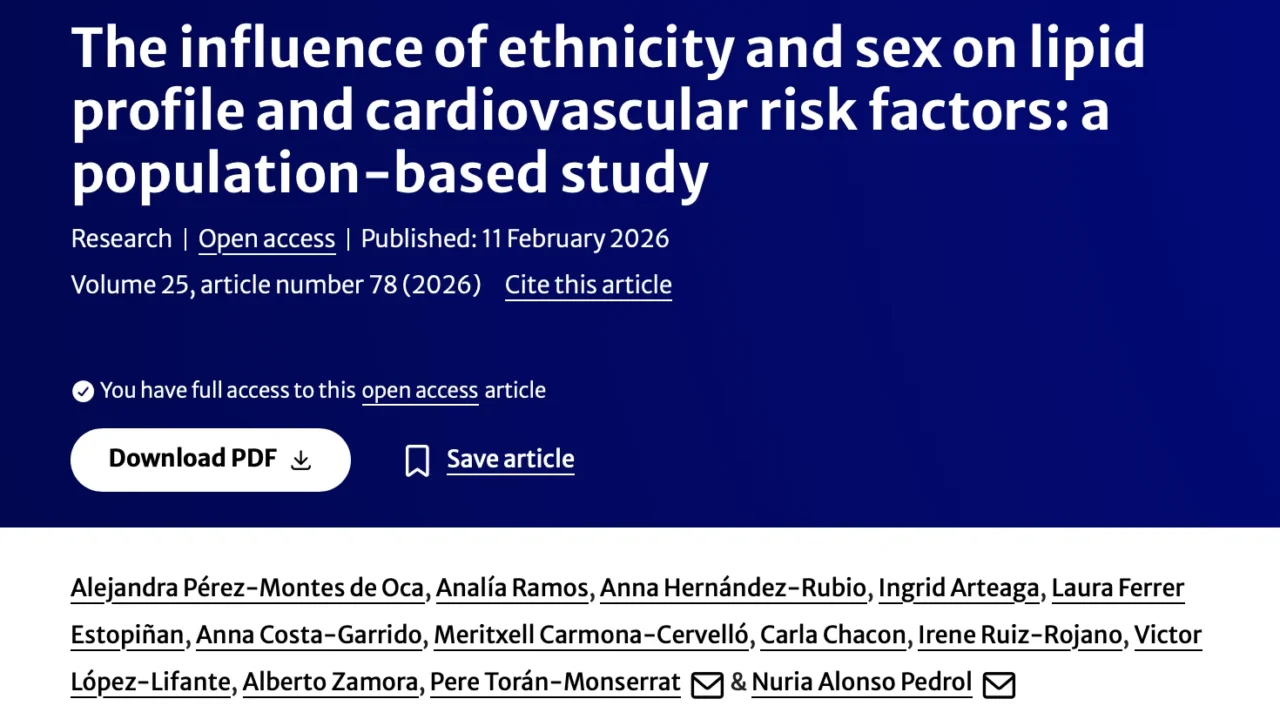
Title: The influence of ethnicity and sex on lipid profile and cardiovascular risk factors: a population-based study
Authors: Alejandra Pérez-Montes de Oca, Analía Ramos, Anna Hernández-Rubio, Ingrid Arteaga, Laura Ferrer Estopiñan, Anna Costa-Garrido, Meritxell Carmona-Cervelló, Carla Chacon, Irene Ruiz-Rojano, Victor López-Lifante, Alberto Zamora, Pere Torán-Monserrat, Nuria Alonso Pedrol
Find more posts featuring Maria Cherska on Hemostasis Today.
-
Oct 20, 2026, 01:43Oliver Weingärtner: Deprescribing of Lipid Lowering Drug after MI is Associated with Cardiovascular Events
-
Oct 19, 2026, 19:44Where You Live Should not Determine Whether You Receive Care – World Federation of Hemophilia
-
Oct 19, 2026, 19:42Belen Bianco: Prevention, Early Suspicion and an Interdisciplinary Approach Save Lives
-
Oct 19, 2026, 19:40Christina Chrysohoou: Catheter-Based LAAC vs OAC for Stroke Prevention in Atrial Fibrillation
-
Oct 19, 2026, 19:38Matthew Flick: A Two-Day Research Meeting on Fibrinogen, Hemostasis and Thrombosis
-
Oct 19, 2026, 19:37Hayat Saeed: Excited to Share Our Publication on the FGL1–Hepcidin Axis in Iron Homeostasis and Disease
-
Oct 19, 2026, 19:08IPAW 2026 Comes to a Close, but the Work Continues – PPTA
-
Oct 19, 2026, 17:44Paul Riley: Moderating a Webinar on Anticoagulation Monitoring
-
Oct 19, 2026, 16:36Christopher Pittman: Blood Clot Prevention Cannot End at Hospital Discharge