


Beril Awuor: The Functional Architecture of Blood and Its Physiological Significance
Beril Awuor, Teacher at Teachers service Commission, Kenya, shared a post on LinkedIn:
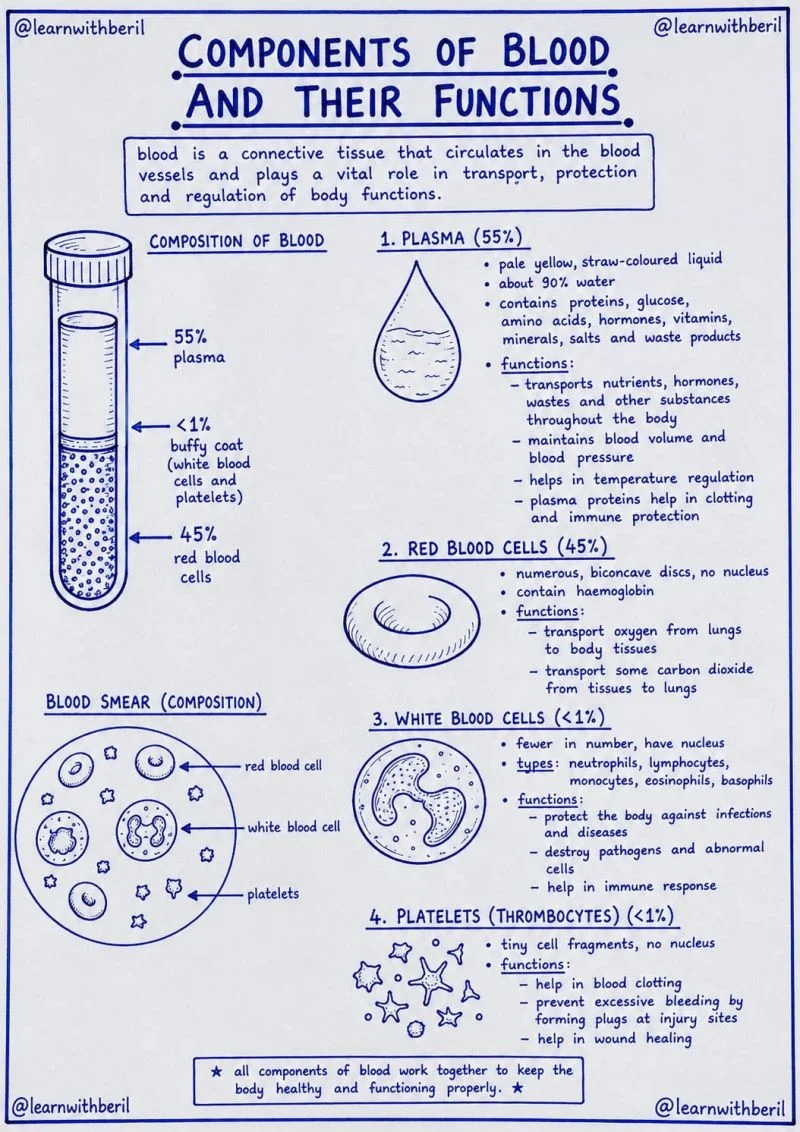
“Blood is a vital connective tissue made up of four main components, each with a specific role in maintaining the body’s health.
Red blood cells are responsible for transporting oxygen from the lungs to body tissues and carrying carbon dioxide back for removal.
White blood cells form part of the immune system, defending the body against infections and foreign invaders.
Platelets help in blood clotting, preventing excessive bleeding when injuries occur.
Plasma, the liquid portion of blood, carries nutrients, hormones, proteins, and waste products throughout the body.
Together, these components work in coordination to ensure oxygen delivery, protection, and internal balance (homeostasis).”
Stay updated with Hemostasis Today.
-
Oct 20, 2026, 13:20The Global Blood Crisis – Are We Solving the Wrong Problem?
-
Oct 20, 2026, 06:45Grant Garcia: Why Does a Blood Clot Diagnosis Immediately End an Athlete’s Season?
-
Oct 20, 2026, 06:35Parag Tamhankar: Landmark Study Reveals Genetic Spectrum and Targeted Therapies for ALPS in the Indian Population
-
Oct 20, 2026, 06:26Nina Houben: Neonatal Blood Transfusion Symposium and PhD Defense
-
Oct 20, 2026, 05:46Jan T. Kielstein: DNP Poisoning and Hemoadsorption The Limits of Rescue Therapy
-
Oct 20, 2026, 05:33Giulia Di Paolo: Connecting Plasma Donation to the Patients Who Depend on It
-
Oct 20, 2026, 05:20James Knowles: Exploring Plasma Manufacturing and Strengthening Industry Collaboration
-
Oct 20, 2026, 05:11Giuseppe Lippi։ Understanding Liver Test Abnormalities After AAV Gene Therapy
-
Oct 20, 2026, 05:02Sanam Loghavi: Test Your Hematology Knowledge at ASH 2026!