

PERT-Guided Patient Selection for Advanced Pulmonary Embolism Therapies
Pulmonary embolism (PE) remains one of the most challenging cardiovascular emergencies, requiring rapid diagnosis, accurate risk assessment, and timely therapeutic decisions.
Although advances in catheter-based therapies have expanded treatment possibilities for patients with acute PE, one of the most important questions in modern PE care remains: which patients are most likely to benefit from interventional treatment?
During ISTH 2026, Professor Gilles Lemesle discussed the evolving approach to identifying candidates for interventional therapies in pulmonary embolism, emphasizing that successful management requires much more than access to advanced procedures.
It depends on developing structured systems of care, multidisciplinary collaboration, and individualized treatment strategies that ensure each patient receives the most appropriate therapy at the right time.
The Ongoing Challenges in Pulmonary Embolism Management
Despite major progress in diagnosis and treatment, pulmonary embolism continues to present significant clinical challenges. The diagnosis of PE in the emergency department is often complex because symptoms are frequently nonspecific, and no single diagnostic tool can reliably confirm or exclude PE in every patient.
Clinicians must often make critical decisions in a time-sensitive environment where uncertainty remains high. This may lead to delays in diagnosis, variation in clinical practice, and differences in treatment approaches between institutions.
Beyond diagnosis, risk stratification has become one of the most important aspects of modern PE management. The goal is no longer simply to identify patients with PE but to determine which patients are at risk of deterioration and require more intensive treatment strategies.
However, despite improvements in risk assessment, many patients remain undertreated because of concerns regarding bleeding complications and uncertainty about when advanced therapies should be considered.
Professor Lemesle emphasized that the priority for every PE program should be improving diagnostic accuracy while implementing structured risk assessment pathways to deliver the right treatment to the right patient at the right time.
Building a Structured Approach Through Standardized Protocols
A major challenge in PE care is the absence of standardized pathways in many institutions. Without a clear protocol, clinical decision-making can become inconsistent, creating uncertainty about patient triage, level of care, specialist involvement, and treatment selection.
A structured PE protocol provides a coordinated pathway that allows healthcare teams to rapidly evaluate patients, determine the appropriate level of monitoring, and select the most suitable treatment strategy based on individual risk.
Professor Lemesle highlighted that the purpose of a protocol is not simply to create an algorithm but to establish an organized system that improves communication, reduces variability and supports evidence-based decision-making across different specialties.
Defining the Goals of a PE Program
Before developing a PE management pathway, each institution must first define its objectives.
The ideal goal is to provide optimal care for every patient with pulmonary embolism, ranging from low-risk cases suitable for standard management to patients with severe disease requiring advanced interventions.
However, objectives should always reflect local realities. Each hospital must consider its own organization, available expertise, and therapeutic capabilities when designing its PE strategy.
Key priorities include ensuring rapid recognition of high-risk and intermediate-high-risk PE, facilitating timely treatment decisions, and creating a structured process that supports personalized care.
Developing an Effective Pulmonary Embolism Response Team (PERT)
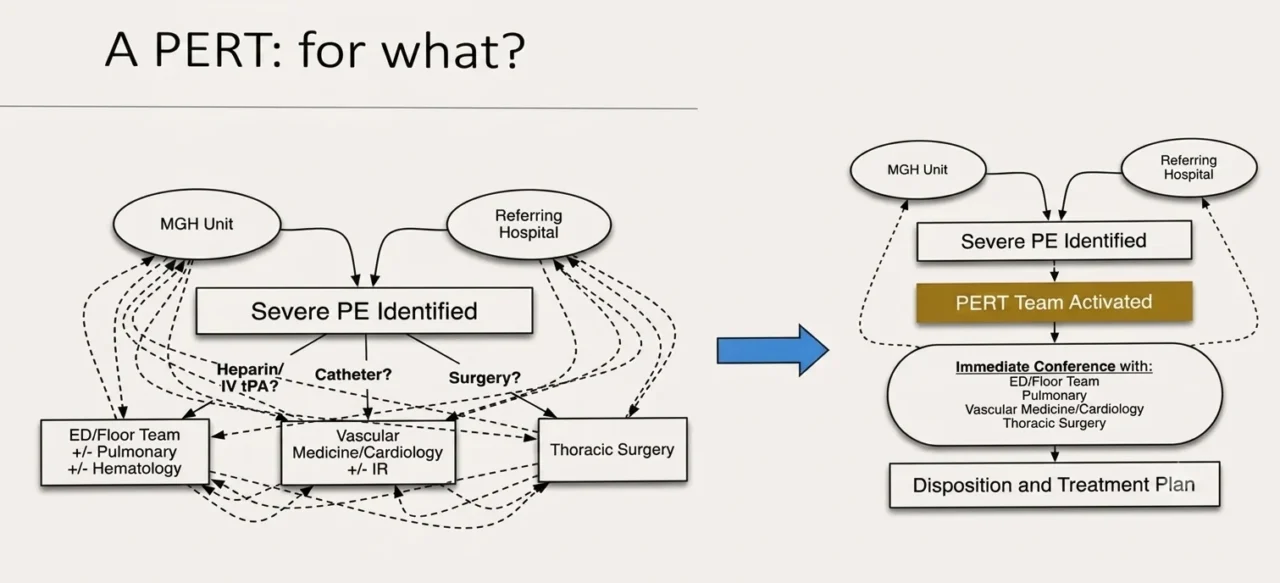
One of the central elements of modern PE management is the development of a Pulmonary Embolism Response Team (PERT).
An effective multidisciplinary team may include emergency physicians, cardiologists, pulmonologists, intensivists, hematologists, vascular specialists, interventional radiologists, cardiac surgeons, and imaging experts. However, the success of a PERT depends not only on the number of specialists involved but also on their commitment, motivation, and willingness to actively participate in patient care.
A highly engaged multidisciplinary team can provide greater value than simply assembling a large group of experts without consistent involvement.
The true strength of a PERT lies in collaboration, rapid communication, and shared responsibility when managing complex pulmonary embolism cases. By bringing together different areas of expertise, a PERT enables more comprehensive assessment, faster decision-making, and more individualized treatment strategies.
Creating Regional Networks for Better PE Care
Effective pulmonary embolism management often requires collaboration beyond a single hospital.
Developing regional networks between tertiary referral centers and surrounding hospitals helps create a coordinated approach to patient care, improves referral pathways, and ensures that patients requiring advanced therapies can access specialized treatment without unnecessary delays.
Building such a network requires active collaboration between institutions, including sharing clinical protocols, discussing referral strategies, and establishing clear communication pathways.
Identifying clinicians with an interest in PE management within each hospital is also essential, as these local contacts can facilitate communication, support timely referrals, and help ensure consistent implementation of PE management pathways across the healthcare system.
Understanding Institutional Resources Before Developing Algorithms
Before creating a pulmonary embolism management algorithm, every center must first evaluate its available resources, expertise and therapeutic capabilities.
Hospitals should carefully assess access to both diagnostic tools and advanced treatment options, including transthoracic echocardiography, catheter-directed therapies, large-bore mechanical thrombectomy, extracorporeal membrane oxygenation (ECMO), surgical pulmonary embolectomy, and inferior vena cava (IVC) filter placement.
Understanding these capabilities helps define the role of each institution within the regional care network and determines which patients can be safely managed locally and which patients require transfer to specialized centers.
A clinical algorithm should always reflect what a hospital can realistically provide. Including therapies that are unavailable within an institution may create unrealistic pathways that cannot be effectively implemented in daily practice.
There Is No Universal PE Algorithm
Pulmonary embolism management cannot follow a single algorithm that applies equally to every hospital.
A pathway designed for a tertiary referral center with access to advanced interventions may not be appropriate for a smaller hospital with limited resources. Conversely, a simpler pathway may be highly effective when it matches the institution’s capabilities and can be consistently applied by the clinical team.
The most effective algorithm is not necessarily the most complex one. It is the one that reflects the local environment, supports rapid clinical decision-making, and ensures that patients receive appropriate care according to their individual risk and available resources.
The Real Impact of a PERT Comes From Active Involvement
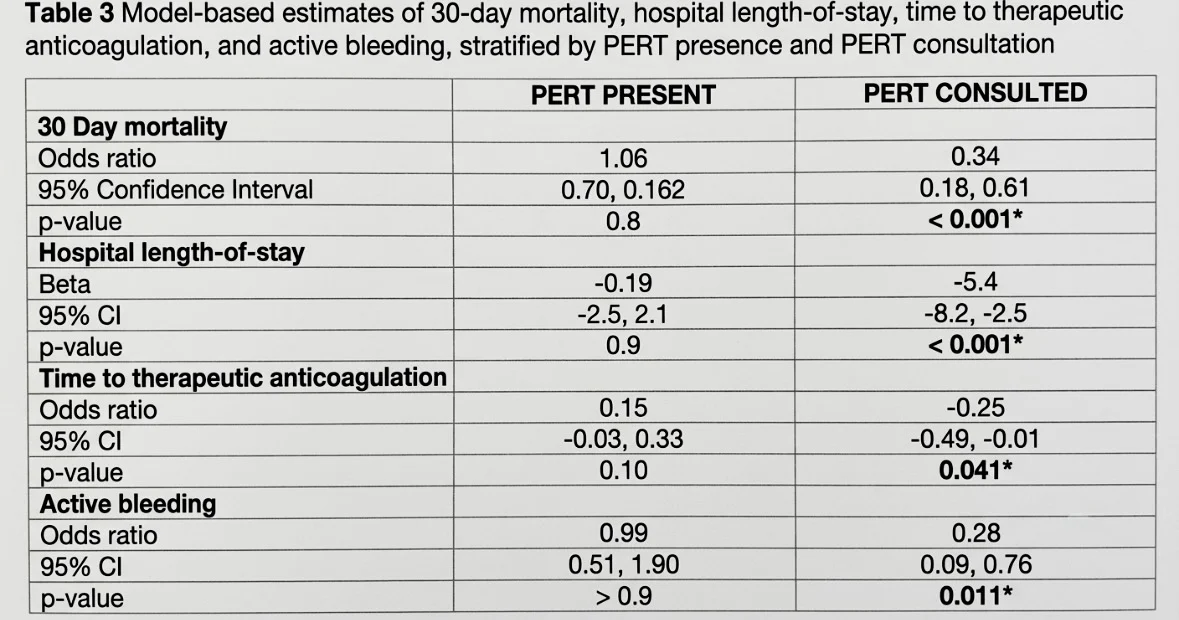
Simply establishing a Pulmonary Embolism Response Team does not automatically improve patient outcomes. The true benefit comes when the team is actively involved in clinical decision-making and consulted for individual patients.
Studies evaluating PERT implementation suggest that active multidisciplinary management may improve several aspects of PE care, including a reduction in 30-day mortality, shorter hospital length of stay, earlier initiation of therapeutic anticoagulation, and fewer major bleeding events.
These findings highlight that the value of a PERT lies not only in assembling experts but in creating an active system that enables rapid communication, collaborative decision-making, and individualized treatment strategies for patients with complex pulmonary embolism.
Identifying Patients Who May Benefit From Interventional Therapies
A major focus of the discussion was identifying patients with pulmonary embolism who may benefit from catheter-based interventions.
One of the most challenging groups is the intermediate-high-risk PE population. Although some patients may appear clinically stable because they maintain normal blood pressure, they may still have significant right ventricular dysfunction and a substantial risk of deterioration.
Data from the FLASH registry demonstrated that approximately one-third of patients with high-risk or intermediate-high-risk PE had preserved blood pressure despite a reduced cardiac index. These findings highlight an important clinical point: normal blood pressure alone does not necessarily indicate low risk.
A comprehensive assessment that incorporates hemodynamic parameters, right ventricular function, laboratory markers, imaging findings, and the overall clinical picture is essential to identify patients who may benefit from earlier consideration of advanced interventional therapies.
Clinical Factors Guiding Patient Selection
Selecting patients for interventional therapies requires a comprehensive assessment that integrates clinical presentation, hemodynamic status, and imaging findings.
Several parameters may help identify patients at increased risk of deterioration, including persistent tachycardia, reduced systolic blood pressure, initial syncope, elevated lactate levels, right ventricular dilation or dysfunction, and reduced cardiac index.
Among these factors, initial syncope, lactate elevation above 2 mmol/L, and reduced cardiac index are particularly important indicators that may help identify patients with a higher risk profile who could benefit from closer monitoring or earlier consideration of advanced therapies.
Respiratory status should also be incorporated into the decision-making process. Patients with significant oxygen requirements, a history of respiratory failure, or severe obesity may have limited cardiopulmonary reserve and may be more vulnerable to clinical deterioration, even when initial hemodynamic parameters appear relatively stable.
The Importance of Bleeding Risk Assessment
Bleeding risk represents another critical factor when selecting patients for interventional treatment.
Patients with intermediate-high-risk PE who subsequently deteriorate may become candidates for systemic thrombolysis. However, when thrombolytic therapy is contraindicated because of a high bleeding risk, available treatment options become more limited.
In carefully selected patients, earlier consideration of catheter-based therapies may provide an opportunity to manage severe pulmonary embolism while reducing reliance on systemic thrombolysis and its associated bleeding complications. This highlights the importance of identifying high-risk patients before clinical deterioration occurs, when more therapeutic options remain available.
Balancing Thrombus Burden and Clinical Severity
Clinical deterioration alone is not sufficient to justify an invasive approach. Before considering interventional therapy, clinicians must ensure that there is a significant thrombus burden within the pulmonary arteries and that the patient’s clinical instability is directly related to pulmonary embolism.
Other underlying conditions, such as left ventricular dysfunction or significant comorbidities, may contribute to hemodynamic compromise and should be carefully evaluated to avoid attributing clinical deterioration solely to PE.
Therefore, the decision to proceed with an invasive procedure requires a comprehensive assessment that integrates clinical presentation, imaging findings, hemodynamic parameters, and the overall patient context. Careful patient selection remains essential to maximize the potential benefits of intervention while minimizing unnecessary procedural risks.
Future Evidence and the Evolution of PE Treatment
The field of interventional pulmonary embolism management continues to evolve rapidly, with ongoing research expected to further refine patient selection and therapeutic strategies.
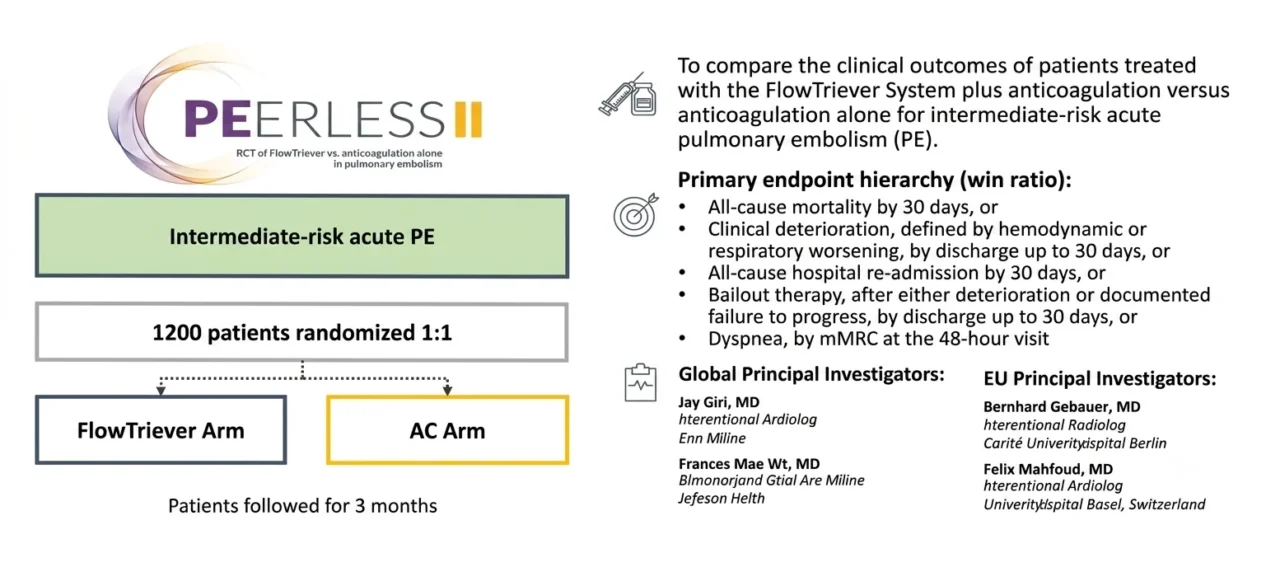
The importance of clinical trials, including the PEERLESS-2 trial, was highlighted as an important step toward understanding which patients are most likely to benefit from catheter-based interventions and how these approaches can be integrated into personalized PE management strategies.
Future evidence will help clarify the optimal role of advanced therapies, improve treatment selection, and support more individualized approaches for patients with acute pulmonary embolism.
The Future of PE Management
The future of pulmonary embolism care extends far beyond the availability of advanced technologies. Although catheter-based therapies continue to expand treatment possibilities, improving patient outcomes requires a comprehensive approach based on early diagnosis, structured risk stratification, multidisciplinary collaboration, and personalized treatment pathways.
Developing effective Pulmonary Embolism Response Teams, establishing regional referral networks, understanding institutional capabilities, and implementing tailored clinical algorithms are essential components of modern PE care.
As evidence continues to evolve, the focus will increasingly shift from performing more interventions to identifying the patients who are most likely to benefit from them.
Ultimately, the future of pulmonary embolism management lies in combining scientific innovation with organized systems of care to ensure that every patient receives the right treatment, at the right time, in the right setting.
Stay Updated with the Latest ISTH 2026 Updates on Hemostasis Today.
-
Oct 12, 2026, 11:51Daniel Sop: Sickle Cell Research Takes Center Stage at ASCAT 2026
-
Oct 12, 2026, 10:36PAI-1 Inhibition as a New Strategy for Enhancing Fibrinolysis and Clot Resolution
-
Oct 12, 2026, 07:39Emmanuel J Favaloro: 100 Years of von Willebrand Disease and the Importance of Local Diagnosis and Management
-
Oct 12, 2026, 07:39Post-Stroke Fatigue Trajectories – 38% Recovered at 12 Months, While 16% Developed New Fatigue – International Journal of Stroke
-
Oct 12, 2026, 07:28Beth Sara: IBMS Specialist Portfolio Achievement and a New Role in Transfusion Practice
-
Oct 12, 2026, 07:28Abdul Mannan: PCC vs. aPCC – The Small ‘a’ That Changes Emergency Management
-
Oct 12, 2026, 07:20Mokhtar Tazik: Improving Access to Plasma Derived Medicines Through Awareness, Interest and Accessibility
-
Oct 12, 2026, 07:08Larissa Chastain: Partnering to Transform Anticoagulation Management Through INR Self-Testing
-
Oct 12, 2026, 06:57Saiful Islam: Laboratory Spot Check – Microcytic Anemias and The Thalassemia Spectrum