


Colleen Grady: Why Normal Hemoglobin Does Not Exclude Iron Deficiency
Colleen Grady, Operations Director and Nurse Practitioner at Rocky Mountain Regenerative Medicine, shared a post on LinkedIn about an article by F Verdon et al. published in BMJ, adding:
“Iron deficiency is the most common nutritional deficiency in the world.
In women of reproductive age and perimenopausal women, it is also one of the most consistently missed in clinical practice.
Not because the testing is unavailable.
Because the wrong test is being used.
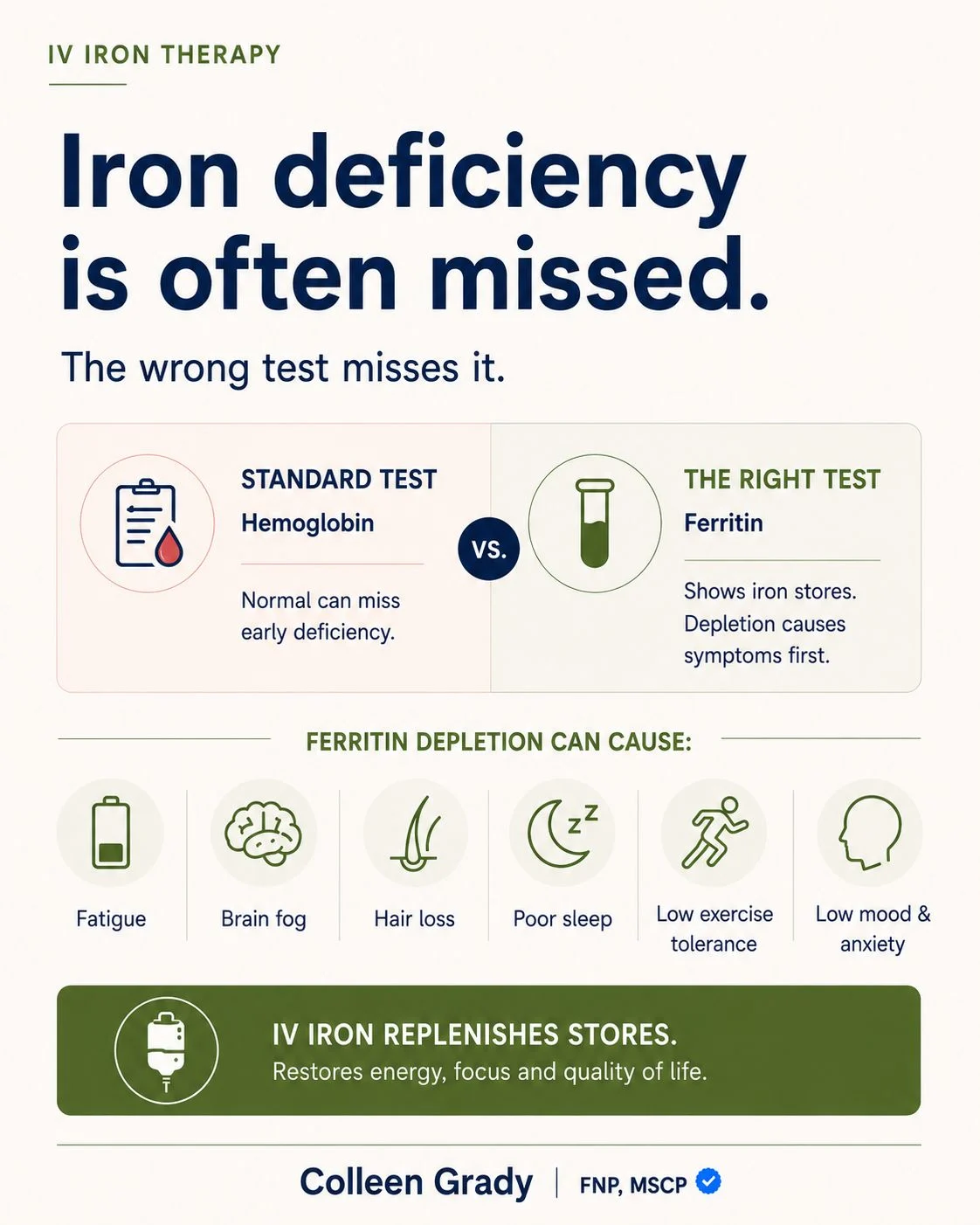
The standard test for iron status in most clinical settings is hemoglobin. If hemoglobin is within normal range, iron status is assumed to be adequate. The patient is told their blood count is fine.
But hemoglobin does not become affected by iron deficiency until the deficiency is severe. In the earlier stages, what is called iron deficiency without anemia or latent iron deficiency, hemoglobin is perfectly normal while ferritin, the storage form of iron, is critically depleted.
And ferritin depletion in the absence of anemia produces a specific and recognizable symptom cluster:
- Persistent fatigue that is disproportionate to sleep and activity levels
- Cognitive impairment, particularly working memory and processing speed
- Hair loss and changes in hair texture
- Restless legs syndrome and disrupted sleep
- Reduced exercise tolerance and prolonged recovery
- Low mood and increased anxiety
A 2003 randomized controlled trial published in the Lancet, one of the most cited studies in this area, enrolled women with unexplained fatigue and ferritin below 50 micrograms per liter but normal hemoglobin.
Women treated with IV iron showed statistically significant improvements in fatigue scores, cognitive function and quality of life compared to placebo.
Their hemoglobin had been normal throughout.
The standard test would have found nothing to treat.”
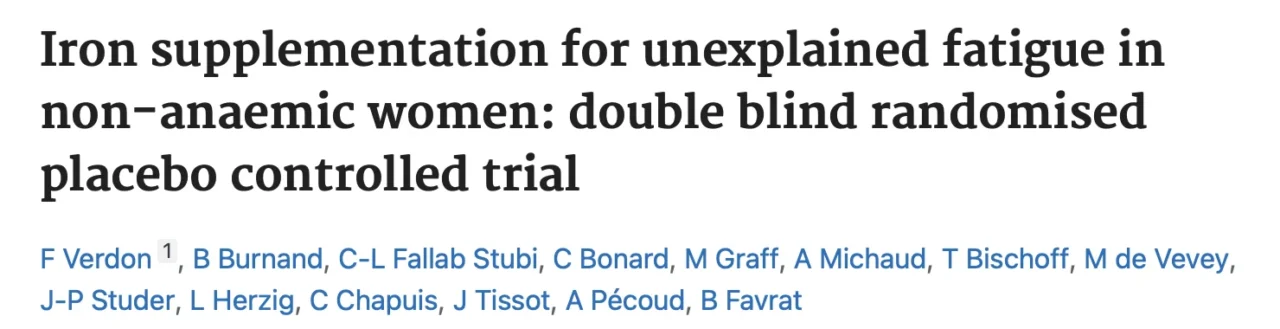
Title: Iron supplementation for unexplained fatigue in non-anaemic women: double blind randomised placebo controlled trial
Authors: F Verdon, B Burnand, C-L Fallab Stubi, C Bonard, M Graff, A Michaud, T Bischoff, M de Vevey, J-P Studer, L Herzig, C Chapuis, J Tissot, A Pécoud, B Favrat
Stay updated on all scientific advances with Hemostasis Today.
-
Sep 20, 2026, 13:29Factor XI Deficiency and the Challenge of Unpredictable Bleeding – EHC
-
Sep 20, 2026, 13:18Cindy Howry: FDA Approves First Treatment for Ataxia-Telangiectasia
-
Sep 20, 2026, 13:08Mohammad Salar Amoli: When Routine Coagulation Tests Miss von Willebrand Disease
-
Sep 20, 2026, 12:55Stelios Andreadis։ Human Salivary Gland Organoids Offer New Potential for Regenerative Medicine
-
Sep 20, 2026, 12:43Obi Light Ogbonnia: The Power of Lived Experience in Sickle Cell Care
-
Sep 20, 2026, 12:34Sabrine Mekni: Advancing HSCT for Children With Fanconi Anemia
-
Sep 20, 2026, 12:11Giacomo Buso: Silent Atherosclerosis Begins Earlier Than Expected
-
Sep 20, 2026, 12:0310 Posts Not to Miss This Week
-
Sep 20, 2026, 11:27Edward Lee Carter: Prasugrel Dosing Matters in P2Y12 Inhibitor Comparisons After PCI