


Eunice Obinna: Hemoglobin and Hematocrit – What Do They Really Tell Us?
Eunice Obinna, Chief Medical Laboratory Scientist at Michael Okpara University of Agriculture Umudike, shared a post on LinkedIn:
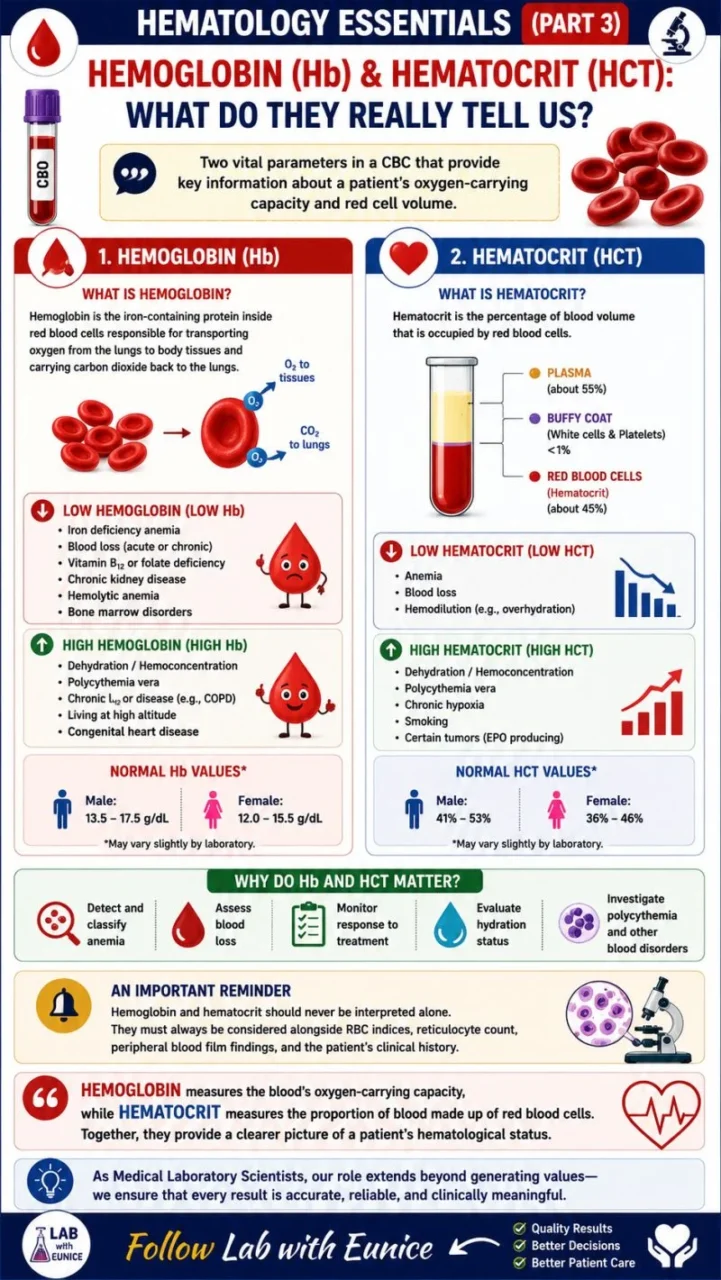
“Hematology Essentials (Part 3): Hemoglobin and Hematocrit – What Do They Really Tell Us?
Two of the most important parameters in a Complete Blood Count (CBC) are Hemoglobin (Hb) and Hematocrit (HCT). Although they are closely related, they measure different aspects of blood and provide valuable diagnostic information.
What is Hemoglobin (Hb)?
Hemoglobin is the iron-containing protein inside red blood cells responsible for transporting oxygen from the lungs to body tissues and carrying carbon dioxide back to the lungs.
Low hemoglobin may indicate:
- Iron deficiency anemia
- Blood loss
- Vitamin B₁₂ or folate deficiency
- Chronic kidney disease
- Hemolytic anemia
High hemoglobin may be seen in:
- Dehydration
- Polycythemia vera
- Chronic lung disease
- Living at high altitude
What is Hematocrit (HCT)?
Hematocrit represents the percentage of blood volume occupied by red blood cells.
A low hematocrit often accompanies anemia, while a high hematocrit may occur in dehydration or conditions associated with increased red blood cell production.
Why Do Hb and HCT Matter?
Together, they help clinicians:
- Detect and classify anemia.
- Assess blood loss.
- Monitor response to treatment.
- Evaluate hydration status.
- Investigate polycythemia and other blood disorders.
An Important Reminder
Hemoglobin and hematocrit should never be interpreted alone. They should always be considered alongside RBC indices, reticulocyte count, peripheral blood film findings, and the patient’s clinical history.
As Medical Laboratory Scientists, our role extends beyond generating values—we ensure that every result is accurate, reliable, and clinically meaningful.
Remember: Hemoglobin measures the blood’s oxygen-carrying capacity, while hematocrit measures the proportion of blood made up of red blood cells. Together, they provide a clearer picture of a patient’s hematological status.
Question: In your practice, which do you find more informative initially—Hemoglobin or Hematocrit? Why?”
Stay updated with Hemostasis Today.
-
Sep 20, 2026, 11:27Edward Lee Carter: Prasugrel Dosing Matters in P2Y12 Inhibitor Comparisons After PCI
-
Sep 20, 2026, 09:51Ceasovschih Alexandr: A Closer Look at Lipid Disorders in CKM Syndrome
-
Sep 20, 2026, 09:05World Stroke Academy: Can Adjunct IAT Improve Tissue Reperfusion?
-
Sep 20, 2026, 06:46Neeraj Songara: From Donated Blood to Engineered Therapeutics
-
Sep 20, 2026, 06:24Louise St. Germain Bannon: Improving Awareness and Care for Women Across the Lifespan
-
Sep 20, 2026, 05:17Maxime Dely: When ABO Compatibility Isn’t Enough for Safe Transfusion
-
Sep 20, 2026, 04:54William Aird: What Does a Complete History and Physical Really Mean?
-
Sep 20, 2026, 04:34Hons Saurabh Kaushik: Why Uncontrolled LDL Can Be Harmful
-
Sep 20, 2026, 03:58Salih Ehsan: The Complexities of HbF and HbA2