

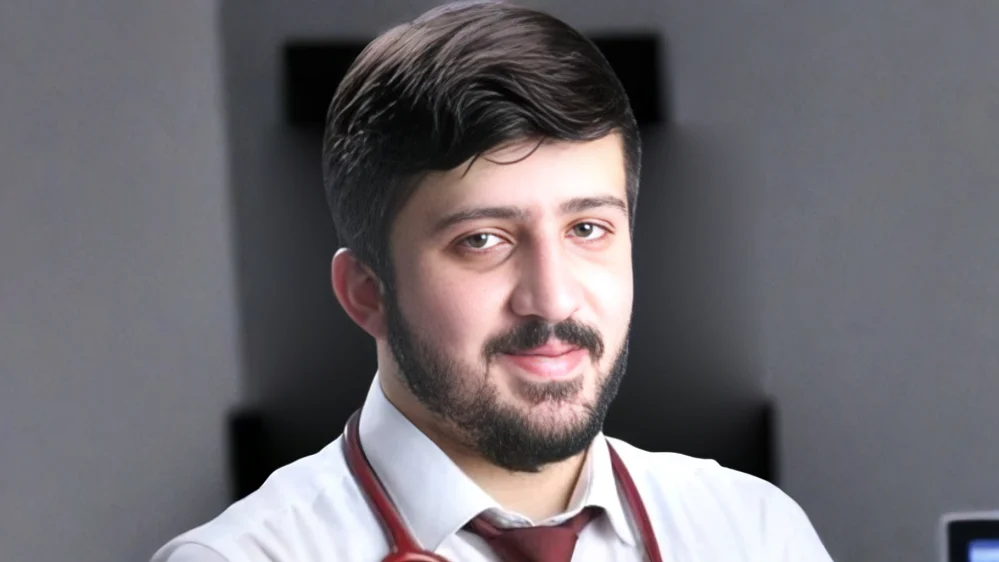
Majd A.AbuAlrob: Is TPA Beneficial for Spinal Infarction?
Majd A.AbuAlrob, Editorial Board Member at BMC Neurology, shared a post on LinkedIn about a recent article he and his colleagues co-authored, published in Stroke, adding:
“Is tPA beneficial for Spinal Infarction?
Arabic follows
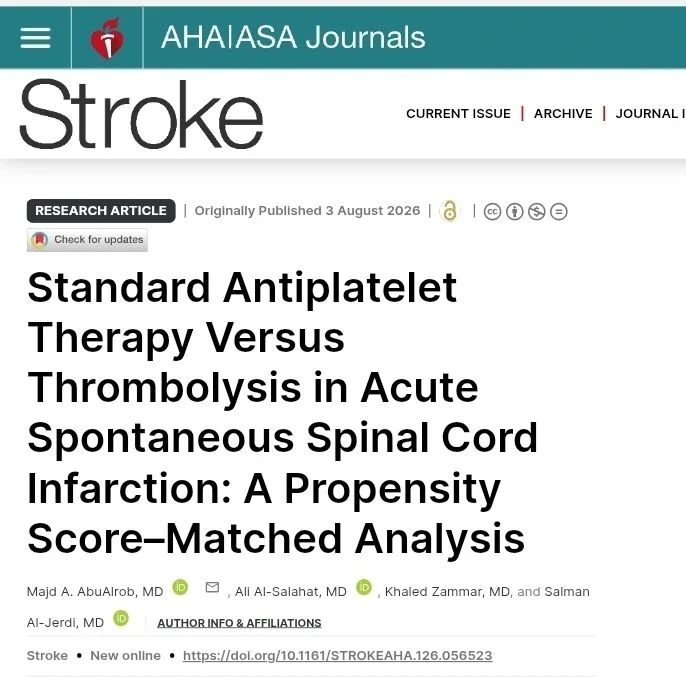
Our study is now published in Stroke (American Heart Association).
Publishing in (Stroke) carries particular meaning for me.
It is the journal where the field’s definitions are written, including the 2013 AHA/ASA statement that formally placed spinal cord infarction inside the definition of stroke.
Placing a spinal cord paper there feels like returning the question to where it belongs.
The review process was the most demanding I have been through.
It reshaped the manuscript rather than polished it. Every causal-sounding word was interrogated.
Why this study is clinically unique:
Spinal cord infarction accounts for roughly 0.3% to 1.2% of all strokes. Its rarity has meant no trials, no guidelines, and no comparative data.
Thrombolysis has been given empirically, extrapolated from cerebral stroke protocols, supported by around twenty published case reports with almost certain publication bias.
This is the first direct comparison of the two strategies actually used at the bedside.
Using the TriNetX Global Collaborative Network, 68 covariates were balanced by 1:1 propensity score matching, leaving 96 patients per arm.
Periprocedural cases were excluded to isolate spontaneous infarction.
Standard care was associated with lower 180-day mortality (13.5% versus 29.2%; HR 0.423 [95% CI, 0.219 to 0.817]; P equals 0.008), with 180-day survival of 84.27% versus 68.69% and an E-value of 4.16.
Readmission and rehabilitation utilization did not differ.
The finding was unexpected.”
Title: Standard Antiplatelet Therapy Versus Thrombolysis in Acute Spontaneous Spinal Cord Infarction: A Propensity Score–Matched Analysis
Authors: Majd A AbuAlrob, Ali Al-Salahat, Khaled Zammar, Salman Al-Jerdi
Stay updated with Hemostasis Today.
-
Sep 25, 2026, 10:49Shefina S: From Presenting to Hosting at TRANSCON 2026
-
Sep 25, 2026, 10:37Michelle Leona Cecil: Hemophilia Advocacy and the Power of Community
-
Sep 25, 2026, 10:13Michael Baria: Platelet Concentration and PRP Outcomes in Partial Rotator Cuff Tears
-
Sep 25, 2026, 09:49Haley Coleman: Volunteering to Support Hemophilia Awareness
-
Sep 25, 2026, 08:55Hitarth Mehta: BHMS Students Gain Practical Exposure to Haemophilia Diagnosis
-
Sep 25, 2026, 07:25Varun Capoor: How Therapeutic Apheresis and Transfusion Medicine Can Complement Clinical Management in SCD
-
Sep 25, 2026, 07:14Manshi Kesharwani: SAK-GQDs Modulate Thrombus Burden and Endothelial Function in Deep Vein Thrombosis
-
Sep 25, 2026, 06:20Farjah Hassan Algahtani: How Can We Better Identify Patients at Risk of Blood Clots after Metabolic and Bariatric Surgery?
-
Sep 25, 2026, 05:59Carla Lewis: Kids Conquering Sickle Disease Joins Nemours Children’s Hospital for 2nd Annual Awareness Event