


Oliver Weingärtner: The Care Transition Gap – Why LDL-C Control Is Lost After STEMI
Oliver Weingärtner, Professor of Medicine at Friedrich-Schiller University Jena, shared a post on LinkedIn, about recent articles, published in Clinical Research in Cardiology, adding:
“The Care Transition Gap: Why do STEMI patients lose lipid control after transitioning to primary care?
Achieving the goal is one thing; staying there is another.
Our new 2-year follow-up data from the ‘Jena auf Ziel‘ (JaZ) study highlights a critical vulnerability in cross-sector cardiovascular care.
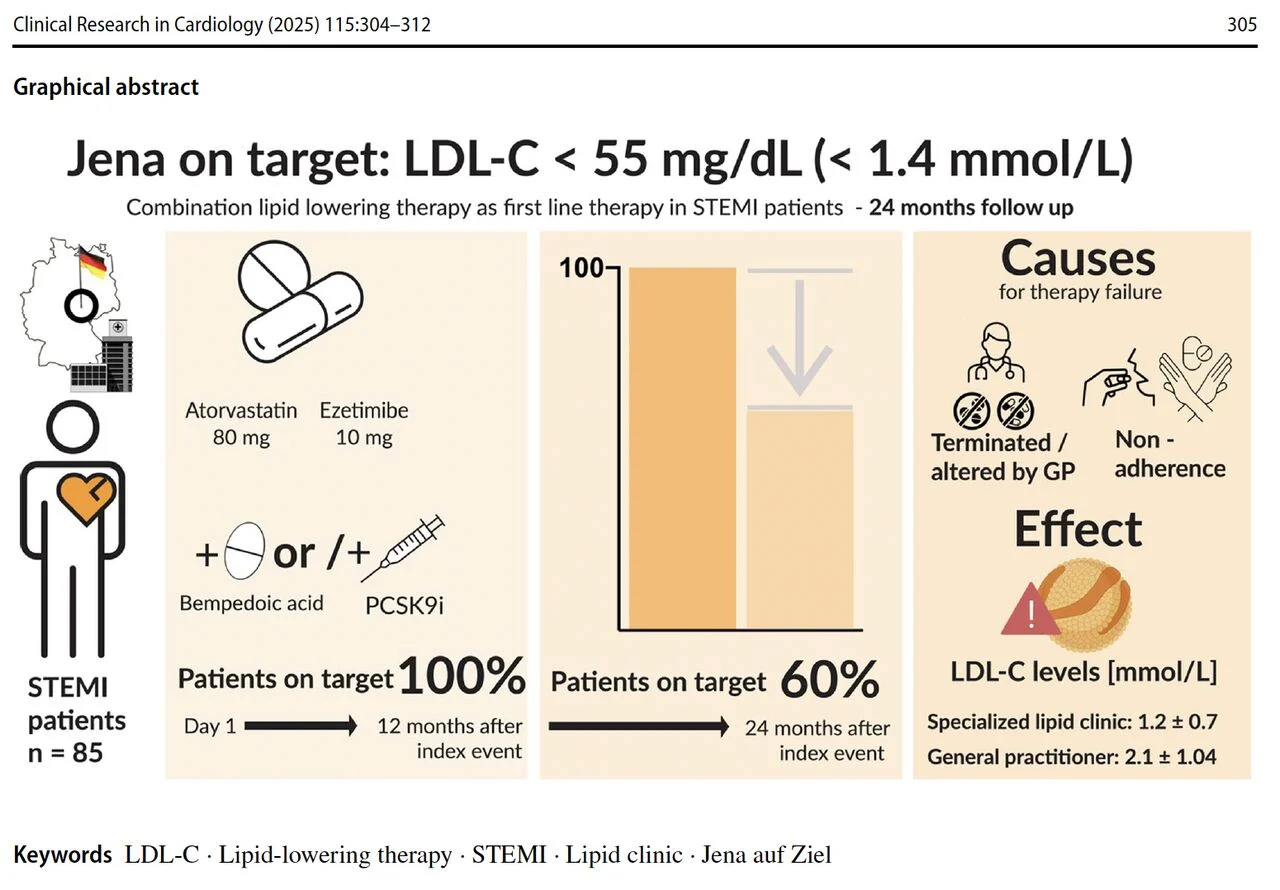
We previously demonstrated that early, in-hospital combination therapy (high-intensity statin and ezetimibe) with timely escalation (bempedoic acid or PCSK9 inhibitors) is safe, feasible, and successfully drives LDL-C levels below 55 mg/dL in 100% of STEMI patients.
The 24-Month Reality (New Data):
After 12 months, patients chose between continuing follow-ups at our university hospital’s outpatient lipid clinic or transitioning to standard care by their local GPs.
The 2-year divergence is clinically striking:
- LDL-C Control: 46.7 mg/dL (Lipid Clinic) vs. 81.7 mg/dL (General Practice).
- Time on Target: Patients in specialized care spent significantly longer within the guideline-recommended LDL-C range.
- Clinical Outcomes: 10 MACE occurred during the follow-up period – strongly associated with rising LDL-C levels.
The Therapeutic Bottleneck:
The primary driver for failure to maintain LDL-C targets was ‘deprescribing’ or ‘dose-reduction’ of successfully established lipid-lowering therapies in the primary care setting.
Clinical Takeaway:
An effective discharge plan is only as good as its long-term continuity.
To protect post-STEMI patients from secondary events, cardiologists and GPs must work closer together to overcome real-world barriers – such as prescription budget fears, side-effect concerns, or declining patient adherence.
High-intensity lipid-lowering therapy is a lifelong commitment, not a short-term intervention.
How do you manage this transition gap in your healthcare system?”
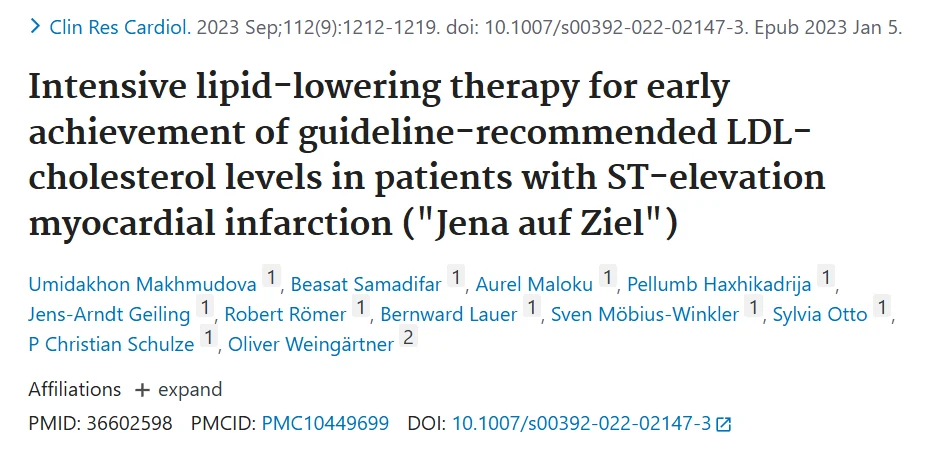
Title 1: Intensive lipid-lowering therapy for early achievement of guideline-recommended LDL-cholesterol levels in patients with ST-elevation myocardial infarction (“Jena auf Ziel”).
Authors: Umidakhon Makhmudova , Beasat Samadifar , Aurel Maloku , Pellumb Haxhikadrija , Jens-Arndt Geiling , Robert Römer , Bernward Lauer , Sven Möbius-Winkler , Sylvia Otto , P Christian Schulze , Oliver Weingärtner.
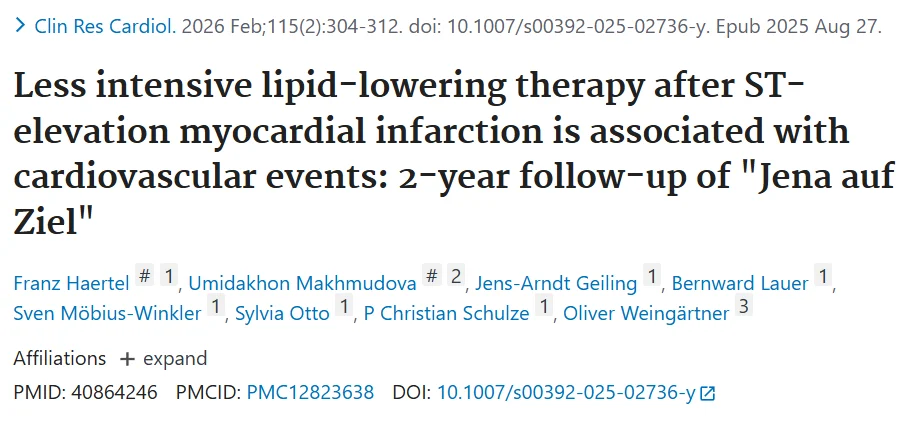
Title 2: Less intensive lipid-lowering therapy after ST-elevation myocardial infarction is associated with cardiovascular events: 2-year follow-up of “Jena auf Ziel”.
Authors: Franz Haertel , Umidakhon Makhmudova , Jens-Arndt Geiling , Bernward Lauer , Sven Möbius-Winkler , Sylvia Otto , P Christian Schulze , Oliver Weingärtner.
Stay updated with Hemostasis Today.
-
Oct 2, 2026, 09:20Anticoagulants, Blood Thinners, or Antithrombotic Medications? – World Thrombosis Day
-
Oct 2, 2026, 06:00Susan Wickersham: Gradual Shift towards Autologous Blood Transfusion is a Current Trend
-
Oct 2, 2026, 05:54Shamee Shastry: When Every Cell Reacts – The Hunt for Rare Blood
-
Oct 2, 2026, 05:49David Mclntosh: Expanding Plasma Protein Therapies in Underserved Regions
-
Oct 2, 2026, 05:38Dianne E. van der Wal: C-Terminal Endings Impact PAR1/PAR4 Peptide Potency in In Vitro Platelet Assays
-
Oct 2, 2026, 05:29Mohammed Alo: Your LDL Isn’t a Snapshot – It’s a Smoking Habit Measured in Years
-
Oct 2, 2026, 00:33Marwa Mostafa: Hemoglobinopathies – When Globin Genes Go Wrong
-
Oct 1, 2026, 23:46Behnood Bikdeli: Global Burden of Venous Thromboembolism
-
Oct 1, 2026, 23:46Sthanu Subramanian: Clinical Presentation, Risk Factors, Diagnosis, and Neuroimaging Findings in CVT