


Gloria Duah: Why Clinical Information Matters When Requesting Blood
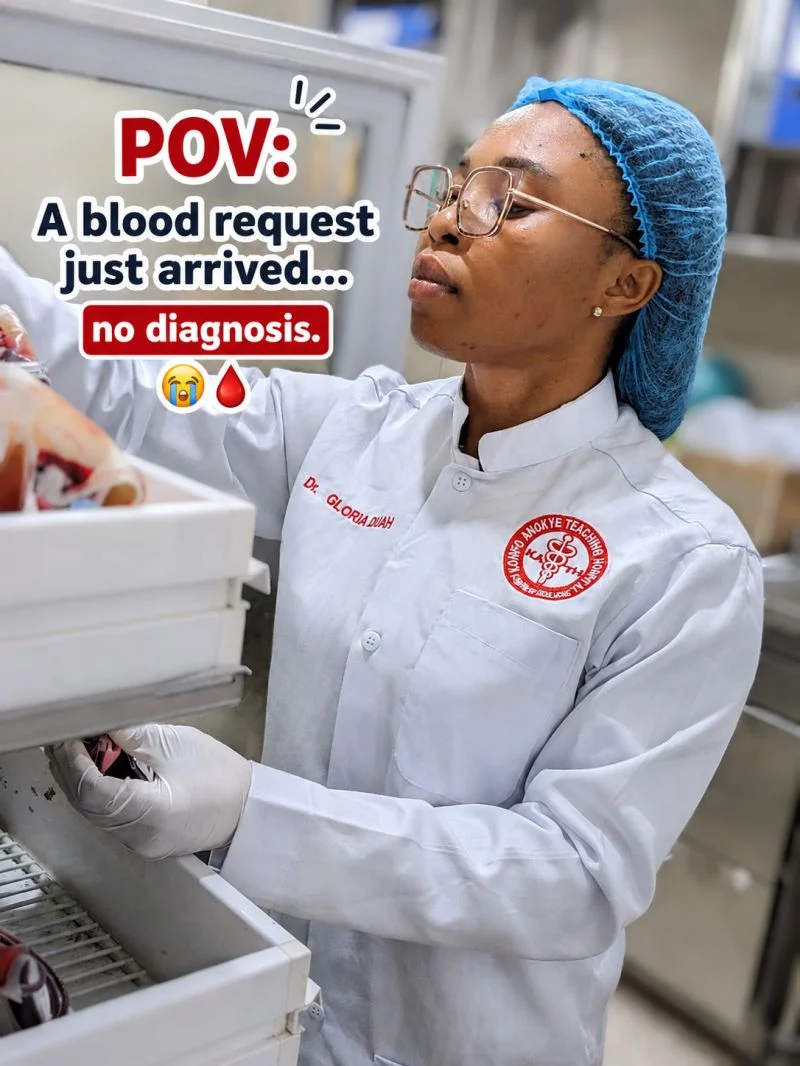
Gloria Duah, Doctor of Medical Laboratory Science at Komfo Anokye Teaching Hospital, shared a post on LinkedIn:
“The Blood Bank receives a request and asks: ‘So… what are we treating?’
A blood request form is not simply about the patient’s blood group and the number of units required.
The clinical indication matters.
Providing relevant clinical information helps the transfusion team understand the reason for transfusion, assess the request appropriately, and support the selection of the most suitable blood component for the patient.
Unfortunately, requests sometimes arrive with limited clinical information, leaving the laboratory team asking important questions about the patient’s condition and the purpose of the transfusion.
A simple reminder: when requesting blood, tell us what is happening with the patient.
Good communication between the clinical and laboratory teams is an important part of safe and appropriate transfusion practice.
Blood is a limited and precious resource.
Let’s use it wisely.”
Stay updated with Hemostasis Today.
-
Nov 16, 2026, 11:33Obed Asumadu: How Can Advanced Laboratory Diagnostics Improve the Detection and Management of Haemophilia?
-
Nov 16, 2026, 11:29Amman Yousaf: Pulmonary Embolism Mortality in Patients With Coagulation Disorders at AHA 2026
-
Nov 16, 2026, 10:48Tareq Abadl: Why the Kell Blood Group System Matters
-
Nov 16, 2026, 10:40TIF in China – Advancing Regional Cooperation in Thalassaemia Prevention and Care
-
Nov 16, 2026, 10:40Dhargam Aljebouri: A Milestone for Transfusion Medicine in Iraq
-
Nov 16, 2026, 10:35Arisha Patel: Why a Normal Blood Count Can Miss Iron Deficiency
-
Nov 16, 2026, 10:29Maxime Dely: The Needle Behind Every Donation
-
Nov 16, 2026, 10:29Marilena Vrana: Building a Resilient Plasma Ecosystem in Europe
-
Nov 16, 2026, 10:24Hichem Selatna: Advancing Hematology Laboratory Automation