


Dilini Christina Ranasinghe: The RhD Paradox – D Reactivity with Anti-D
Dilini Christina Ranasinghe, Registrar in Transfusion Medicine at National Blood Centre, shared on LinkedIn:
”The RhD Paradox: D Reactivity with Anti-D.
A 32-year-old primigravida presented at 16 weeks with a remote history of transfusion.
- ABO: O — concordant forward and reverse grouping
- RhD: 2+
- DAT: Negative
- Antibody screen: Positive
- Antibody identified: Anti-D
How can her red cells express D reactivity while her plasma contains anti-D?
- No recent RhIG administration → passive anti-D is unlikely.
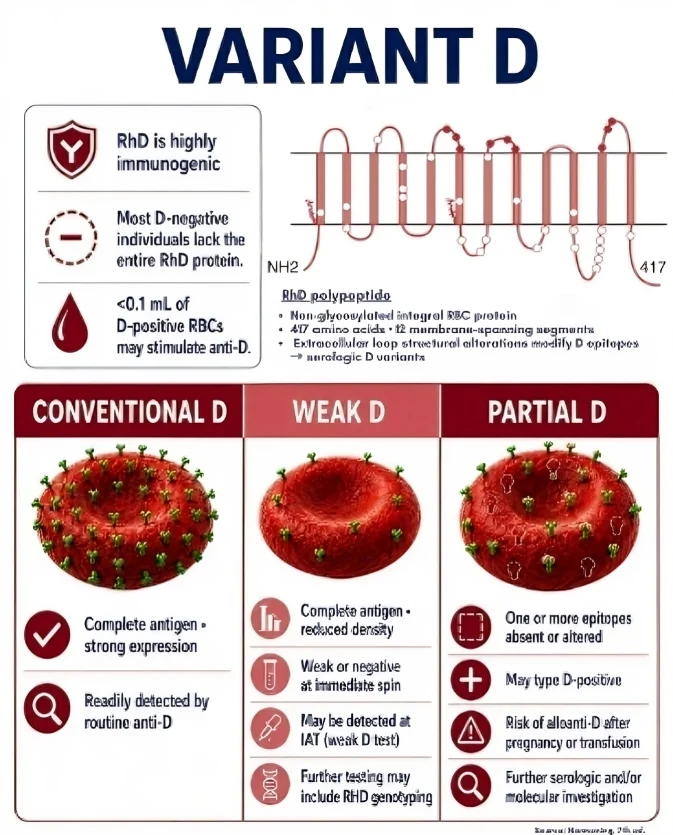
- Suspect an alloimmunisation-prone RHD variant, particularly Partial D.
- Partial D red cells may react with routine anti-D reagents while lacking epitopes present on conventional D-positive cells.
Serology demonstrates the phenotype; it does not define the genotype.
The negative DAT supports a circulating alloantibody rather than sensitisation of the patient’s own red cells—but it does not identify the underlying D variant.
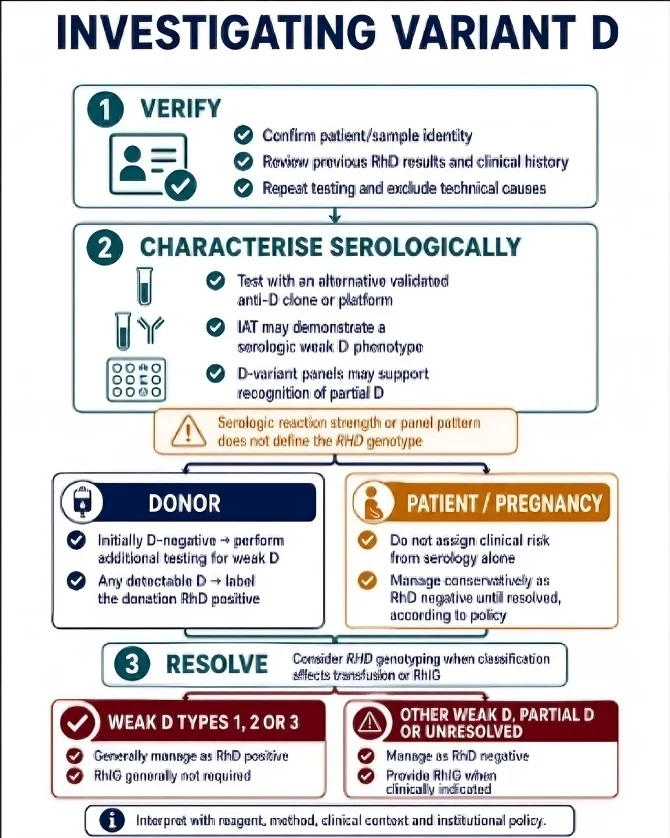
Further investigation should include antibody confirmation, repeat RhD characterisation with validated reagents and RHD genotyping, where available. Until resolved, the patient should be managed as RhD negative for transfusion.
If immune anti-D is confirmed, RhIG is not indicated. The pregnancy requires appropriate anti-D quantification or titration and fetal-risk assessment according to local guidelines.
The donor–patient distinction is also critical:
Donors: Any detectable D expression is classified as RhD positive to prevent alloimmunisation in D-negative recipients.
Patients: Unresolved Variant D is managed conservatively as RhD negative until characterised, guiding red-cell selection and RhIG decisions.”
Find more posts featuring Dilini Christina Ranasinghe on Hemostasis Today.
-
Oct 12, 2026, 13:58Francisco Chacón-Lozsán: Catastrophic Antiphospholipid Syndrome A Rapidly Progressive Multiorgan Thrombotic Emergency
-
Oct 12, 2026, 12:50Nawsherwan Mohammad: Study Examines Thrombotic Events in Patients with Polycythemia Vera in Iraq
-
Oct 12, 2026, 12:30Chanakya Nayudu: Looking Beyond Blood Clots – Patient-Reported Outcomes in Antiphospholipid Syndrome
-
Oct 12, 2026, 12:12Jean-Jacques Kiladjian: Improving Treatment Strategies with JAK Inhibitors in Myelofibrosis
-
Oct 12, 2026, 12:04Chloe Homich: AABB Annual Meetings – Building Connections and Advancing Transfusion Medicine
-
Oct 12, 2026, 11:51Daniel Sop: Sickle Cell Research Takes Center Stage at ASCAT 2026
-
Oct 12, 2026, 10:36PAI-1 Inhibition as a New Strategy for Enhancing Fibrinolysis and Clot Resolution
-
Oct 12, 2026, 07:39Emmanuel J Favaloro: 100 Years of von Willebrand Disease and the Importance of Local Diagnosis and Management
-
Oct 12, 2026, 07:39Post-Stroke Fatigue Trajectories – 38% Recovered at 12 Months, While 16% Developed New Fatigue – International Journal of Stroke