


Jeff Sternlicht: We Don’t Measure Lp(a) Because We Have a Drug
Jeff Sternlicht, Emergency Physician and Medical Director at Vituity, shared a post on LinkedIn:
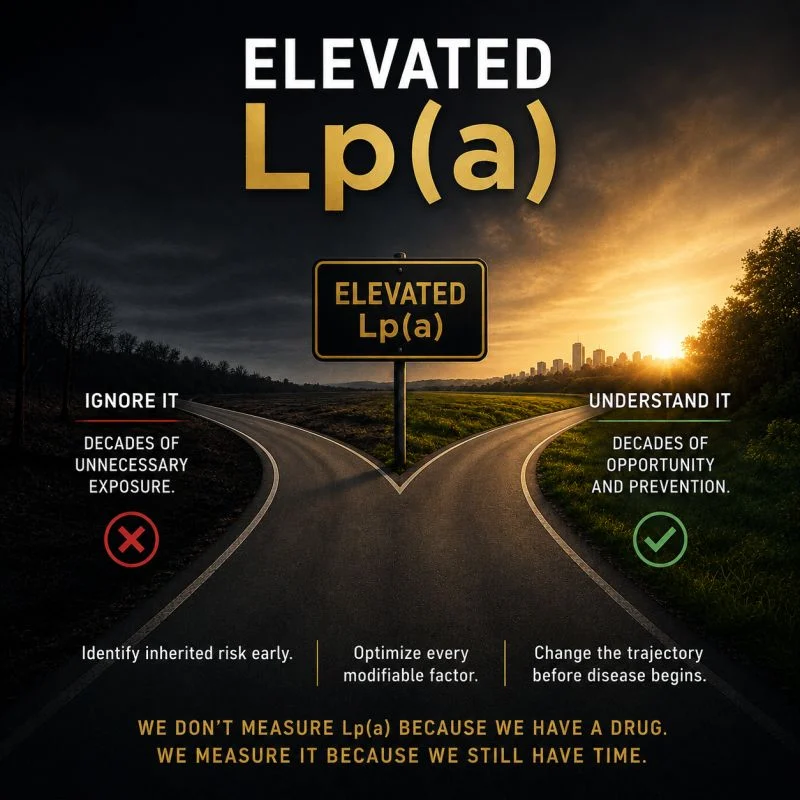
”We don’t measure Lp(a) because we have a drug.
We measure it because we still have time.
One of the questions I hear most often is:
‘What’s the point of checking Lp(a) if we don’t have an approved medication that specifically lowers it?’
I think that question misses the purpose of prevention.
An elevated Lp(a) in your third decade of life isn’t simply a laboratory result.
It’s an opportunity.
An opportunity to identify inherited cardiovascular risk decades before the first heart attack.
An opportunity to screen family members who may have inherited the same risk.
An opportunity to optimize every lifestyle lever that influences long-term cardiovascular health.
An opportunity to optimize ApoB and every other modifiable cardiovascular risk factor over the next 40 or 50 years, not just the next office visit.
Here’s where I think we still need more science.
We don’t yet know the optimal strategy for an otherwise healthy 28-year-old with markedly elevated Lp(a).
Should ApoB targets be lower?
Should imaging play a role in selected patients?
Should intervention depend on family history or early plaque burden?
I don’t think we have definitive answers yet.
My own approach is to view elevated Lp(a) as a signal that lifetime cardiovascular risk deserves a different conversation, not simply another number on a laboratory report.
We can’t change the genes someone inherited.
But we can change the trajectory that follows.
I’m curious how others are approaching this.
If you see a healthy young adult with markedly elevated Lp(a), how does it influence your management today?
These views are my own and do not represent those of my organization or affiliates. This content is for educational purposes only and is not medical advice.”
Other posts featuring Jeff Sternlicht on Hemostasis Today.
-
Oct 12, 2026, 17:53Donna Morelli: Hydroxyurea Safe and Effective for Pediatric Sickle Cell in Africa
-
Oct 12, 2026, 17:39Annie Bauzon: Differentiating Direct and Indirect Coombs Tests in Hematology
-
Oct 12, 2026, 17:15Cedric Hermans: Identifying and Diagnosing Hemophilia Carriers and Affected Females
-
Oct 12, 2026, 17:01Bianca Rocca: Evaluating Factor XI Inhibition Lessons from LIBREXIA-ACS
-
Oct 12, 2026, 13:58Francisco Chacón-Lozsán: Catastrophic Antiphospholipid Syndrome A Rapidly Progressive Multiorgan Thrombotic Emergency
-
Oct 12, 2026, 12:50Nawsherwan Mohammad: Study Examines Thrombotic Events in Patients with Polycythemia Vera in Iraq
-
Oct 12, 2026, 12:30Chanakya Nayudu: Looking Beyond Blood Clots – Patient-Reported Outcomes in Antiphospholipid Syndrome
-
Oct 12, 2026, 12:12Jean-Jacques Kiladjian: Improving Treatment Strategies with JAK Inhibitors in Myelofibrosis
-
Oct 12, 2026, 12:04Chloe Homich: AABB Annual Meetings – Building Connections and Advancing Transfusion Medicine