


Ifeanyichukwu Ifechidere: Coagulation Knowledge – A Core Skill in Internal Medicine
Ifeanyichukwu Ifechidere, Specialist Biomedical Scientist at Sheffield Teaching Hospitals NHS Foundation Trust, shared a post on LinkedIn:
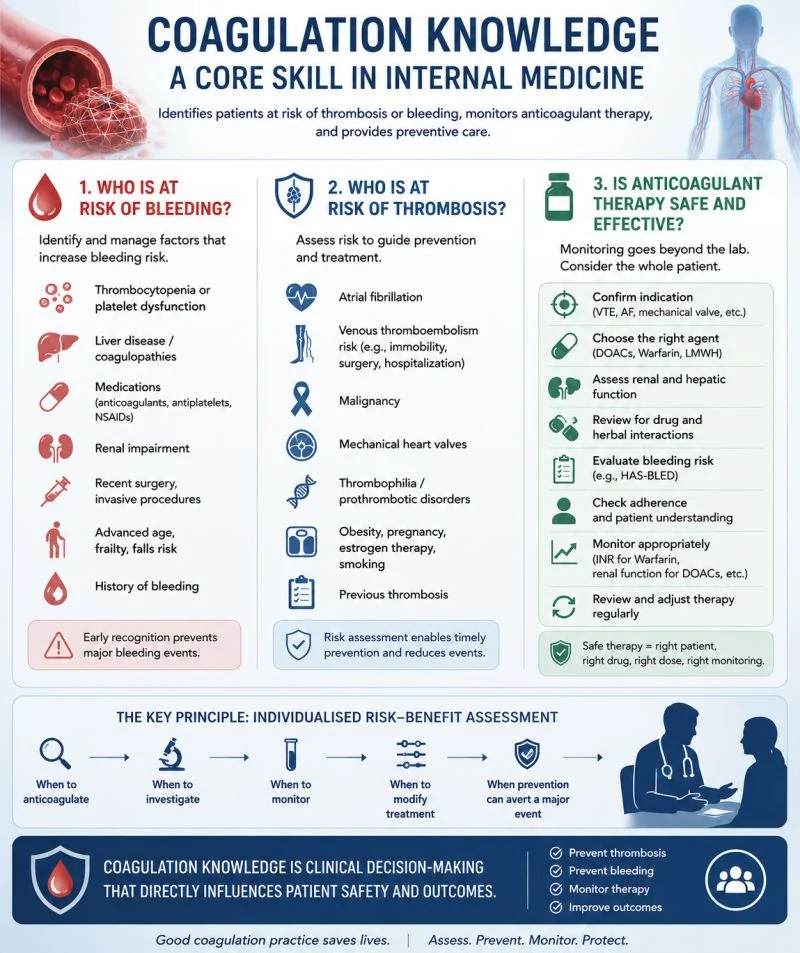
“Coagulation Knowledge: A Core Skill in Internal Medicine
Coagulation is more than understanding PT, INR, or a platelet count—it is a fundamental part of safe, preventative internal medicine.
For the physician, strong coagulation knowledge helps answer three critical questions:
- Who is at risk of bleeding?
Recognising thrombocytopenia, coagulopathies, liver dysfunction, drug interactions, renal impairment, and acquired bleeding risks can prevent avoidable complications.
- Who is at risk of thrombosis?
Identifying atrial fibrillation, venous thromboembolism risk, malignancy, immobility, mechanical heart valves, and other prothrombotic states enables timely risk assessment and prevention.
- Is anticoagulant therapy safe and effective?
Monitoring therapy requires more than checking an INR. It involves understanding the indication, anticoagulant choice, renal and hepatic function, drug interactions, adherence, bleeding risk, and when treatment should be reviewed or adjusted.
The key principle is individualised risk–benefit assessment.
Good coagulation practice means knowing when to anticoagulate, when to investigate, when to monitor, when to modify treatment—and importantly, when prevention can avert a major thrombotic or bleeding event.
In internal medicine, coagulation knowledge is therefore not simply laboratory knowledge. It is clinical decision-making that directly influences patient safety and outcomes.”
Stay updated with Hemostasis Today.
-
Oct 12, 2026, 17:39Annie Bauzon: Differentiating Direct and Indirect Coombs Tests in Hematology
-
Oct 12, 2026, 17:15Cedric Hermans: Identifying and Diagnosing Hemophilia Carriers and Affected Females
-
Oct 12, 2026, 17:01Bianca Rocca: Evaluating Factor XI Inhibition Lessons from LIBREXIA-ACS
-
Oct 12, 2026, 13:58Francisco Chacón-Lozsán: Catastrophic Antiphospholipid Syndrome A Rapidly Progressive Multiorgan Thrombotic Emergency
-
Oct 12, 2026, 12:50Nawsherwan Mohammad: Study Examines Thrombotic Events in Patients with Polycythemia Vera in Iraq
-
Oct 12, 2026, 12:30Chanakya Nayudu: Looking Beyond Blood Clots – Patient-Reported Outcomes in Antiphospholipid Syndrome
-
Oct 12, 2026, 12:12Jean-Jacques Kiladjian: Improving Treatment Strategies with JAK Inhibitors in Myelofibrosis
-
Oct 12, 2026, 12:04Chloe Homich: AABB Annual Meetings – Building Connections and Advancing Transfusion Medicine
-
Oct 12, 2026, 11:51Daniel Sop: Sickle Cell Research Takes Center Stage at ASCAT 2026