

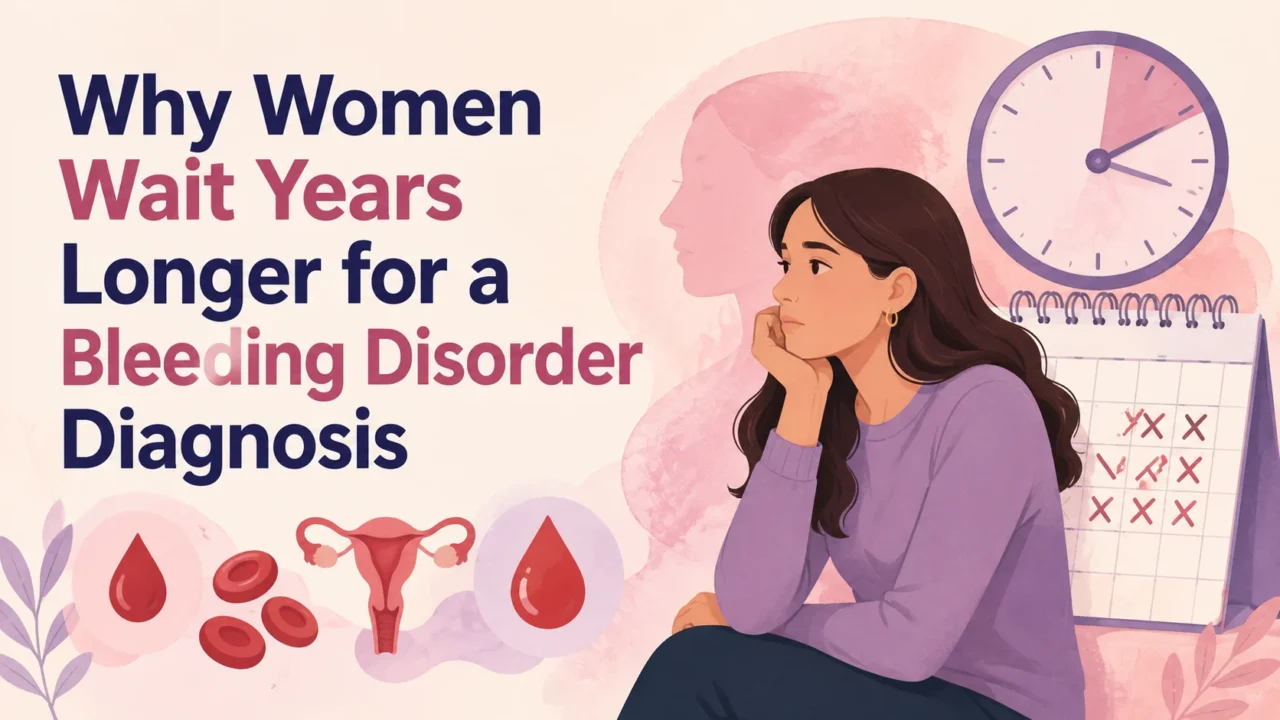
Charles Cohen: Why Women Wait Years Longer for a Bleeding Disorder Diagnosis
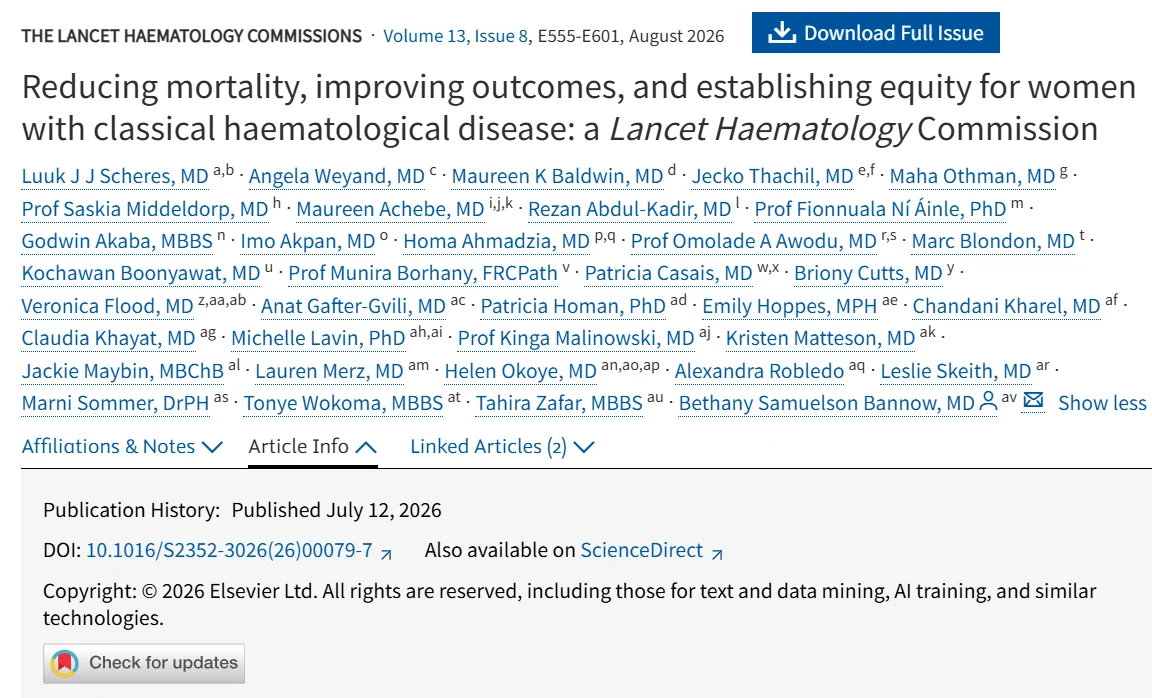
Charles Cohen, CEO at Mooncup Ltd, shared a post on LinkedIn about a recent article by Luuk J J Scheres et al., published in The Lancet Haematology, adding:
“If a man walks into a clinic with an unexplained bleeding problem, he’s typically diagnosed within about 2 years. If a woman does, it takes 14 to 16!
That figure comes from the Commission on Global Female Health and Haematology, published in The Lancet Haematology this July and presented at the International Society on Thrombosis and Haemostasis Congress in Paris, led by Dr Bethany Samuelson Bannow.
It’s the largest attempt yet to map how badly the blood side of women’s health has been neglected, and heavy periods sit right at the centre of it.
Heavy menstrual bleeding affects up to one in three women, and is often the very first sign of an inherited bleeding disorder.
That sign gets missed for years, sometimes decades.
Women remain underrepresented in the clinical trials meant to catch conditions like this earlier.
We have customers reaching out to us all the time about heavy periods and unusual bleeding, we direct them towards medical support but this does beg the question of if they are just being ignored at this stage.
One of the great things about menstrual cups is it is easy to measure blood and fluid loss, well much easier than absorbent products e.g. pads.
If you believe you have heavy periods it might be worth giving a cup a go and measuring the fluid loss over your period so that you can take this to your GP without being asked how many pads you have gone through in the last 24 hours which is extremely unreliable.
It will not provide a diagnosis, but it will give you data instead of a feeling, which is a small, concrete place to start.
Activate to view larger image, ”
Title: Reducing mortality, improving outcomes, and establishing equity for women with classical haematological disease: a Lancet Haematology Commission
Authors: Luuk J J Scheres, Angela Weyand, Maureen K Baldwin, Jecko Thachil, Maha Othman, Saskia Middeldorp, Maureen Achebe, Rezan Abdul-Kadir, Fionnuala Ní Áinle, Godwin Akaba, Imo Akpan, Homa Ahmadzia, Omolade A Awodu, Marc Blondon, Kochawan Boonyawat, Munira Borhany, Patricia Casais, Briony Cutts, Veronica Flood, Anat Gafter-Gvili, Patricia Homan, Emily Hoppes, Chandani Kharel, Claudia Khayat, Michelle Lavin, Kinga Malinowski, Kristen Matteson, Jackie Maybin, Lauren Merz, Helen Okoye, Alexandra Robledo, Leslie Skeith, Marni Sommer, Tonye Wokoma, Tahira Zafar, Bethany Samuelson Bannow
Stay updated with Hemostasis Today.
-
Oct 5, 2026, 15:31Irma Bagdoniene: Multidisciplinary Management of High-Risk Familial Hypercholesterolaemia and CAD
-
Oct 5, 2026, 15:00Serena Williams and Pulmonary Embolism: From Personal Crisis to Lessons in Venous Thromboembolism
-
Oct 5, 2026, 14:55Marco Moscarelli: 3D Reconstruction Enhances Volumetric Assessment of Post-TAVI Thrombosis
-
Oct 5, 2026, 13:24Abdul Muqtadir Abbasi: Diagnostic Pearls for Evaluating Isolated Thrombocytopenia in Residents
-
Oct 5, 2026, 13:16Katerina Pavenski: Rethinking What ‘Normal’ Means for Iron Deficiency
-
Oct 5, 2026, 13:09Rick Matthews: Balancing Established VTE Partnerships with Innovative Interventional Technologies
-
Oct 5, 2026, 13:01Nawsherwan Mohammad: Recognizing TTP Before the ADAMTS13 Result Arrives
-
Oct 5, 2026, 12:51Bruno Pougault: The Hidden Challenges Behind Anti Xa Testing
-
Oct 5, 2026, 12:41Syed Huzaifa Khan: Rethinking CTRP12 as a Biomarker for In Stent Restenosis