


Cesarovic Nikola: FDA Data Reanalysis Raises Questions About Moderna’s mFLUSIVA Risk-Benefit Profile
Cesarovic Nikola, Senior Cardiovascular Translational Scientist at Deutsches Herzzentrum Berlin and ETH Zürich, shared on LinkedIn:
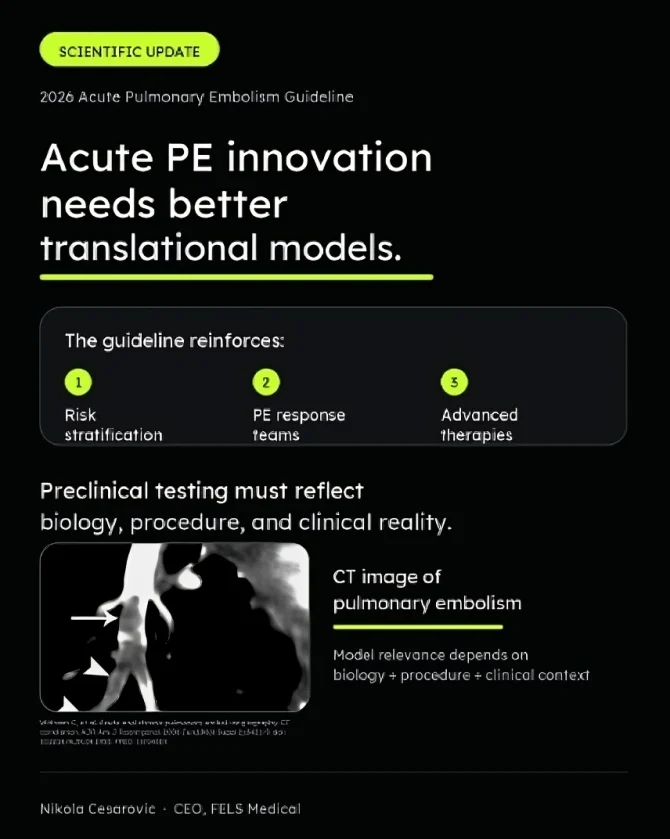
”The new 2026 AHA/ACC/Multisociety guideline on acute pulmonary embolism is an important signal for everyone working in this field.
Acute PE is no longer only a question of anticoagulation and supportive care.
We are seeing a much more structured approach to:
- risk stratification
- multidisciplinary decision-making
- advanced therapies
One important update is the introduction of the AHA/ACC Acute PE Clinical Categories, ranging from lower-risk patients to those with incipient or established cardiopulmonary failure.
The guideline also reinforces the role of Pulmonary Embolism Response Teams (PERTs) and recognizes advanced therapies — including catheter-based thrombolysis, mechanical thrombectomy, and surgical embolectomy — in selected high-risk or deteriorating patients.
For clinicians, this is about choosing the right treatment for the right patient.
For developers, it raises another question: How do we test new technologies in a way that reflects the clinical reality of acute PE?
This is where preclinical model design becomes critical.
A useful acute PE model should not only create an obstruction. It should help answer clinically relevant development questions:
- Does the model reproduce meaningful hemodynamic compromise?
- Can it reflect right ventricular strain or dysfunction?
- Is the access route clinically realistic?
- Can the intervention be performed under relevant imaging conditions?
- Are the endpoints connected to what clinicians and regulators will care about?
- Does the model help us understand whether the technology changes the physiological situation, not only the angiographic image?
This is especially important as device-based and catheter-based therapies continue to evolve.A model that is technically convenient may still fail to answer the right question.
We have been working on acute pulmonary embolism model development with this translational need in mind. The goal is not simply to reproduce PE. The goal is to create a model that helps developers understand how a therapy performs in a setting that is biologically, procedurally, and clinically meaningful.
Because in acute PE innovation, the question is not only: ‘Can we remove or treat the clot?’It is also: ‘What does that intervention change for the patient’s physiology, risk, and clinical pathway?’
That is the level of evidence development we need if new technologies are going to move responsibly from concept toward clinical use.”
Stay updated with Hemostasis Today.
-
Oct 10, 2026, 11:32Thrombus Age Assessment Through Advanced Imaging and Biomarkers
-
Oct 10, 2026, 10:55Tzu-Fei Wang: How Should We Approach Anticoagulation for Cancer-Associated Gonadal and Renal Vein Thrombosis?
-
Oct 10, 2026, 10:50Robert Sidonio Joins ATHN Advanced Clinical Research Fellowship Program
-
Oct 10, 2026, 10:45Federica Fogacci: Co-Moderating at CA Meet 2026 in Padua – Elevating Lifestyle Interventions in Cardiology
-
Oct 10, 2026, 10:40Juan Cristóbal Morales Muñoz: Pharmacokinetic Profiling of Factor VIII Concentrates in Chilean Patients
-
Oct 10, 2026, 10:32Randall Schaefer: What Do Blood Product Wastage Rates Really Tell Us in Prehospital Care?
-
Oct 10, 2026, 10:26Simone Strasser: ROTEM-Guided Transfusion Cuts Blood Product Use in Patients with Cirrhosis
-
Oct 10, 2026, 10:18Jérôme S.: WHO Launches Global Roadmap to Combat Hypertensive Disorders of Pregnancy
-
Oct 10, 2026, 10:07Maha Othman: Look Forward to an Amazing ISTH 2027 in Vancouver!