

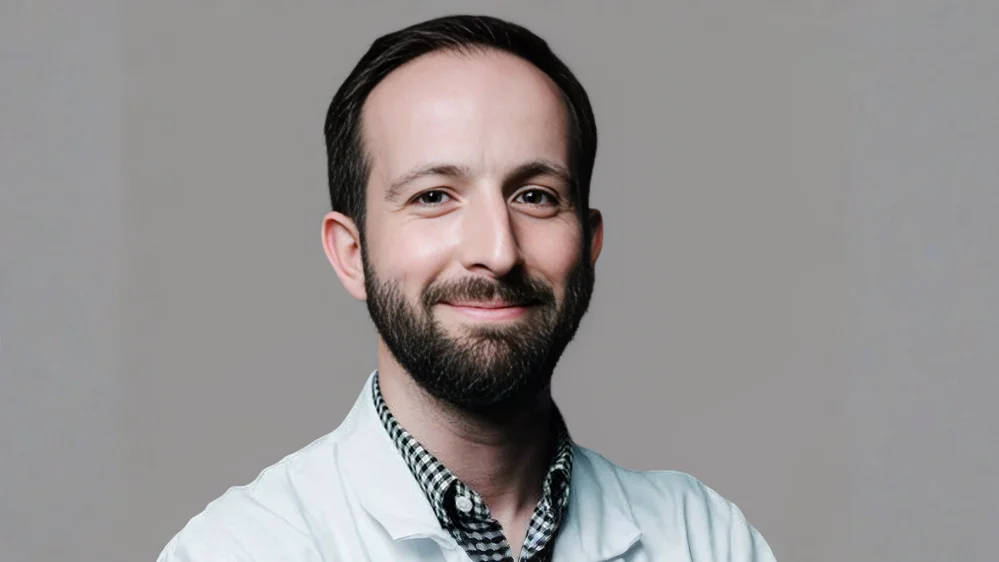
Nicolas Gendron: Real-World Data on Danaparoid in Patients with Suspected HIT
Nicolas Gendron, Postdoctorate research Fellow at Harvard Medical School, Research Fellow and Hematologist at Boston Children’s Hospital, shared a post on LinkedIn about a recent article he and his colleagues co-authored, published in Haematologica Journal, adding:
“Real-world data on danaparoid in patients with suspected HIT
We are proud to share our latest work published in Haematologica Journal, conducted within the HIT Team of the Hôpital Européen Georges Pompidou (Paris), based on 6 years of consecutive real-world practice.
HIT (heparin-induced thrombocytopenia) is a rare but life-threatening immune-mediated prothrombotic disorder. When suspected, heparin must be stopped immediately and replaced by an alternative anticoagulant.
Danaparoid is one of the 2 main options available in France yet real-world data on its outcomes and biological monitoring remain surprisingly scarce.
Main results:
- Thrombotic events occurred in 12% of patients
- Bleeding events occurend in 10% of patients.
Both regardless of whether HIT was ultimately confirmed or not.
- Low first anti-Xa activity and prolonged time below target anti-Xa were associated with thrombosis
- Outcomes were similar in confirmed and non-confirmed HIT patients, reinforcing that suspected HIT must be treated promptly, without waiting for platelet functional assay results.
HIT remains a prothrombotic disorder with substantial morbidity despite anticoagulation.
- Danaparoid remains a valid and effective option in acute HIT
- Our findings underscore the need for therapeutic dosing until diagnosis is confirmed, along with anti-Xa monitoring to mitigate thrombotic risk.
Huge thanks to all co-authors, the HIT Team, and the hematology and clinical teams at HEGP․”
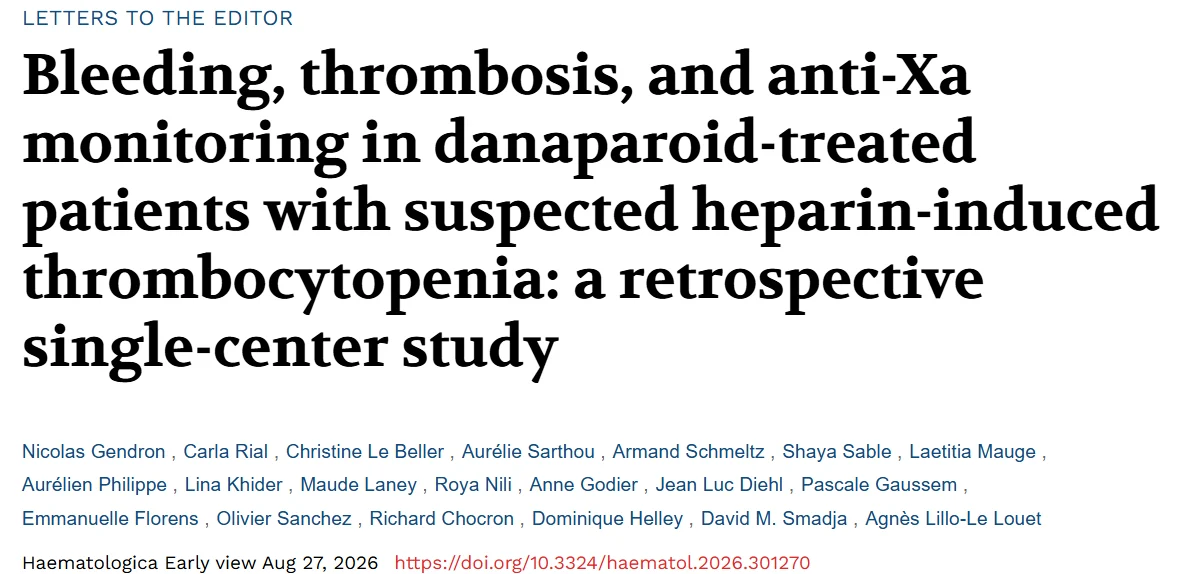
Title: Bleeding, thrombosis, and anti-Xa monitoring in danaparoid-treated patients with suspected heparin-induced thrombocytopenia: a retrospective single-center study
Authors: Nicolas Gendron, Carla Rial, Christine Le Beller, Aurélie Sarthou, Armand Schmeltz, Shaya Sable, Laetitia Mauge, Aurélien Philippe, Lina Khider, Maude Laney, Roya Nili, Anne Godier, Jean Luc Diehl, Pascale Gaussem, Emmanuelle Florens, Olivier Sanchez, Richard Chocron, Dominique Helley, David M. Smadja, Agnès Lillo-Le Louet
Stay updated with Hemostasis Today.
-
Oct 18, 2026, 17:11Owen McCarty: Understanding Prekallikrein and Its Role in Inflammation and Thrombosis
-
Oct 18, 2026, 17:04Emna Gouider Belhadjali: Don’t Miss GPAS 2026 on Bleeding Disorders
-
Oct 18, 2026, 16:53Mehran Ghasemzadeh: Microparticle-Associated Mitochondrial DNA in Stored Platelet Products
-
Oct 18, 2026, 16:38Edward Lee Carter: A 15-Minute Blood Test for Brain Hemorrhage?
-
Oct 18, 2026, 16:29Patrick Taylor: Oral vs Transdermal Estrogen and Cardiovascular Risk in Menopausal Women
-
Oct 18, 2026, 16:19Artangela Henry: A Meaningful Week at the SCDAA National Convention
-
Oct 18, 2026, 16:04Emília Araújo։ New Insights Into the Genetics of Hemophilia B Leyden
-
Oct 18, 2026, 15:43André Marcel Harris: Award-Winning Research on Texas Sickle Cell Data Collection
-
Oct 18, 2026, 15:21Eleonora Gambineri: First Results of the IEI-Haem Consortium at ESID 2026