


Mohd Ashhad: How Much Does Hemoglobin Increase After 1 Unit of PRBC?
Mohd Ashhad, Medical Laboratory Technologist at Blood Bank, shared a post on LinkedIn։
“How Much Does Hemoglobin Increase After 1 Unit of PRBC?
A common question in blood transfusion practice is:
‘After transfusing one unit of packed red blood cells (PRBC), how much should the patient’s Hb increase?’
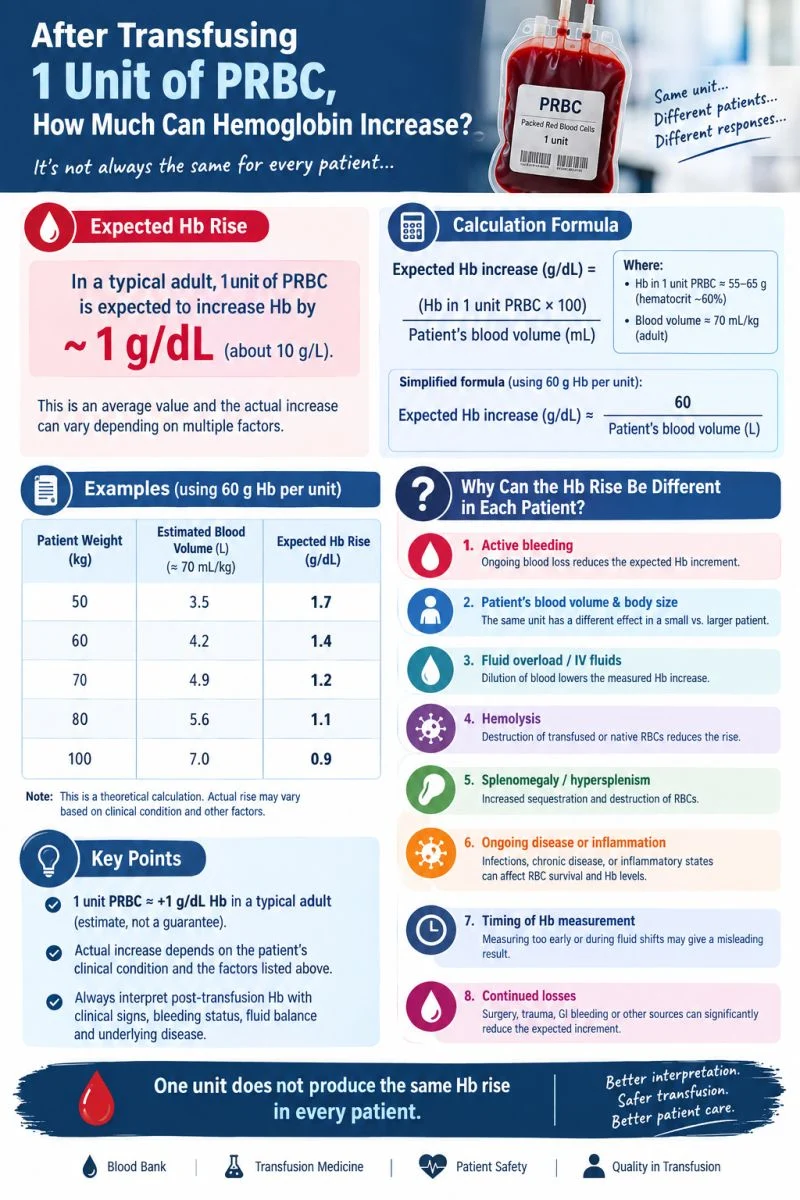
In an average adult patient, transfusion of 1 unit of PRBC is generally expected to increase Hb by approximately 1 g/dL (about 10 g/L), although the actual response can vary.
Why can the Hb rise be different from patient to patient?
1. Active bleeding
If the patient is still bleeding, the transfused RBCs are being lost, so the Hb may increase less than expected.
2. Patient’s blood volume and body size
The same unit has a different effect in a small patient compared with a larger patient.
3. Fluid overload or IV fluids
Large amounts of IV fluids can dilute the blood and produce a smaller measured Hb increase.
4. Hemolysis
Destruction of RBCs—whether immune-mediated or due to another cause—can reduce the expected Hb increment.
5. Splenomegaly or hypersplenism
An enlarged or overactive spleen may increase RBC sequestration and destruction.
6. Ongoing disease or inflammation
Conditions such as severe infection, inflammation, or chronic disease can affect RBC survival and Hb levels.
7. Timing of the Hb measurement
Hb should be assessed at an appropriate interval after transfusion. Measuring too early or during major fluid shifts may give a misleading impression.
8. Transfusion of a patient with significant ongoing losses
Bleeding from surgery, trauma, gastrointestinal bleeding, or other sources can significantly reduce the expected increment.
Key point:
1 unit PRBC increases Hb by approximately1 g/dL in a typical adult, but this is an estimate—not a guaranteed increase.
As laboratory and transfusion professionals, we should always interpret the post-transfusion Hb together with the patient’s clinical condition, bleeding status, fluid balance, and underlying disease.
One unit does not produce the same Hb rise in every patient.”
Other posts featuring Mohd Ashhad on Hemostasis Today.
-
Oct 23, 2026, 17:45Lucy Brook: Had the Privilege of Attending the Blood 2026 Conference with New Zealand Blood Service
-
Oct 23, 2026, 16:05Platelet Secretion Defects and Their Role in the Diagnosis of Bleeding Disorders
-
Oct 23, 2026, 16:00Hemophilia Alliance team in New Orleans at the ATHN Data Summit
-
Oct 23, 2026, 15:49Brian Sapp: Why Exact Calf Vein Naming Is Critical for DVT Diagnosis?
-
Oct 23, 2026, 15:33Smitirupa Mishra: A Systematic Approach to Bone Marrow Examination
-
Oct 23, 2026, 15:29José Antonio García Erce: Preoperative Anemia Emerges as a Modifiable Surgical Risk in New POWER Study
-
Oct 23, 2026, 15:13Reza Shojaei: Manufactured Red Blood Cells vs Blood Donation
-
Oct 23, 2026, 14:29Jean Jacques Kiladjian: International Scientific Exchange at IHCAMS in Tianjin
-
Oct 23, 2026, 14:11Aravind Palraj: The Prolonged aPTT Puzzle in SLE