


Mizinga Moonze: When Blood Speaks – The Missing Link in Healthcare Sustainability
Mizinga Moonze, Director at Prime Health Systems Ltd Zambia, Director of Fundraising at Vein to Vitality, Diagnostics Support at Genmark Sağlık Ürünleri, Founder and CEO at HealthCycle Africa shared a post on LinkedIn:
“Blood Needs a Voice: Sustainability Starts at the Cellular Level
Healthcare sustainability conversations about blood tend to stop at donation, availability, and how we dispose of what expires.
That is necessary, but it is not the whole story.
Long before a unit reaches a blood bank, blood is already telling us something about a person’s health, and across Africa, that message is often silenced before it is heard.
Sickle cell disease is the clearest example.
Africa carries the largest share of the global burden by a wide margin: birth prevalence on the continent runs at roughly 1,000 per 100,000 live births, compared with about 30 per 100,000 in Europe.
In countries including Cameroon, the Republic of Congo, Gabon, Ghana, and Nigeria, carrier prevalence sits between 20 percent and 30 percent of the population, and reaches as high as 45 percent in parts of Uganda.
Most children born with the disease in Africa still do not survive past childhood, not because the condition is untreatable, but because it is underdiagnosed and under-discussed.
The silence extends far beyond one disease:
- Menstrual blood is treated as something to hide rather than a monthly signal of reproductive health.
- Blood in stool is dismissed, delayed, or self-medicated rather than investigated, often until a condition has advanced.
- Postpartum bleeding is normalised as ‘just part of birth’, even though postpartum haemorrhage causes over a quarter of maternal deaths worldwide, and more than 80 percent of those deaths occur in sub-Saharan Africa and South Asia.
- Excessive bleeding of any kind, from gums to unexplained bruising, is absorbed into daily life instead of raised with a clinician.
Why this belongs in a sustainability conversation, not just a clinical one: a health system that only measures blood at the point of donation and disposal is managing the supply chain while missing the demand signal upstream.
Every case of undiagnosed sickle cell disease, every postpartum haemorrhage dismissed as normal, every blood-in-stool symptom that went unspoken, becomes a future call on the very blood supply we spend so much effort trying to protect.
We have so much work to do, and starting now is not too late.
Blood needs a voice.
Giving it one is a step toward healthcare sustainability, not a detour from it.”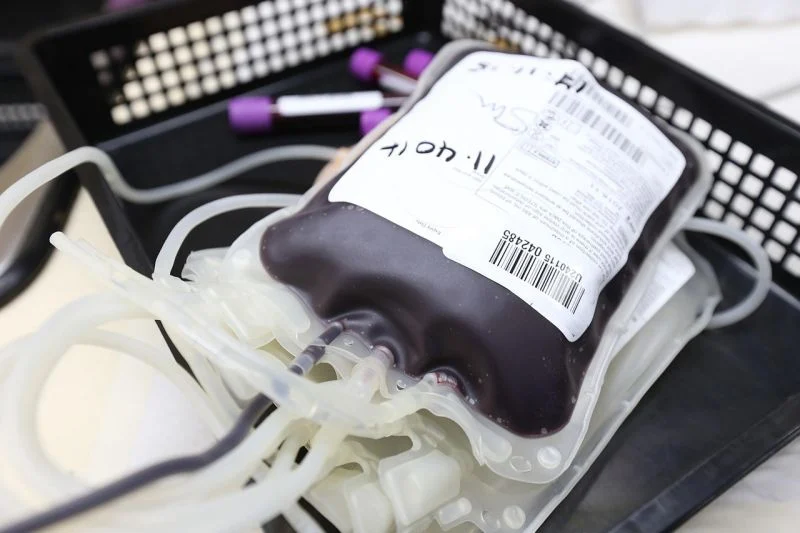
Stay updated with Hemostasis Today.
-
Sep 13, 2026, 05:16W. Alberto Sifuentes Giraldo: Dual Targeted Therapy Shows Promise in Refractory Systemic Autoinflammatory Diseases
-
Sep 13, 2026, 04:42Christopher Robinson: Early Pregnancy Oxylipins May Signal Risk of Fetal Growth Restriction
-
Sep 13, 2026, 04:22Gabriela Hobbs: 2026 Society of Hematologic Oncology Meeting
-
Sep 12, 2026, 17:55Dries De Wolf: Honored to Have Wolfgang Miesbach Comment on Our Latest Research
-
Sep 12, 2026, 17:53Usman Waheed: Introducing the Discovery of the 49th ISBT Blood Group System
-
Sep 12, 2026, 17:51Maria Sabater Lleal: Happy to Share Our Latest Work Exploring the Genetic Determinants of PE in VTE
-
Sep 12, 2026, 17:51Jeff Sternlicht: Why LDL-C and ApoB Remain King of the Hill?
-
Sep 12, 2026, 17:49Kalyan Roy: TRAGS – An Emerging Transfusion Safety Concern
-
Sep 12, 2026, 17:48Jason Fung: What Happened to “Statins Save Lives”?