

Sthanu Subramanian: When HbA1c Does Not Reflect True Glycemia
Sthanu Subramanian, Pediatrician, shared a post on X about a recent article by Ranjit Unnikrishna et al, published in Indian Journal of Endocrinology and Metabolism, adding:
“Iron deficiency anemia (IDA) can falsely elevate HbA1c levels, even if your actual daily blood sugar levels are completely stable and within a healthy range.
This biological quirk means a person could receive a prediabetic or diabetic HbA1c result that does not accurately reflect their true glycemic health.
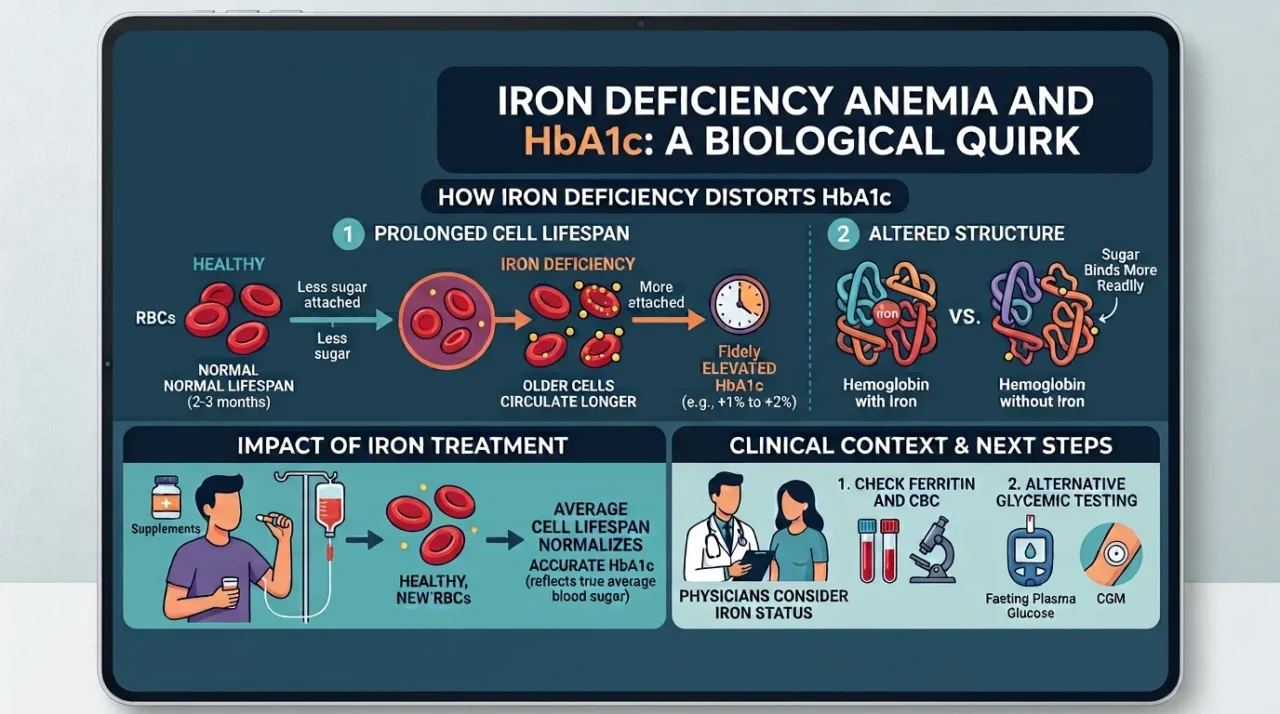
How Iron Deficiency Distorts HbA1c The HbA1c test measures the percentage of hemoglobin that has glucose attached to it over a 2-to-3-month period (the average lifespan of a red blood cell).
When you lack sufficient iron, two main changes occur:
1. Prolonged Cell Lifespan: Your body produces fewer new red blood cells (RBCs).
As a result, the existing RBCs stay in circulation longer.
Because these older cells circulate for an extended period, they are exposed to blood glucose for longer, allowing more glycation (sugar binding) to occur.
2. Altered Structure: Changes in the three-dimensional structure of hemoglobin in iron-deficient states may allow glucose to bind more readily to the protein chain.
Together, these mechanisms can spuriously inflate your HbA1c level by roughly 1 percent to 2 percent.
Impact of Iron Treatment…
Clinical studies show that treating iron deficiency with oral or intravenous iron supplements successfully corrects this bias.
As the body begins producing healthy, new red blood cells, the average cell lifespan normalizes.
Consequently, the falsely elevated HbA1c levels typically decrease to accurately mirror true average blood sugar levels.
Clinical Context and Next Steps…
Because iron deficiency is highly prevalent, physicians must consider a patient’s iron status before modifying a diabetes treatment plan or diagnosing someone with diabetes based on HbA1c alone.
1. Check Ferritin and CBC: If you suspect your HbA1c is inaccurate, a physician can order a Complete Blood Count (CBC) and a Ferritin test to evaluate your exact iron stores.
2. Alternative Glycemic Testing: If severe anemia makes HbA1c unreliable, healthcare providers can use Fasting Plasma Glucose (FPG) or continuous glucose monitoring (CGM) to get an accurate view of your metabolic health
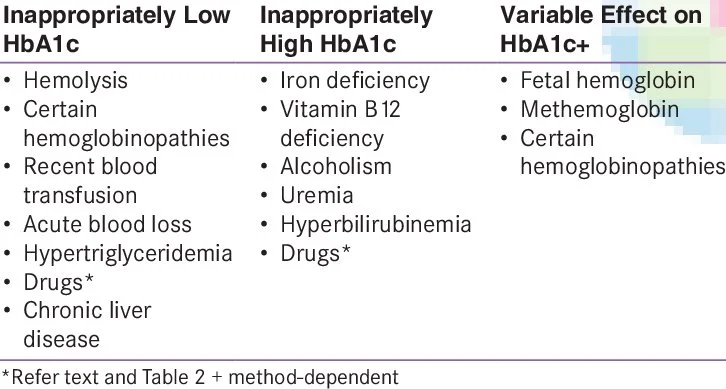
Conditions causing inappropriately high or low Hba1c.”
Title: Drugs affecting HbA1c levels
Authors: Ranjit Unnikrishnan, Ranjit Mohan Anjana, Viswanathan Mohan

Stay updated on all scientific advances with Hemostasis Today.
-
Sep 24, 2026, 16:02Leonardo Roever: Understanding Peripheral Artery Disease in the Modern Era
-
Sep 24, 2026, 15:09Caroline Voltz-Girolt: Accelerating the Development of Innovative Therapies for Rare Blood Disorders
-
Sep 24, 2026, 15:00Gambo Ramatu: Anemia as a Preventable Pregnancy Challenge
-
Sep 24, 2026, 14:56Holly John: Sickle Cell Disease Beyond Pain and Clinical Outcomes
-
Sep 24, 2026, 14:45Bruce Holland: Ex Vivo Assessment of ActiGraft Clot Formation Under Anticoagulation
-
Sep 24, 2026, 14:33Mohamed El Belghiti Alaoui: Thrombin as a Therapeutic Target in Coagulation
-
Sep 24, 2026, 14:22Integrating Thrombosis Risk Into Menopause Care – World Thrombosis Day
-
Sep 24, 2026, 13:41Mahmoud Samir Bayomi: Raise ITP Awareness and Improve Patient Care
-
Sep 24, 2026, 12:56Maria Helena Parrinello: A New Score for Chronic GvHD Risk Assessment at the SIE Congress