


Rajnikant Patel: Bridging Ayurvedic Concepts and Modern Toxin-Mediated Disease
Rajnikant Patel, Senior Ayurvedic Consultant at Jiva Ayurveda, shared a post on LinkedIn:
”What if one of Ayurveda’s oldest clinical disciplines—Visha Chikitsa—has a much more contemporary relevance than we usually recognize?
A 29-year-old woman presented with a severe Hemolytic Uremic Syndrome (HUS).
Her initial condition was critical:
- Hemoglobin: 3 g/dL
- Platelets: 25,000/µL
- Serum creatinine: 3.5 mg/dL
- High-grade fever with rigors
- Orange-colored urine
- 8 sessions of dialysis plus 6 plasma therapies
Despite initial management, her hemoglobin again dropped, thrombocytopenia recurred, and the urine again became orange-colored.
She was subsequently referred for Ayurvedic management.
What happened next?
Ayurvedic treatment was initiated based on the clinical understanding of the condition through the lens of Visha Chikitsa.
Treatment:
- Shirish Tvak choorna
- Vilwadi gulika
- Vastiamyantik ghrita
- Nagarjunabhra rasa
- Over approximately 2 months:
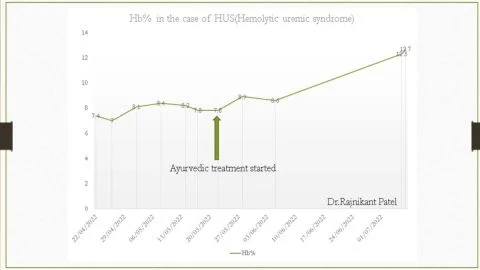
Hemoglobin increased from approximately 7.0–8.0 g/dL to 12.3–12.7 g/dL.
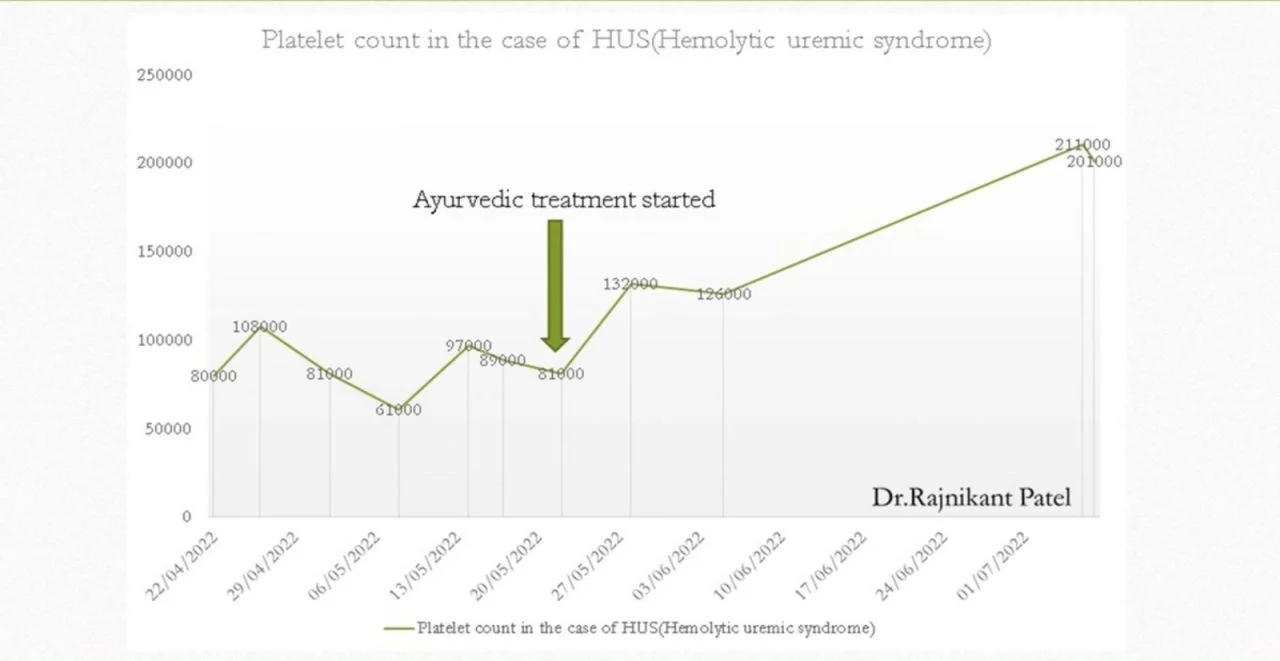
Platelets increased from approximately 61,000–97,000/µL to 201,000–211,000/µL.
Serum creatinine, previously around 3.5 mg/dL, subsequently remained in the range of 1.3–2.6 mg/dL.
Clinically, the patient recovered sufficiently to resume her routine day-to-day activities without significant disturbance.
But here is the part that interests me most…
Modern medicine describes an important form of HUS as a toxin-mediated disease.
In Shiga-toxin–associated HUS, bacterial toxins can injure vascular endothelium. The toxin interacts with Gb3 receptors, which are highly expressed in renal microvascular tissue, contributing to endothelial injury, platelet activation and microvascular thrombosis—ultimately producing the characteristic triad of:
Hemolytic anemia plus thrombocytopenia plus acute kidney injury.
And Ayurveda has an entire clinical discipline devoted to understanding the effects of Visha — toxic substances and their systemic consequences.
This raises a fascinating question:
Can classical Ayurvedic concepts such as Visha Chikitsa provide useful conceptual frameworks for understanding modern toxin-mediated and infection-associated diseases?
- Bacterial toxins.
- Fungal toxins and virulence factors.
- Viral-mediated tissue injury.
- Environmental toxic exposures.
Perhaps the most productive approach is not to ask:
‘Ancient vs Modern?’
But rather:
‘What happens when classical Ayurvedic pathophysiology is studied alongside modern molecular pathogenesis?’ ”
Stay updated with Hemostasis Today.
-
Sep 29, 2026, 19:00Caitlin Raymond: Can Artificial Blood Solve Blood Supply Shortages?
-
Sep 29, 2026, 18:51Chaza Alaji: Dyslipidemia, Thrombosis and the DIC Diagnostic Trap
-
Sep 29, 2026, 17:13Nicholas Lang։ A Meaningful Case of Immune Thrombocytopenia
-
Sep 29, 2026, 16:55Ayatullah Gamal Wahab: When the CBC Lies
-
Sep 29, 2026, 16:35Jonathan Douxfils: Navigating the VTE Risk Continuum in Reproductive Medicine
-
Sep 29, 2026, 16:35Chaima Rajeh: Types of Anemia and Their Laboratory Features
-
Sep 29, 2026, 16:27Scott Isaacs: How GLP-1 RAs Target Systemic Inflammation to Drive Cardio, Autoimmune, and Gut Health
-
Sep 29, 2026, 16:21Yitshak Kreiss: From Treating Patients to Defining the Standard of Knowledge
-
Sep 29, 2026, 16:18Edward Lee Carter: Why Periprocedural DOAC Guidance Needs a Common Output Standard