


10 Posts Not to Miss This Week
This week brings together recent clinical evidence, emerging research, practical insights, and expert perspectives across thrombosis, hemostasis, bleeding disorders, transfusion medicine, and vascular health.
Key discussions address antithrombotic-associated bleeding and reversal, maternal anemia and its potential impact on infant brain development, and advances in red cell exchange for sickle cell disease. Other highlights include intracranial arteriopathy and ischemic brain injury in adults with sickle cell disease, mechanical thrombectomy for high-risk pulmonary embolism, and new consensus recommendations on GLP-1 receptor agonists across the reproductive life course.
The week also features emerging research on embryonic immune-cell migration, VTE risk across assisted reproduction, pregnancy, and postpartum, and new methodological approaches for evaluating platelet structure and function.
Here are 10 key highlights from this week, featuring new research findings, practical clinical insights, expert perspectives, and important developments across hematology, hemostasis, and thrombosis.
Priya Sriskandarajah, Consultant Haematologist at Guy’s and St Thomas’ NHS Foundation Trust:
“Do check out our paper just published in OncoTargets and Therapy which covers the ongoing Hema-MED trial combining JAK inhibitors with the PI3K inhibitor Rogilinosib in MF patients.
Delighted to be running this study at Guy’s and St Thomas’ NHS Foundation Trust.”
Chris Baugh, Chair Elect at Emergency Medicine Foundation:
“New paper in EB Medicine’s Emergency Medicine Practice: ‘Antithrombotic-Associated Bleeding: Management in the Emergency Department,’ co-authored with the incredibly talented Xin Qi and Annie Leamon.
Several points from the review that may change bedside practice:
- Resuscitation and hemorrhage control come first. Reversal runs in parallel and is not the initial priority.
- A normal INR or PTT does not exclude a DOAC effect. Drug-specific anti-factor Xa levels are needed, and a normal thrombin time effectively rules out a clinically significant dabigatran effect.
- Emergent warfarin reversal requires 4F-PCC plus IV vitamin K. Vitamin K alone is insufficient.
- With andexanet withdrawn from the US market, PCC-based replacement is the current strategy for factor Xa inhibitor reversal, though evidence for it remains limited.
- For antiplatelet-associated ICH, platelet transfusion is supported only when neurosurgical intervention is planned. In nonsurgical ICH, it offers no benefit and may cause harm.
- High thrombotic risk, such as a mechanical valve, does not automatically justify or preclude reversal. The decision weighs both risks.
The issue also covers periprocedural management, pregnancy, fibrinolytic reversal, and a clinical pathway for ED use.
It is eligible for 4 AMA PRA Category 1 Credits.”
Ana Cespedes, Chief Executive Officer at Vitamin Angels, Board Member at argenx, Member of Steering Committee at Instituto ProPatiens:
“4%.
That’s the difference in brain volume researchers found among infants born to mothers with anemia during pregnancy, according to new peer-reviewed research led by Jessica Ellen Ringshaw and published in Brain Communications.
The findings are striking, especially because most of the mothers with anemia in the study had only mild anemia.
As the children born to mothers with anemia grew, so did the gap in their brain development.
By 24 months, one key region of the brain was more than 6% smaller.
Anemia is not a new or highly localized condition we don’t know how to address.
It affects more than a third of pregnant women worldwide, with the highest rates in sub-Saharan Africa and South Asia.
Despite its prevalence and the existence of proven, affordable interventions to help prevent it, global progress has stalled for decades.
We know what works.
Multiple micronutrient supplementation (MMS) during pregnancy is a proven intervention that can reduce maternal anemia while improving birth outcomes.
Earlier this year, I joined health leaders in Makueni County, Kenya, where nearly 40% of pregnant women have anemia.
Vitamin Angels is supporting the county as it introduces MMS, beginning with 13 public health facilities and approximately 7,200 pregnant women expected to be reached by the end of this year.
By 2028, the goal is to expand MMS to all 242 county health facilities and reach every pregnant woman in Makueni County each year — approximately 21,000 women.
We’re seeing progress at the national level, too. In Indonesia, Vitamin Angels supported the Ministry of Health in integrating MMS into the national health system, putting the country on track to reach 9.6 million women and children annually with UNIMMAP MMS by 2030.
The evidence on MMS is clear.
Governments are demonstrating what is possible when it is integrated into health systems and delivered at scale.
The opportunity now is to build on this progress and expand access to MMS for pregnant women around the world, giving mothers and babies the opportunity to thrive.”
Ravi C Dara, Consultant Physician Transfusion Medicine at Sheikh Shakhbout Medical City:
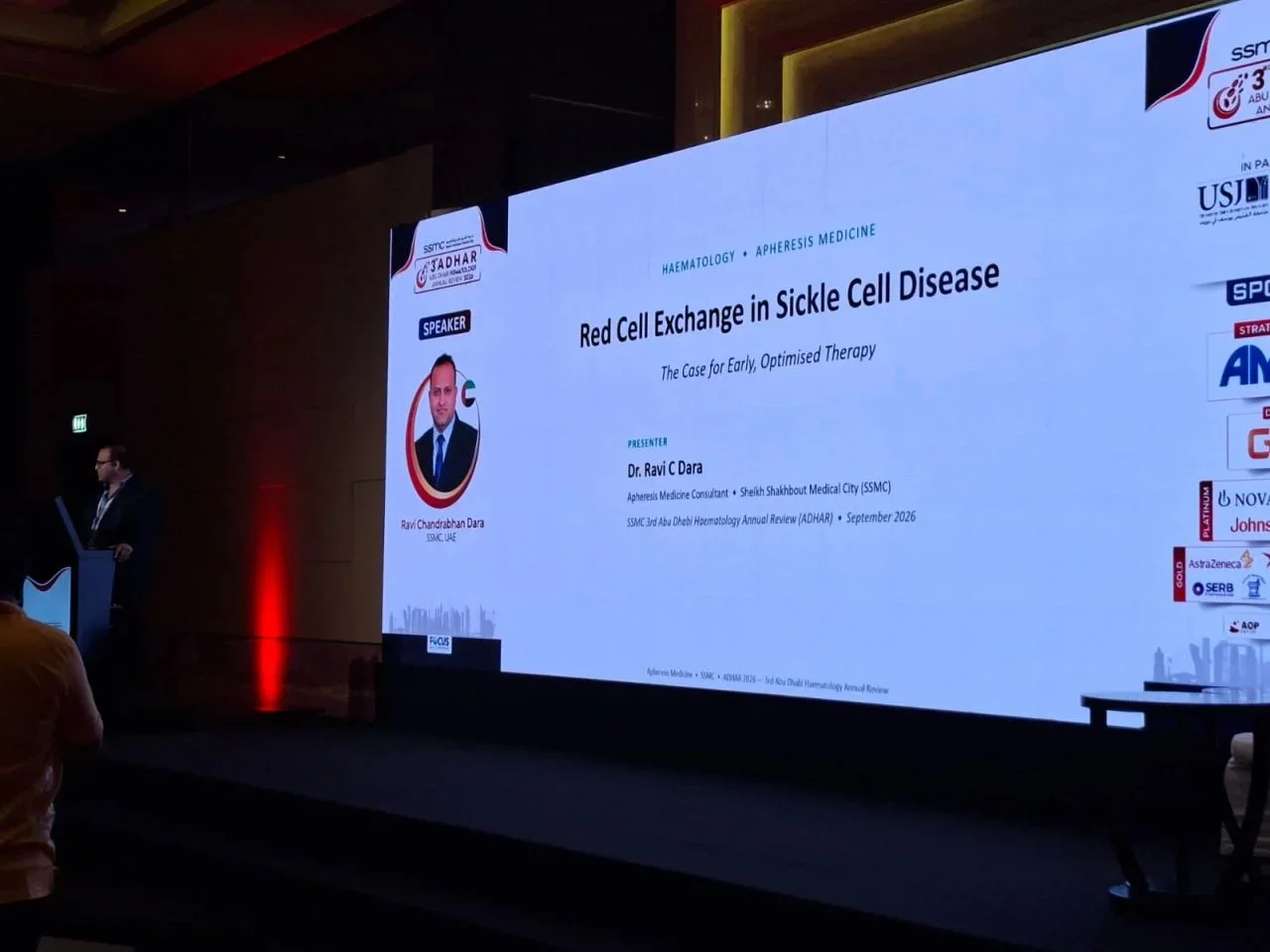
“Grateful for the opportunity to speak at ADHAR 2026 – the 3rd Abu Dhabi Haematology Annual Review – on ‘Red Cell Exchange in Sickle Cell Disease: The Case for Early, Optimised Therapy.’
It was a privilege to share our experience from the apheresis programme, and especially rewarding to see such active engagement from the audience – with several thoughtful questions following the talk.
Thank you to the Kourosh Lotfi, Kayane Mheidly, Aydah AlAwadhi for the invitation, and to everyone who attended and contributed to the discussion.”
Dan Milikovsky, Stroke fellow at University of Toronto, University Health Network, Toronto Western Hospital:
“I’m happy to share our new paper, ‘Intracranial Arteriopathy and Ischemic Brain Injury in Adults With Sickle Cell Disease,’ published in the Canadian Association of Radiologists Journal.
We studied brain MRI and MRA findings in 527 consecutive adults with sickle cell disease attending a routine clinic, rather than selecting only patients with a history of stroke or TIA.
Ischemic brain injury took several forms, including cortical, lacunar, watershed, and large-vessel territorial infarcts.
A key finding was that steno-occlusive intracranial arteriopathy was associated with several patterns of brain injury and cortical atrophy, even after accounting for clinical factors.
Dilative arteriopathy did not show the same associations.
These findings suggest that vascular imaging may help us better characterize cerebrovascular injury in adults with sickle cell disease and vascular imaging should be strongly considered as a screening tool.
I’m grateful to my coauthors and collaborators for their work and guidance in this study.”
Richard Davis, Field Clinical Specialist at Stryker, Registered Nurse at Geisinger:
“Remarkable save this weekend with a 37-year-old transferred to us in critical condition with a massive, bilateral pulmonary embolism (PE) – heavier clot burden on the right.
They presented with significant hemodynamic instability and distress, requiring supplemental oxygen and a heparin drip.
Utilizing the FlowTriever PE system, we performed an acute mechanical thrombectomy, successfully clearing more than 97% of the clot burden in a 25-minute case time with less than 50cc blood loss and zero thrombolytics required.
The clinical turnaround was almost instantaneous:
- Immediate blood pressure stabilization.
- Rapid decrease in heart and respiratory rates.
- Immediate relief of severe chest heaviness.
- Successful weaning off supplemental oxygen.
Cases like this underscore the life-changing impact of advanced intervention for high-risk PE, especially in young, critically
ill patients where every minute counts.
Proud to be part of the team driving these outcomes!”
Garima Sharma, Director of Preventive Cardiology and Women’s Cardiovascular health at Inova Health System:
“The first international consensus recommendations The Lancet Group on the use of GLP-1 receptor agonists across the reproductive life course in women with diabetes were developed by integrating a systematic review and meta-analysis of more than 43 000 women exposed to GLP-1 receptor agonists, expert consensus from 42 specialists with international representation, and input from 60 women with lived experience.
Available evidence, predominantly in women with type 2 diabetes, suggests that there is no increase in congenital anomaly risk following first-trimester discontinuation of GLP-1 receptor agonists, compared with no GLP-1 receptor agonist exposure, but important uncertainties remain regarding pregnancy loss, pregnancy exposure beyond the first trimester, and postpartum use.
The consensus panel supported GLP-1 receptor agonist use for preconception metabolic optimisation where needed in women with type 2 diabetes and recognised potential benefits in women with type 1 diabetes and previous gestational diabetes, although direct evidence in these groups is scarce.
The consensus recommendations should be interpreted in the context of little direct evidence and low certainty. Future studies focused on fertility, breastfeeding and lactation impact etc are needed.”
Nicolas Hubacz, Advisory Board Member at Drug Target Review, Founder of NH Sponsorships:
“Immune Cells in the Embryo
In this video, you’re seeing embryonic myeloid cells (red), among the earliest immune cells to emerge during development, spreading across developing frog tissue (blue).
New research shows that these cells aren’t navigating alone. The physical movement of surrounding tissue helps guide their migration.
As embryonic tissue spreads outward, early immune cells move along with it.
But they aren’t simply being carried by the flow. The cells reorganize their internal cytoskeleton and extend protrusions in the direction of tissue movement, allowing them to actively migrate with it.
This suggests that mechanical forces generated during development can provide directional cues to immune cells, helping them disperse throughout the embryo and establish an early line of defense.
Understanding how tissue movement guides immune cells could also reveal mechanisms involved in wound healing, inflammation, and cancer.
Video from work by Hoang Anh Le and colleagues, Department of Cell and Developmental Biology, University College London.
Research published in Nature Cell Biology, September 2026.”
Jonathan Douxfils, Director of the Research Unit in Clinical Pharmacology and Toxicology at University of Namur:
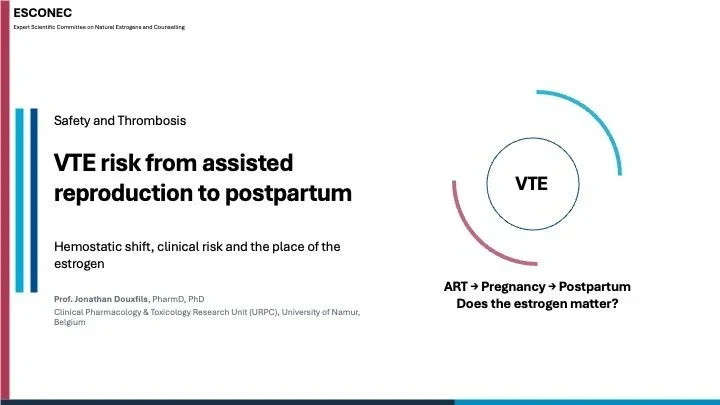
“I was pleased to participate in the FFER meeting in Montpellier, where I presented on VTE risk from assistedreproduction to postpartum.
The key message: thrombotic risk in reproductive medicine is not a single event, but a continuum:
ART – pregnancy – delivery – postpartum – contraception restart.
Although VTE remains uncommon in absolute terms, the burden is clinically relevant:
- In the general obstetric population, VTE occurs in 1.2–1.4 per 1,000 pregnancies, with mmore than 50% of events occurring after delivery.
- Pregnancy increases VTE risk 4–5-fold, while the early postpartum period can increase it up to 60-fold compared with non-pregnant women.
- The first postpartum weeks are critical: around 9 VTE events per 10,000 deliveries in week 1, decreasing to 1 per 10,000 by week 4.
- ART adds a specific early risk window. In IVF pregnancies, first-trimester VTE risk is increased, particularly after fresh embryo transfer. OHSS remains the major red flag, with an absolute VTE risk reported around 1.7%.
- But ART alone is not an indication for systematic anticoagulation. The clinical challenge is to identify who accumulates risk: previous VTE, OHSS, fresh transfer, multiple pregnancy, caesarean section, pre-eclampsia, obesity, infection or postpartum haemorrhage.
Another important point: estrogens are not interchangeable. Ethinylestradiol, and Natural Estrogens like E2 and E4 differ in hepatic impact, thrombin generation, APC resistance and expected thrombotic profile.
Why does this matter?
In programmed frozen embryo transfer, E2 is used to prepare the endometrium, but oral estrogen substitution can modify thrombin generation and fibrinolysis.
E4 may offer a pharmacologically attractive alternative because of its lower hepatic impact and more neutral haemostatic profile.
However, replacing E2 by E4 would first require dedicated ART studies showing preserved endometrial receptivity, pregnancy outcomes and improved haemostatic markers.
For now: a research priority, not a clinical recommendation.
Many thanks to the FFER organisers and Gedeon Richter France for the invitation and the excellent discussions.”
Samir Kumar Beura, Post-Doctoral Research Fellow at Central University of Punjab:
“Here is our recent publication in the ‘Journal of Thrombosis and Thrombolysis (Springer)‘ providing a comprehensive overview of methodological approaches for evaluating platelet structure and function.
This review highlights the current techniques used to assess platelet count, morphology, adhesion, activation, secretion, aggregation, and clot retraction, while also discussing recent technological advances and emerging approaches.
The article aims to provide researchers with practical insights into selecting appropriate methods for investigating platelet biology in health and disease.
Hope readers will find it helpful for their research and understanding of platelet biology.”
Stay updated with Hemostasis Today.
-
Oct 4, 2026, 14:47Rana Al-Hrout: Recognizing Non-Anemic Iron Deficiency – Why Iron Matters Beyond Hemoglobin
-
Oct 4, 2026, 14:41David McIntosh: International Plasma Awareness Week 2026 – Closing the Global Plasma Gap
-
Oct 4, 2026, 14:33Pete Stibbs: CleanerVac Real-World Study Presented at VIVA and The VEINS 2026
-
Oct 4, 2026, 13:56Maria Elisa Mancuso: EHC 2026 Highlights the Unmet Needs of Women with Bleeding Disorders
-
Oct 4, 2026, 13:53Nirmal Shaji George: Individualizing Anticoagulation in Complex APS and Thrombocytopenia
-
Oct 4, 2026, 13:45Suswapna Singh Rawat: The Clinical Significance of Coronary Plaque Stability
-
Oct 4, 2026, 13:35Sumyea Kabir: Optimizing Plasma Selection for Therapeutic Plasma Exchange in TTP
-
Oct 4, 2026, 13:31Swati Raikwar: Microplastics as a Threat to Cerebral Blood Flow
-
Oct 4, 2026, 13:18Maria Elisa Mancuso: EHC 2026 Opens with Focus on Haemophilia Care, Access and Rare Disorders