


Chokri Ben Lamine: Anemia in Myelofibrosis – Multiple Mechanisms, Limited Responses
Chokri Ben Lamine, Hematologist at King Faisal Specialist Hospital and Research Center, shared a post on X:
“Anemia in myelofibrosis: multiple mechanisms, limited responses
More insights from Prof. Ayalew Tefferi, SOHO KSA 2026
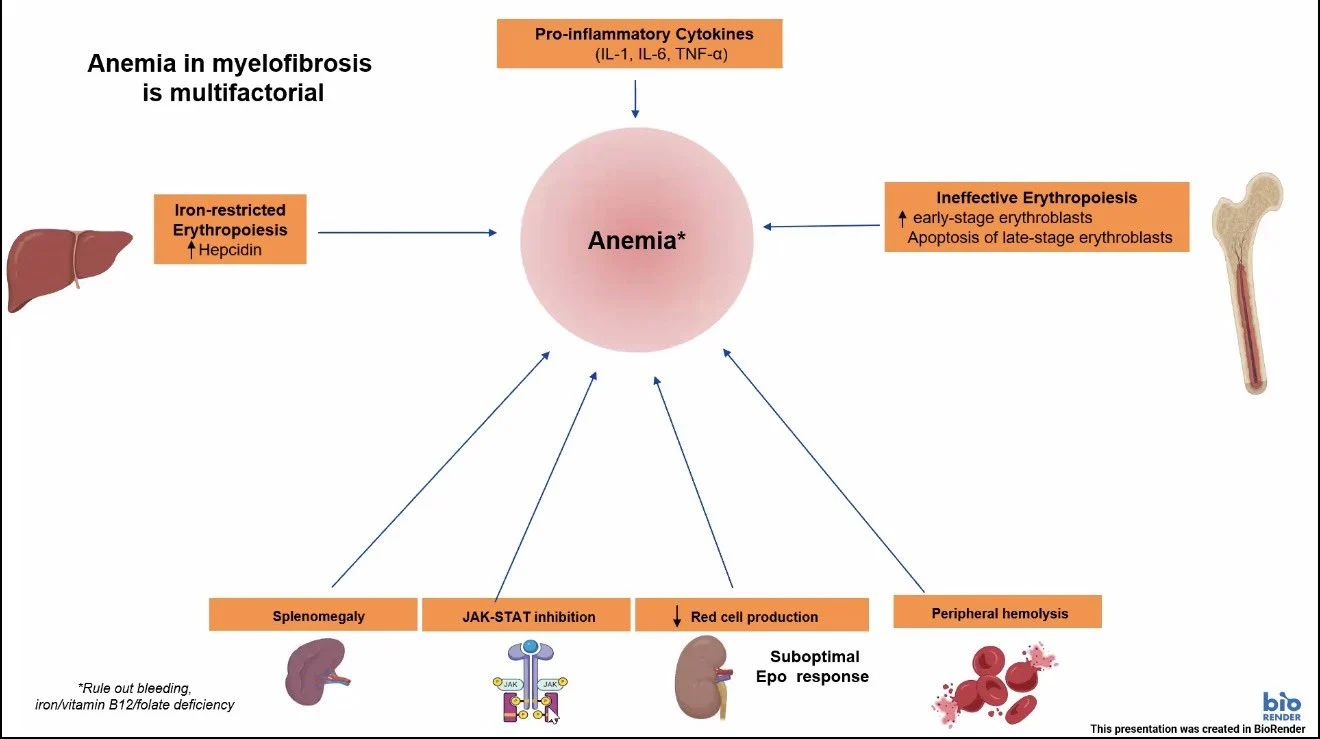
Anemia reflects several interacting factors:
- Pro-inflammatory cytokines
- High Hepcidin, leading to iron-restricted erythropoiesis
- Ineffective erythropoiesis
- Suboptimal erythropoietin response
- Splenic sequestration and peripheral hemolysis
- Treatment-related suppression of erythropoiesis
First, identify reversible contributors before attributing every Hb decline to MF:
- Exclude bleeding
- Check iron, vitamin B12 and folate
- Assess hemolysis and renal function
- Review treatment timing and doses
New or worsening anemia also warrants reassessment of disease status.
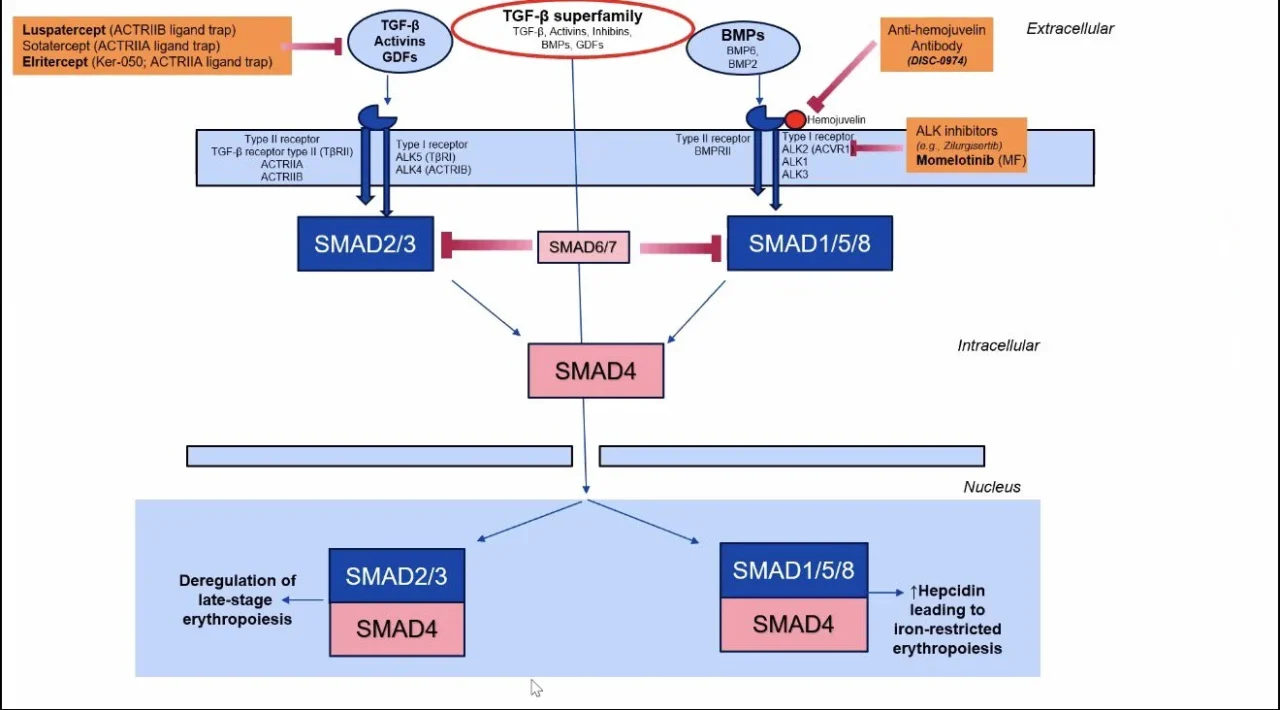
Two pathways worth remembering
- SMAD2/3: excessive signaling can impair late-stage erythroid maturation. Activin receptor ligand traps, such as luspatercept, target this biology.
- BMP–ACVR1–SMAD1/5/8: promotes hepcidin production. Momelotinib inhibits ACVR1, reducing hepcidin and improving iron availability.
Memory aid: ‘Maturation and Mobilization’
Support red-cell maturation and mobilize iron.
Mayo Clinic experience: a substantial unmet need
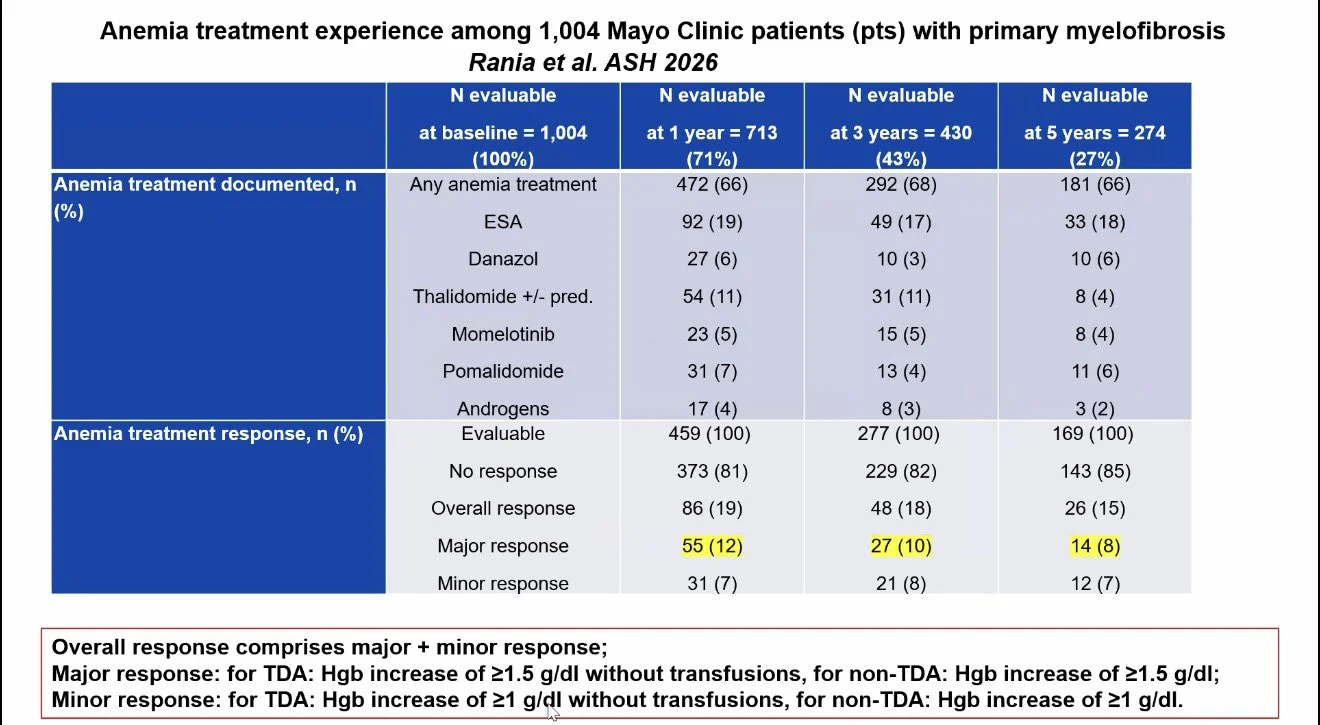
The slide cites Rania et al., ASH 2026, describing 1,004 patients with primary MF.
Among patients evaluable for anemia-treatment response:
- Year 1: 19% overall; 12% major response
- Year 3: 18% overall; 10% major response
- Year 5: 15% overall; 8% major response
These are slide-reported observational findings. Changing denominators and mixed treatments mean they cannot establish comparative drug efficacy.
Match treatment to the patient’s needs
Assess anemia alongside:
- Transfusion burden
- Splenomegaly
- Symptom burden
- Platelet count
- Disease risk and transplant eligibility
Momelotinib has an FDA indication for adults with intermediate or high-risk MF and anemia.
Luspatercept has phase II MF evidence; agents displayed in a pathway diagram should not be assumed to share the same indication or evidence.”
Other posts featuring Chokri Ben Lamine on Hemostasis Today.
-
Nov 26, 2026, 04:50Dr Arun V J: Transforming Transfusion Medicine Beyond Resource Limitations
-
Nov 26, 2026, 03:56Agnes Kisakye: Strengthening Governance and Sustainability in Haemophilia Care Across Uganda
-
Nov 26, 2026, 03:41Gurpreet Kaurr: Bare Megakaryocytic Nuclei as Clues to Underlying Bone Marrow Disorders
-
Nov 26, 2026, 03:31Abdul Muqtadir Abbasi: Lymphocytopenia When to Investigate and When to Reassure
-
Nov 25, 2026, 15:19Yoji Takeuchi։ A New Strategy for Periprocedural DOAC Management in Colonoscopic Polypectomy
-
Nov 25, 2026, 15:10Quebec Platelet Disorder: When Platelets Become Drivers of Fibrinolysis
-
Nov 25, 2026, 15:04Aditya Seth: Vitamin K Deficiency Bleeding in Newborns A Preventable Emergency
-
Nov 25, 2026, 14:53Aryabhatta Sadhu: When a Sickle Cell Crisis Calls for a Different Treatment Approach
-
Nov 25, 2026, 14:47Andres Zuleta: Rethinking Aspirin After Primary PCI