


Mandy Moore’s Pregnancy Journey With Immune Thrombocytopenia
For actress and singer Mandy Moore, immune thrombocytopenia (ITP) became an important part of her journey through pregnancy and childbirth. In July 2022, while expecting her second child, Moore revealed that her persistently low platelet count meant she could not receive an epidural during labor.
Her disclosure brought attention to a condition that may not always produce obvious symptoms but can influence some of life’s most personal and significant experiences. By sharing her story, Moore helped illustrate how a hematological disorder can affect not only medical decisions but also a person’s expectations, comfort and sense of control.
Understanding ITP Beyond the Diagnosis
Immune thrombocytopenia is an acquired autoimmune disorder in which the immune system targets platelets, resulting in a reduced platelet count and a potential risk of bleeding. Autoantibodies can accelerate platelet destruction, particularly in the spleen, while immune-mediated disturbances in platelet production may contribute to the condition.
Symptoms vary from no apparent manifestations to easy bruising, petechiae, nosebleeds and other bleeding complications. For some patients, however, the most significant consequences arise when thrombocytopenia limits access to certain medical procedures or requires additional planning for major life events.
The First Birth: A Difficult Experience Without an Epidural
Moore welcomed her first son, August “Gus” Goldsmith, in February 2021. During her pregnancy with her second child, she explained that she had also given birth to Gus without an epidural because her platelet levels were too low for the procedure.
Reflecting on that experience in her 2022 interview with TODAY Parents, she described the delivery as extremely difficult, recalling that it had been an ordeal she was reluctant to repeat. Nevertheless, as her second birth approached, she recognized that the same limitation might again determine her pain-management options.
Her comments revealed an aspect of chronic illness that can easily be overlooked: knowing why a procedure is unavailable does not necessarily make the limitation easier to accept. Moore openly expressed that she wished medication were an option, emphasizing how much the possibility of pain relief mattered to her.
At the same time, she approached the upcoming delivery with determination, saying she was prepared to face the experience again. Her account showed how patients may need to reconcile their personal hopes with medical decisions made to reduce potential harm.
Why Low Platelet Counts Can Limit Epidural Analgesia
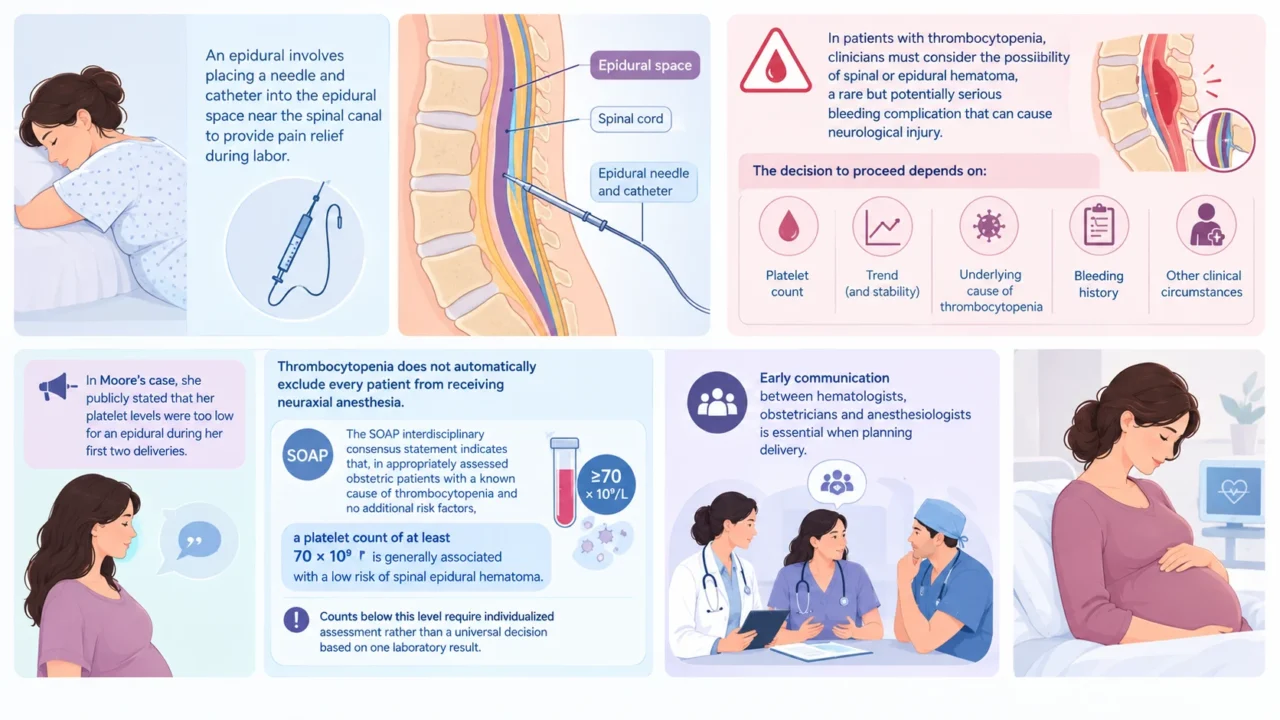
An epidural involves placing a needle and catheter into the epidural space near the spinal canal to provide pain relief during labor. In patients with thrombocytopenia, clinicians must consider the possibility of spinal or epidural hematoma, a rare but potentially serious bleeding complication that can cause neurological injury.
The decision to proceed depends on the platelet count, its trend, the underlying cause of thrombocytopenia, bleeding history and other clinical circumstances. In Moore’s case, she publicly stated that her platelet levels were too low for an epidural during her first two deliveries.
Importantly, thrombocytopenia does not automatically exclude every patient from receiving neuraxial anesthesia. The SOAP interdisciplinary consensus statement indicates that, in appropriately assessed obstetric patients with a known cause of thrombocytopenia and no additional risk factors, a platelet count of at least 70 × 10⁹/L is generally associated with a low risk of spinal epidural hematoma. Counts below this level require individualized assessment rather than a universal decision based on one laboratory result.
This distinction highlights why early communication between hematologists, obstetricians and anesthesiologists is essential when planning delivery.
The Second Pregnancy: Preparing to Face the Same Challenge
In June 2022, Moore announced that she and her husband, musician Taylor Goldsmith, were expecting their second son. As the pregnancy progressed, she explained that her platelet counts remained low and that she would again have to prepare for childbirth without an epidural.
In her July interview, she acknowledged the difficulty of anticipating another unmedicated delivery while drawing on her previous experience. Her story highlighted how a chronic condition can influence birth planning long before a patient arrives at the delivery room.
Moore also faced the practical demands of balancing pregnancy, family life and her professional commitments. In June 2022, she decided to cancel the remainder of her tour after finding the physical demands of traveling increasingly exhausting during pregnancy.
She explained that she needed to recognize her limits and allow herself to rest, describing the decision as difficult but necessary. Although this decision was reported in the context of her pregnancy, the available coverage does not establish that ITP itself was the direct reason for canceling the tour.
Moore welcomed her second son, Oscar “Ozzie” Goldsmith, on October 21, 2022. Her experience demonstrated why pregnancy in patients with ITP may require more than routine platelet monitoring: decisions about analgesia, delivery and bleeding risk need to be considered in advance.
It also underscored the importance of giving patients clear information about their options, including what may happen if platelet counts change as delivery approaches. An individualized plan can help patients prepare for different scenarios without assuming that every pregnancy affected by ITP will follow the same course.
A Different Outcome During Her Third Pregnancy
Moore’s experience with childbirth did not end with two unmedicated deliveries. In September 2024, she welcomed her daughter, Louise “Lou” Everett Goldsmith, after her medical team used corticosteroids during the final week of pregnancy to increase her platelet count. In a later interview, Moore explained that her platelet levels had fallen sufficiently low for her doctors to consider treatment before delivery, partly to prepare for the possibility of an emergency cesarean section.
After treatment, her counts rose above the threshold used by her clinical team, allowing her to receive an epidural during this birth.
The difference between her earlier deliveries and the birth of her daughter illustrates how management can change when platelet counts respond to treatment. Corticosteroids are among the established therapies used to increase platelet counts in pregnant patients with ITP when treatment is clinically indicated.
The decision to use them depends on factors such as the platelet count, bleeding risk, gestational age and anticipated procedures, rather than pregnancy alone. Moore’s experience offers a particularly clear example of why individualized care and preparation can make a meaningful difference to a patient’s birth experience.
Her third birth also adds an important dimension to the story: ITP does not necessarily mean that the same restrictions will apply during every pregnancy. Platelet counts can fluctuate, and treatment may create options that were not available during an earlier delivery.
Moore’s account does not establish that every patient can achieve a similar response, but it shows the potential value of close monitoring and coordinated planning. It also reinforces the importance of revisiting previous birth experiences and discussing what might be different next time.
Pregnancy With ITP: Balancing Maternal and Neonatal Considerations
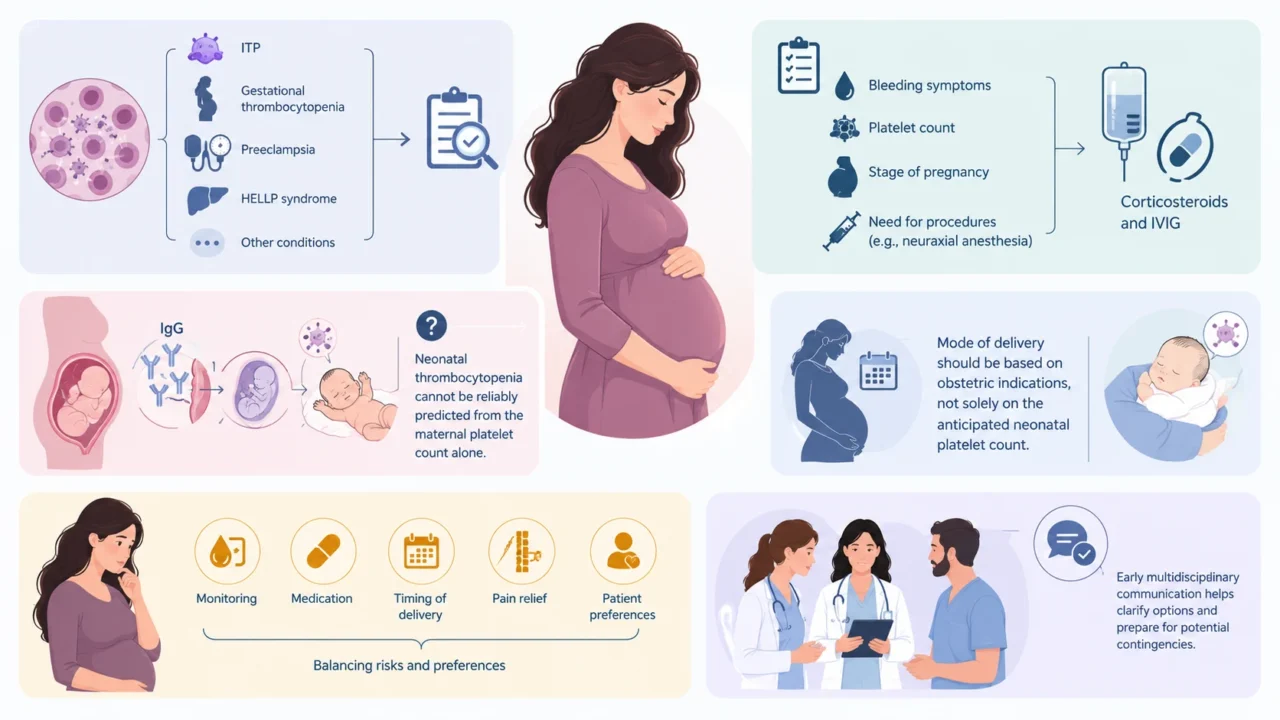
Pregnancy in patients with ITP requires careful assessment because low platelet counts may also arise from gestational thrombocytopenia, preeclampsia, HELLP syndrome or other conditions. Distinguishing between these diagnoses is essential because their implications for maternal health and treatment differ.
Management is individualized according to bleeding symptoms, platelet levels, the stage of pregnancy and the need for procedures such as neuraxial anesthesia. When treatment is necessary, corticosteroids and intravenous immunoglobulin (IVIG) are among the established options used to raise platelet counts.
The baby’s platelet count is another consideration because maternal IgG autoantibodies can cross the placenta and may contribute to neonatal thrombocytopenia. However, the severity of neonatal thrombocytopenia cannot be reliably predicted from the mother’s platelet count alone. For this reason, appropriate delivery planning includes consideration of neonatal assessment and monitoring when indicated.
The mode of delivery should generally be determined by obstetric indications, rather than by the anticipated neonatal platelet count alone.
For expectant mothers, these considerations can add uncertainty to an already significant life event. Decisions may involve monitoring, medication, the timing of delivery and discussions about pain relief, all while balancing the patient’s preferences against potential risks.
Early multidisciplinary communication can help clarify which options are appropriate and what contingencies may be needed. Moore’s experience makes these clinical considerations more tangible by showing how platelet counts can influence an aspect of childbirth that many patients expect to be able to choose.
The Hidden Burden of Living With ITP
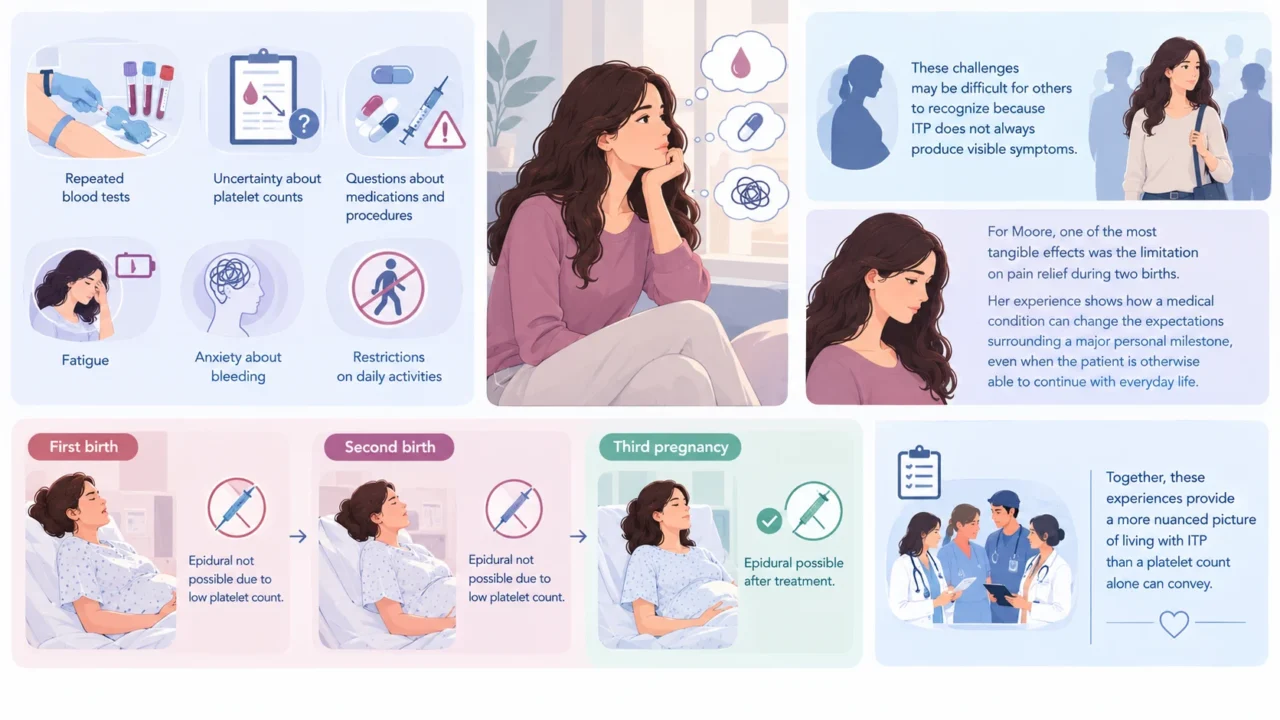
The impact of ITP is not limited to bleeding episodes or abnormal laboratory results. Patients may face repeated blood tests, uncertainty about their platelet counts and concerns about whether particular medications or procedures are safe. Fatigue, anxiety about bleeding and restrictions on everyday activities can also affect quality of life, even when serious bleeding is absent. These challenges may be difficult for others to recognize because the condition does not always produce visible symptoms.
For Moore, one of the most tangible effects was the limitation on pain relief during two births. Her experience shows how a medical condition can change the expectations surrounding a major personal milestone, even when the patient is otherwise able to continue with everyday life.
Her later ability to receive an epidural after treatment during her third pregnancy further illustrates that clinical circumstances can change over time. Together, these experiences provide a more nuanced picture of living with ITP than a platelet count alone can convey.
Beyond Awareness: The Importance of Individualized Care
Mandy Moore’s decision to speak openly about ITP has helped bring visibility to a condition that is often understood primarily through laboratory findings. Her story highlights the importance of discussing not only platelet counts and bleeding risks but also the personal priorities that shape treatment decisions.
For pregnant patients, these conversations may include pain-management preferences, delivery planning, treatment options and the possibility that recommendations may change as pregnancy progresses. Clear communication can help patients participate in decisions and feel better prepared for different outcomes.
Ultimately, Moore’s experience is a reminder that the same diagnosis can lead to different clinical experiences, even within one person’s life. Her first two deliveries were unmedicated because of low platelet counts, whereas treatment during her third pregnancy enabled her to receive an epidural.
Although her story cannot predict outcomes for other patients, it demonstrates the value of individualized assessment, coordinated care and attention to quality of life. Behind every platelet count is a person whose concerns, expectations and experiences deserve to be part of the clinical conversation.
FAQ
1. What is immune thrombocytopenia (ITP)?
Immune thrombocytopenia (ITP) is an autoimmune disorder in which the immune system targets platelets, resulting in a reduced platelet count. It can increase the risk of bleeding, although symptoms and disease severity vary between patients.
2. What causes ITP?
ITP develops when immune mechanisms accelerate platelet destruction and may also impair platelet production in the bone marrow. In many cases, the precise trigger is unknown, although some cases occur in association with infections, autoimmune diseases or other conditions.
3. What are the most common symptoms of ITP?
Symptoms may include easy bruising, petechiae, nosebleeds, gum bleeding and heavy menstrual bleeding. Some people have no noticeable symptoms and are diagnosed after a routine blood test.
4. Why couldn’t Mandy Moore receive an epidural during her first two deliveries?
Moore explained publicly that her platelet count was too low for an epidural during her first two deliveries. Thrombocytopenia can increase concern about bleeding around the spinal canal, so the decision to perform neuraxial anesthesia requires an individualized assessment of platelet counts and other risk factors.
5. Does everyone with ITP have to avoid an epidural?
No. ITP does not automatically rule out epidural analgesia. The decision depends on the platelet count, its stability, the underlying cause of thrombocytopenia, bleeding history and other clinical factors, with the anesthesiology team assessing the individual patient’s risk.
6. Can ITP affect pregnancy and childbirth?
Yes. Platelet counts may change during pregnancy, and ITP can influence treatment decisions, delivery planning and the suitability of certain anesthesia options. Care should be coordinated between hematologists, obstetricians and anesthesiologists.
7. Can ITP be treated during pregnancy?
Yes, when treatment is necessary. Corticosteroids and intravenous immunoglobulin (IVIG) are commonly used options to increase platelet counts, with the choice depending on the patient’s clinical circumstances, gestational age and treatment goals.
8. Can maternal ITP affect a newborn?
Maternal IgG autoantibodies can cross the placenta and contribute to thrombocytopenia in the newborn. However, maternal platelet counts alone cannot reliably predict neonatal platelet counts, so appropriate assessment and monitoring may be needed after birth.
9. Does every patient with ITP require treatment?
No. Some patients with no significant bleeding and an adequate platelet count can be monitored without immediate treatment. Management is individualized according to bleeding symptoms, platelet levels, risk factors, planned procedures and the patient’s overall clinical situation.
10. What does Mandy Moore’s experience teach us about living with ITP?
Moore’s experience illustrates how ITP can affect important life decisions beyond routine blood tests and visible symptoms. Her first two deliveries were unmedicated because of low platelet counts, while treatment during her third pregnancy enabled her to receive an epidural. Her story highlights the importance of individualized care, early planning and communication between patients and their healthcare teams.
Written by Hermine Sayiyan, MD
Stay updated with Hemostasis Today.
-
Oct 22, 2026, 16:48Ahmed Alotaibi: Rare Rh Phenotype and Severe Fetal Anaemia
-
Oct 22, 2026, 16:36Alissa Odum: Every Blood Type Matters Every Donation Saves Lives
-
Oct 22, 2026, 16:33Mehul Malhotra: Targeted Therapies and Clinical Advances Transform the wAIHA Treatment Landscape
-
Oct 22, 2026, 16:13William Wallace: The Hidden Neurological Impact of Vitamin B12 Deficiency
-
Oct 22, 2026, 16:06Akram Farhadi: Anemia and Low Hemoglobin Associated With Higher Risk of Osteosarcopenia in Older Adults
-
Oct 22, 2026, 15:49Javed Iqbal: NUMC Pulmonary and Critical Care Team Showcases Research at CHEST 2026
-
Oct 22, 2026, 15:37Alina Mitina: Key Concerns Surrounding DVT and Pulmonary Embolism
-
Oct 22, 2026, 14:45Seyed Mehrab Safdari: Prenatal Diagnosis in Hemophilia – Two Decades of Progress and Remaining Challenges
-
Oct 22, 2026, 14:39Mahmoud Abdelnabi: Evaluating the Evidence on Elevated Lp(a) and VTE Before Clinical Translation