

Mehul Malhotra: Targeted Therapies and Clinical Advances Transform the wAIHA Treatment Landscape
Mehul Malhotra, Marketing Executive at DelveInsight Business Research LLP, shared a post on LinkedIn:
“The Warm Autoimmune Hemolytic Anemia Market is entering a transformative phase as breakthrough targeted therapies, expanding clinical research, and improved diagnostic capabilities reshape the future of rare autoimmune blood disorders.
According to DelveInsight, the Warm Autoimmune Hemolytic Anemia Market Size was valued at approximately USD 600 million in 2025 and is projected to reach nearly USD 2.4 billion by 2036, registering an impressive CAGR of 14.4 percent during the forecast period (2026–2036).
This remarkable expansion highlights the growing commercial potential of the Warm Autoimmune Hemolytic Anemia Treatment Market, driven by increasing disease awareness, rising investments in immunology research, and the development of innovative targeted therapies.
The Warm Autoimmune Hemolytic Anemia Market Forecast reflects a significant shift from conventional immunosuppressive therapies toward precision medicine.
Pharmaceutical companies are investing heavily in biologics and mechanism-based therapies that aim to improve long-term disease control while minimizing treatment-related toxicity.
As a result, the Warm Autoimmune Hemolytic Anemia Therapeutics Market is expected to witness unprecedented innovation over the next decade.
Understanding Warm Autoimmune Hemolytic Anemia
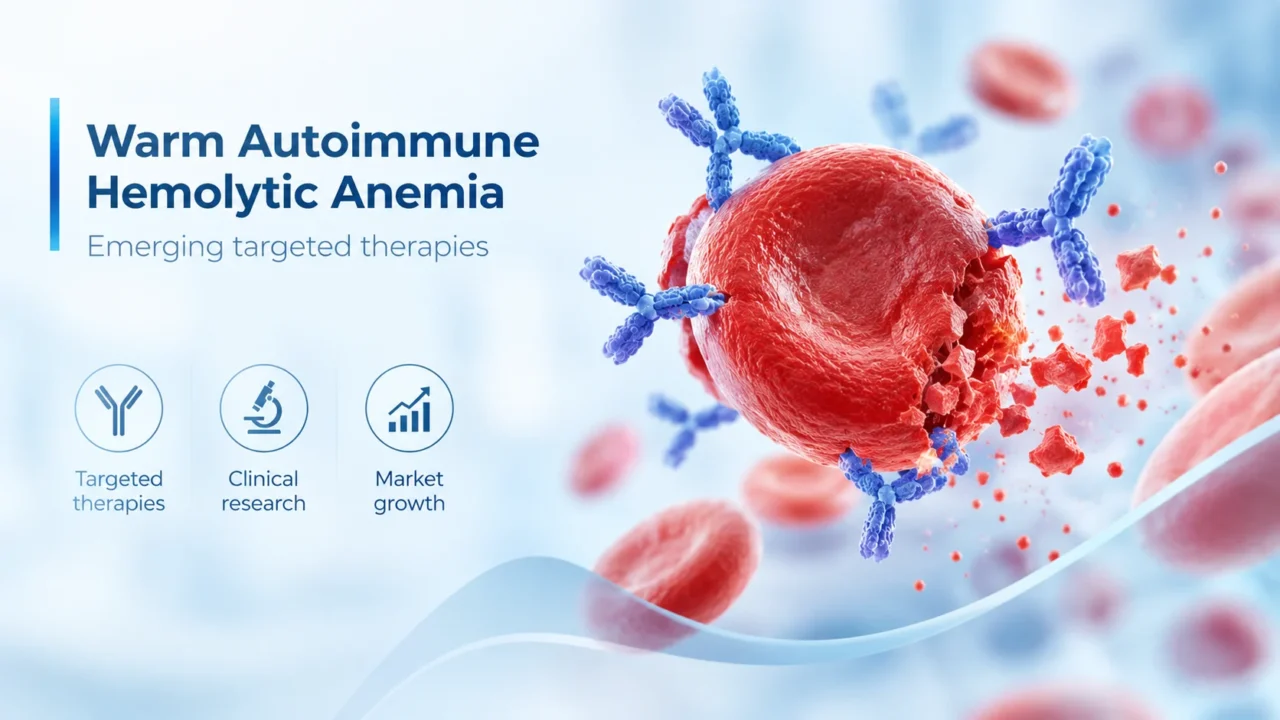
Warm Autoimmune Hemolytic Anemia (wAIHA) is a rare autoimmune disorder in which the body’s immune system mistakenly attacks healthy red blood cells.
This immune-mediated destruction causes chronic hemolytic anemia, reducing oxygen delivery throughout the body and leading to symptoms such as fatigue, weakness, dizziness, jaundice, shortness of breath, and splenomegaly.
Although corticosteroids remain the first-line standard of care, relapse rates remain high, and many patients require prolonged immunosuppressive therapy.
Existing treatments frequently fail to provide durable disease control, creating a substantial unmet medical need.
Consequently, the Warm Autoimmune Hemolytic Anemia Treatment Market is witnessing growing interest from pharmaceutical innovators developing next-generation immunotherapies capable of modifying disease progression rather than simply controlling symptoms.
Warm Autoimmune Hemolytic Anemia Market Overview
DelveInsight’s Warm Autoimmune Hemolytic Anemia Market Report provides comprehensive coverage of historical market performance, future growth projections, epidemiological trends, current treatment practices, emerging therapies, competitive intelligence, and commercial opportunities across the United States, EU4 (Germany, France, Italy, and Spain), the United Kingdom, and Japan.
The report delivers detailed Warm Autoimmune Hemolytic Anemia Market Insights, including therapy adoption patterns, market share analysis, unmet clinical needs, treatment algorithms, pricing trends, reimbursement scenarios, and future commercial opportunities through 2036.
These insights enable pharmaceutical companies, investors, healthcare providers, and strategic decision-makers to better understand the evolving wAIHA Market landscape.
Explore the complete Warm Autoimmune Hemolytic Anemia Market Report
Warm Autoimmune Hemolytic Anemia Companies Driving Innovation
The competitive environment continues to evolve as leading pharmaceutical and biotechnology companies invest in targeted therapies designed specifically for wAIHA.
Some of the major Warm Autoimmune Hemolytic Anemia Companies actively developing innovative therapies include:
- Johnson and Johnson
- Rigel Pharmaceuticals
- Sanofi
- Apellis Pharmaceuticals
- Immunovant
- Incyte Corporation
- Zenas BioPharma
- Bristol Myers Squibb
Other emerging biotechnology companies advancing novel immunotherapies.
These organizations are accelerating research across multiple therapeutic mechanisms, including FcRn inhibition, BTK inhibition, complement pathway modulation, B-cell targeting, and monoclonal antibody development.
Their investments are expected to significantly strengthen the Warm Autoimmune Hemolytic Anemia Pipeline over the coming years.
Warm Autoimmune Hemolytic Anemia Epidemiology
Understanding Warm Autoimmune Hemolytic Anemia Epidemiology is essential for evaluating future commercial opportunities and identifying regions with growing patient populations.
According to DelveInsight’s epidemiological analysis:
Approximately 88,000 diagnosed prevalent cases of wAIHA were reported across the seven major markets (7MM) during 2025.
The United States represented nearly 50 percent of the diagnosed patient population.
Primary and secondary forms of wAIHA continue to contribute substantially to disease burden.
Women account for a larger proportion of diagnosed cases than men.
Adults aged 65 years and above represent the largest affected age group across Europe.
Increasing awareness and improved diagnostic technologies continue to expand the diagnosed patient pool globally.
The expanding patient population continues to create significant opportunities within the Autoimmune Hemolytic Anemia Market, encouraging pharmaceutical companies to invest in innovative therapeutics capable of improving long-term disease management.
Discover comprehensive Warm Autoimmune Hemolytic Anemia market demand.
Warm Autoimmune Hemolytic Anemia Competitive Landscape.
The Warm Autoimmune Hemolytic Anemia Pipeline is one of the most promising areas within autoimmune hematology.
Unlike conventional therapies that broadly suppress immune function, emerging therapies are designed to selectively target the biological pathways responsible for red blood cell destruction.
Current Emerging Therapies for Warm Autoimmune Hemolytic Anemia include:
- FcRn inhibitors
- BTK inhibitors
- Complement inhibitors
- Anti-BAFF receptor therapies
- Novel monoclonal antibodies
- Precision immunomodulatory therapies
Among the most closely watched Warm Autoimmune Hemolytic Anemia Drugs are:
- IMAAVY (nipocalimab) – Johnson & Johnson
- WAYRILZ (rilzabrutinib) – Sanofi
- Ianalumab – Novartis
These late-stage therapies have the potential to redefine treatment standards by delivering improved efficacy, reduced relapse rates, and enhanced long-term safety compared with traditional corticosteroid-based approaches.
wAIHA Clinical Recent Development
In February 2026, Johnson and Johnson announced the submission of a supplemental Biologics License Application (sBLA) to the US FDA seeking approval of IMAAVY (nipocalimab-aahu) for the treatment of patients with warm autoimmune hemolytic anemia (wAIHA).
According to Novartis’ 2026 investor presentation, the Phase III clinical trial data for ianalumab in patients with warm autoimmune hemolytic anemia (wAIHA) is expected to be released in the second half of 2026, marking an important milestone in the therapy’s clinical development.
In February 2026, the US FDA granted Breakthrough Therapy Designation (BTD) to WAYRILZ (rilzabrutinib) for the treatment of patients with warm autoimmune hemolytic anemia (wAIHA).
During the same month, Japan’s Ministry of Health, Labour and Welfare (MHLW) also granted Orphan Drug Designation (ODD) to rilzabrutinib for the same indication.
Stay updated on breakthrough clinical trials, regulatory approvals, and emerging therapies transforming the future of Warm Autoimmune Hemolytic Anemia treatment.
Warm Autoimmune Hemolytic Anemia Market Outlook
The future of the Warm Autoimmune Hemolytic Anemia Market appears highly promising as precision medicine continues to replace conventional treatment strategies.
Historically, disease management has relied heavily on corticosteroids, rituximab, splenectomy, and other immunosuppressive therapies.
Although these interventions provide symptomatic relief for many patients, they are frequently associated with relapse, long-term toxicity, and limited durability.
As pharmaceutical companies increasingly focus on mechanism-based therapies, the Warm Autoimmune Hemolytic Anemia Therapeutics Market is expected to undergo substantial transformation.
Novel therapies targeting FcRn, BTK, BAFF-R, and complement pathways have the potential to provide more durable disease control while reducing steroid dependence and improving patients’ quality of life.
DelveInsight projects that the Warm Autoimmune Hemolytic Anemia Market Forecast will remain strongly positive through 2036, supported by expanding diagnosis rates, growing patient awareness, increasing healthcare investments, and a robust late-stage pipeline.
The United States is expected to maintain the largest market share across the seven major markets, while Europe and Japan continue to present attractive growth opportunities.
Warm Autoimmune Hemolytic Anemia Key Growth Drivers
Several factors are expected to accelerate the growth of the Warm Autoimmune Hemolytic Anemia Market Size over the next decade:
- Rising prevalence of autoimmune diseases worldwide
- Increasing awareness among physicians and patients
- Advancements in diagnostic technologies enabling earlier diagnosis
- Growing investment in rare disease research
- Expanding Warm Autoimmune Hemolytic Anemia Pipeline
- Rising number of wAIHA Clinical Trials
- Development of innovative FcRn inhibitors, BTK inhibitors, and complement inhibitors
- Improved regulatory support for orphan diseases
- Greater adoption of precision medicine and targeted biologics
Warm Autoimmune Hemolytic Anemia Market Challenges
Despite encouraging growth prospects, several challenges continue to influence the Warm Autoimmune Hemolytic Anemia Treatment Market:
- Absence of widely approved disease-specific therapies
- High development costs associated with biologics
- Complex regulatory pathways
- Limited patient awareness in developing regions
- Reimbursement and market access challenges
- Long clinical development timelines
- Dependence on corticosteroids and associated adverse effects
- Small patient populations characteristic of rare diseases
Explore the market dynamics, commercial opportunities, and strategic developments shaping the next generation of Warm Autoimmune Hemolytic Anemia therapeutics.
Future Opportunities
The next decade is expected to witness substantial innovation within the Autoimmune Hemolytic Anemia Market, driven by scientific advances in immunology, biomarker research, and personalized medicine.
Companies developing targeted biologics are increasingly focusing on therapies capable of delivering long-term remission with improved safety profiles.
Simultaneously, collaborations between biotechnology firms, pharmaceutical companies, and academic institutions are accelerating clinical development and expanding therapeutic options.
Artificial intelligence, real-world evidence, and precision diagnostics are also expected to play an increasingly important role in identifying appropriate patient populations, optimizing clinical trial design, and supporting personalized treatment strategies.
As awareness improves and more therapies approach commercialization, the Warm Autoimmune Hemolytic Anemia Market Insights indicate significant opportunities for healthcare providers, pharmaceutical innovators, investors, and policy makers alike.
Gain exclusive insights into future commercial opportunities, pipeline expansion, and investment trends driving the Warm Autoimmune Hemolytic Anemia Market Forecast
Conclusion
The Warm Autoimmune Hemolytic Anemia Market is entering one of the most dynamic periods in its history.
With a market projected to grow from approximately USD 600 million in 2025 to nearly USD 2.4 billion by 2036, the disease area is attracting unprecedented attention from pharmaceutical companies, investors, and healthcare stakeholders.
Rapid advancements in the Warm Autoimmune Hemolytic Anemia Pipeline, increasing numbers of wAIHA Clinical Trials, and the emergence of highly targeted therapies such as FcRn inhibitors and BTK inhibitors are expected to fundamentally transform disease management.
These innovations have the potential to reduce reliance on traditional immunosuppressive therapies while significantly improving long-term patient outcomes.
As reflected in the Warm Autoimmune Hemolytic Anemia Market Report, continued investments in research, supportive regulatory initiatives, and expanding awareness are likely to sustain strong market growth throughout the forecast period.
For pharmaceutical companies, healthcare professionals, and investors, the evolving Warm Autoimmune Hemolytic Anemia Market Forecast presents significant opportunities to participate in one of the fastest-growing segments within autoimmune hematology.
About DelveInsight
DelveInsight is a leading life sciences market research and business consulting firm specializing in pharmaceutical, biotechnology, healthcare, and medical device intelligence.
Through comprehensive market research reports, epidemiology analysis, competitive intelligence, pipeline assessments, and forecasting solutions, DelveInsight empowers organizations with actionable insights to support strategic decision-making across global healthcare markets.”
Stay updated with Hemostasis Today.
-
Oct 22, 2026, 16:13William Wallace: The Hidden Neurological Impact of Vitamin B12 Deficiency
-
Oct 22, 2026, 16:06Akram Farhadi: Anemia and Low Hemoglobin Associated With Higher Risk of Osteosarcopenia in Older Adults
-
Oct 22, 2026, 15:49Javed Iqbal: NUMC Pulmonary and Critical Care Team Showcases Research at CHEST 2026
-
Oct 22, 2026, 15:37Alina Mitina: Key Concerns Surrounding DVT and Pulmonary Embolism
-
Oct 22, 2026, 14:45Seyed Mehrab Safdari: Prenatal Diagnosis in Hemophilia – Two Decades of Progress and Remaining Challenges
-
Oct 22, 2026, 14:39Mahmoud Abdelnabi: Evaluating the Evidence on Elevated Lp(a) and VTE Before Clinical Translation
-
Oct 22, 2026, 14:34David McIntosh: Fundamental Flaws in National Blood Systems Are Root Causes of Failure
-
Oct 22, 2026, 14:32Aurelio Maggio: Bridging Scientific Progress and Equitable Access to SCD Care in Sub-Saharan Africa
-
Oct 22, 2026, 14:26Khaled Musallam: Longevity and Healthy Aging in Thalassemia