


How Antiseizure Medication Selection May Influence DOAC Safety in Epilepsy – JAMA Neurology
JAMA Neurology shared a post on LinkedIn about a recent article by Kai Michael Schubert et al., adding:
“Among adults with Epilepsy receiving direct oral anticoagulants, antiseizure medication selection was associated with different risks of thromboembolic events, major bleeding, and all-cause mortality.
Antiseizure medication choice may be a modifiable contributor to safety outcomes during anticoagulation and may inform treatment selection when seizure therapy and anticoagulation are both required.”
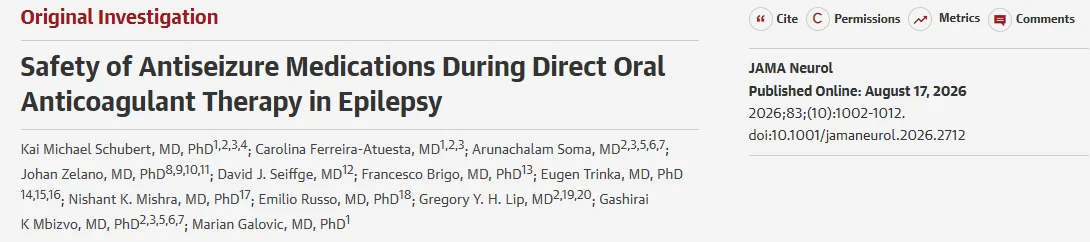
Title: Safety of Antiseizure Medications During Direct Oral Anticoagulant Therapy in Epilepsy
Authors: Kai Michael Schubert, Carolina Ferreira-Atuesta, Arunachalam Soma, Johan Zelano, David J. Seiffge, Francesco Brigo, Eugen Trinka, Nishant K. Mishra, Emilio Russo, Gregory Y. H. Lip, Gashirai K. Mbizvo, Marian Galovic
Stay updated on all scientific advances with Hemostasis Today.
-
Oct 31, 2026, 19:40Andreas Calatzis: Revisiting a Widely Cited Study on Preoperative Screening for Primary Hemostasis Disorders
-
Oct 31, 2026, 19:35Alejandro González Veliz: Balancing Ischemic Protection and Bleeding Risk in Antiplatelet Management
-
Oct 31, 2026, 19:29Sascha David: Therapeutic Plasma Exchange Associated with Lower 90 Day Mortality in Streptococcal Septic Shock
-
Oct 31, 2026, 19:25Jessica Garcia: Real-World Evidence on Efanesoctocog Alfa Prophylaxis in Pediatric Hemophilia A
-
Oct 31, 2026, 19:21Cedric Hermans: What If Higher Plasma FIX Levels Do Not Necessarily Mean better Haemostatic Protection?
-
Oct 31, 2026, 19:16Valance Washington: Celebrating Sravya Nimmala’s Outstanding Abstract Award
-
Oct 31, 2026, 16:41Ward Faisal: Ferric Carboxymaltose as an Alternative to Traditional Iron Preparations for Anemia
-
Oct 31, 2026, 16:35Bhavna Daryani: Using Technology to Make Anemia Screening More Accessible and Non-Invasive
-
Oct 31, 2026, 16:33Greg Jackson: Key Insights from the 22nd Annual McMaster Hematology and Thromboembolism Update