


Backflow-Induced Clot Formation During Red Cell Transfusion – AABB
AABB shared a post on LinkedIn about a recent article by Vandela Brismar et al., published in Journal Transfusion, adding:
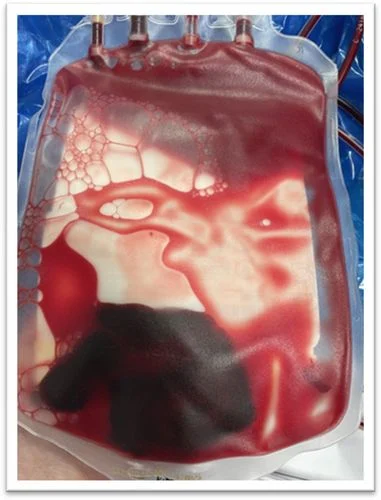
“A red cell unit arrived with clots the size of a fist. Twelve hours later, when it was photographed, fibrinolysis had dissolved much of the evidence. So what happened?
A new, subscriber-only case report from Karolinska Universitetssjukhuset in Stockholm details the investigation.
Records showed no deviations in blood donation, component manufacturing, transportation or storage.
Serological testing provided the key clue: the donor and patient differed in two antigens, c and Jka, and testing revealed evidence of both patient and donor blood in the transfusion set and blood bag.
The findings indicated backflow of patient blood into the red cell unit, likely through the transfusion set. Transportation during an active transfusion was suspected as a contributing factor, though the precise cause was not confirmed.”
Title: Backflow of patient blood during transfusion causing clotting
Authors: Vendela Brismar, Daniel Wessman, Stella Larsson

See more in the Gallery.
Stay updated on all scientific advances with Hemostasis Today.
-
Nov 3, 2026, 13:45Keiyona Coots: Patient Blood Management as a Cornerstone of Safer Healthcare
-
Nov 3, 2026, 13:37Godfred Oduro: Engaging Young Students in Thalassemia and Sickle Cell Disease Awareness
-
Nov 3, 2026, 13:37Saskia Middeldorp: The Use of LMWH in Women With Pregnancy Complications
-
Nov 3, 2026, 13:31Nita Radhakrishnan: MRI T2 Reveals Hidden Cardiac and Hepatic Iron Overload in Thalassemia
-
Nov 3, 2026, 13:26Chancellor Donald: Bridging Hematology Innovation and Entrepreneurship to Advance Patient Care
-
Nov 3, 2026, 13:21Pete Stibbs: From Scientific Ideas to Clinical Impact
-
Nov 3, 2026, 12:38Kemal Karaagac: DOACs vs. VKAs in Cerebral Venous Thrombosis
-
Nov 3, 2026, 12:30Pakeeza Arshad: RDW and Bone Marrow Recovery in Hematological Malignancies
-
Nov 3, 2026, 12:21Mohamed Touhid Patel: Combining Microfluidics and SERS for Advanced Blood Analysis