

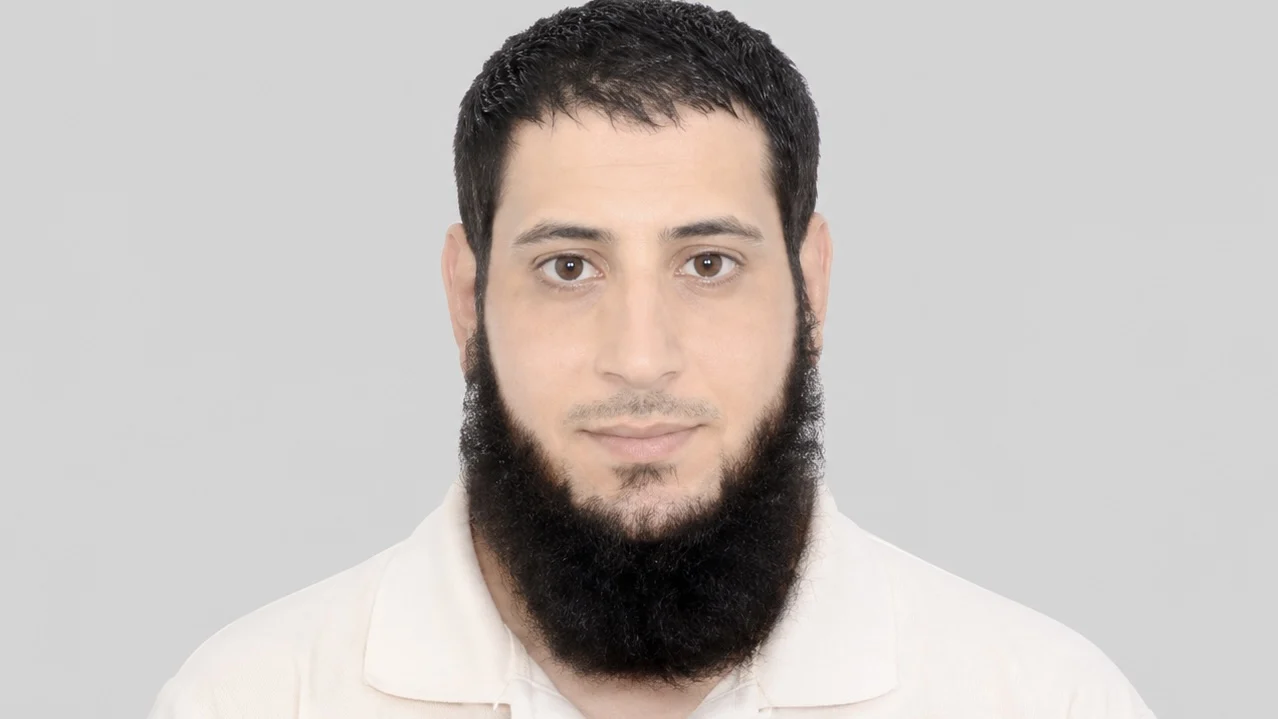
Chokri Ben Lamine: Redefining Toxicity Assessment After Immune Effector Cell Therapy
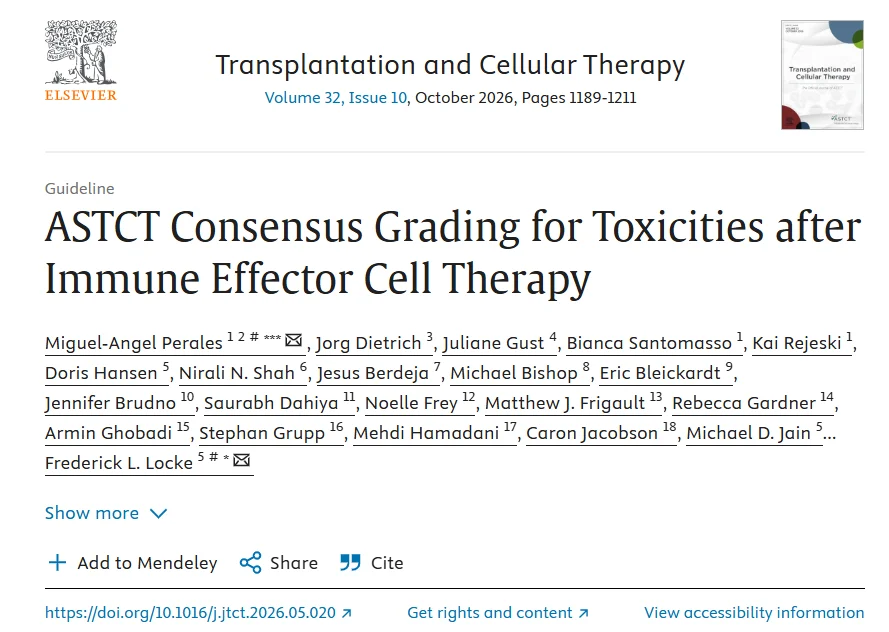
Chokri Ben Lamine, Hematologist at King Faisal Specialist Hospital and Research Center, shared a post on LinkedIn about a recent article by Miguel-Angel Perales et al., published in Transplantation and Cellular Therapy, adding:
“ASTCT 2026: What Changed From Previous Toxicity Criteria?
- CRS: clarification, not reclassification
- The 2019 grades remain.
- Oxygen thresholds are emphasized: low-flow 6 L/min versus high-flow 6 L/min; oxygen for comfort does not qualify.
- After established CRS receives antipyretic/anticytokine treatment, persistent fever is unnecessary for grading.
- Ferritin, CRP and organ injury still do not determine CRS grade.
ICANS: core grades retained, baseline assessment improved
Previously: standard ICE bands, with CAPD recommended for younger children.
Now: ICE generally suits developmentally appropriate patients aged at least 9 years; M-ICE replaces CAPD when standard ICE is developmentally unsuitable.
New: account for baseline ICE less than 10
- Fall of 1–2 points – G1 criterion.
- Fall of 3–4 points – G2 criterion.
- Always assign the highest grade across all neurological domains – not the score alone.
Bilateral CN VI palsy removed as a standalone G4 ICANS criterion
Assess cranial nerve palsies separately and investigate their cause.
Neurotoxicity beyond ICANS is now explicitly classified
- IEC-parkinsonism.
- IEC-cranial nerve palsies.
- IEC-polyneuropathies.
Also addresses cerebellar disorder and tumor inflammation-associated neurotoxicity – TIAN.
NINTs is preferred over blanket ‘delayed neurotoxicity’: these events can coexist with ICANS, and normal ICE does not exclude them.
ICAHT: from neutrophil-focused grading to separate neutrophil AND platelet reporting
EHA/EBMT 2023 criteria mainly captured neutropenia.
ASTCT endorses N-ICAHT and adds T-ICAHT, incorporating platelet depth, duration and timing.
Early: D0–30.
Late: after D30; additionally document whether counts previously recovered.
Grade ICAHT regardless of attribution, then assess contributing causes separately.
IEC-HS: definition refined from the 2023 framework
Explicitly incorporates antecedent or ongoing/resolving CRS.
Ferritin criterion changes from the earlier higher 2 ULN/baseline or rapidly rising framework to higher 5 ULN if baseline normal, or 5 times baseline if abnormal, and/or rapidly rising on clinical assessment.
Ferritin alone is insufficient. HLH-like organ injury during severe CRS does not automatically establish IEC-HS.
IEC-HS severity grading remains based on clinical consequences, not the treatment selected.
Broader scope
The expanded framework also applies to immune cell engagers, including bispecific antibodies, and addresses enterocolitis, local IEC-associated toxicity syndrome and on-target/off-tumor effects.”
Title: ASTCT Consensus Grading for Toxicities after Immune Effector Cell Therapy
Authors: Miguel-Angel Perales, Jorg Dietrich, Juliane Gust, Bianca Santomasso, Kai Rejeski, Doris Hansen, Nirali N. Shah, Jesus Berdeja, Michael Bishop, Eric Bleickardt, Jennifer Brudno, Saurabh Dahiya, Noelle Frey, Matthew J. Frigault, Rebecca Gardner, Armin Ghobadi, Stephan Grupp, Mehdi Hamadani, Caron Jacobson, Michael D. Jain, Frederick L. Locke
Other posts featuring Chokri Ben Lamine on Hemostasis Today.
-
Nov 9, 2026, 12:18Rob Maloney: Learning to Lead Without Being Needed
-
Nov 9, 2026, 12:08Anand Padmanabhan: Looking forward to presenting at ASH2026 on MGTS
-
Nov 9, 2026, 11:56Stephen Nicholls: The Search for Effective Lp(a) Therapies Continues
-
Nov 9, 2026, 11:34Shahram Kordasti: Exploring the Pathophysiology of Aplastic Anaemia at ESHBMFS 2026
-
Nov 9, 2026, 11:30When Kidney Function Affects Blood Production – World Anemia Awareness
-
Nov 9, 2026, 10:32Natalie Arnold: The Lp(a) Puzzle – Why Lower Levels May Not Tell the Whole Story
-
Nov 9, 2026, 10:22ISBT Opens Applications for the I TRY IT Programme 2027
-
Nov 9, 2026, 10:08Ibrahim Mansoor: Rare Tests, Common Diseases – Rethinking Autoimmune Diagnostics
-
Nov 9, 2026, 09:29Veronica Sanchez: A Framework for Woman’s Health