


Alamgir Hosen Ronit: Corrected Platelet Count in EDTA Induced Platelet Aggregation
Alamgir Hosen Ronit, Medical Laboratory Technologist at BIRDEM General Hospital, shared a post on LinkedIn:
“Corrected Platelet Count in EDTA Induced Platelet Aggregation
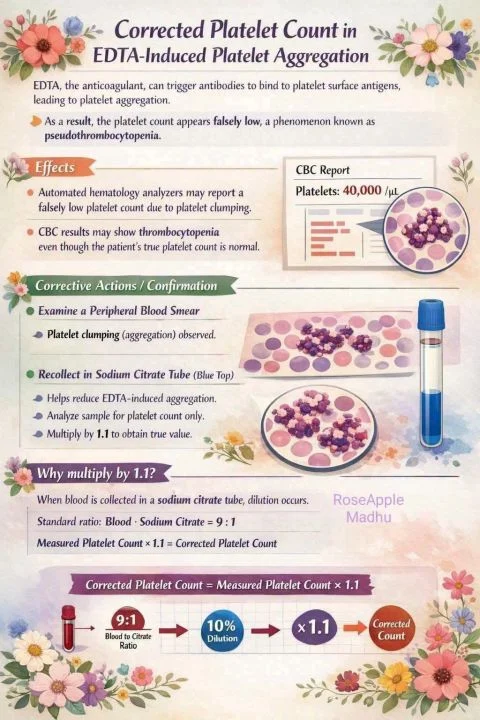
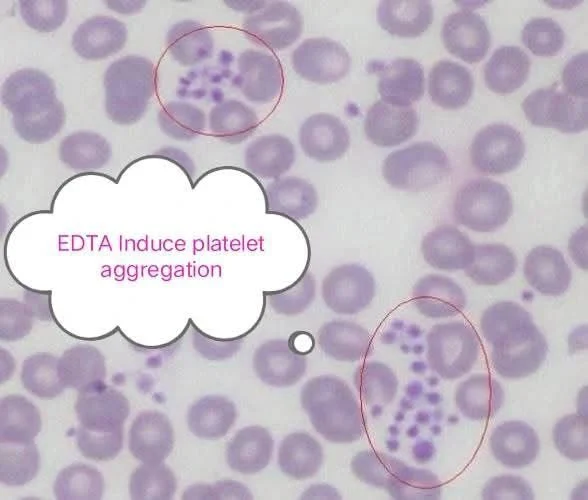
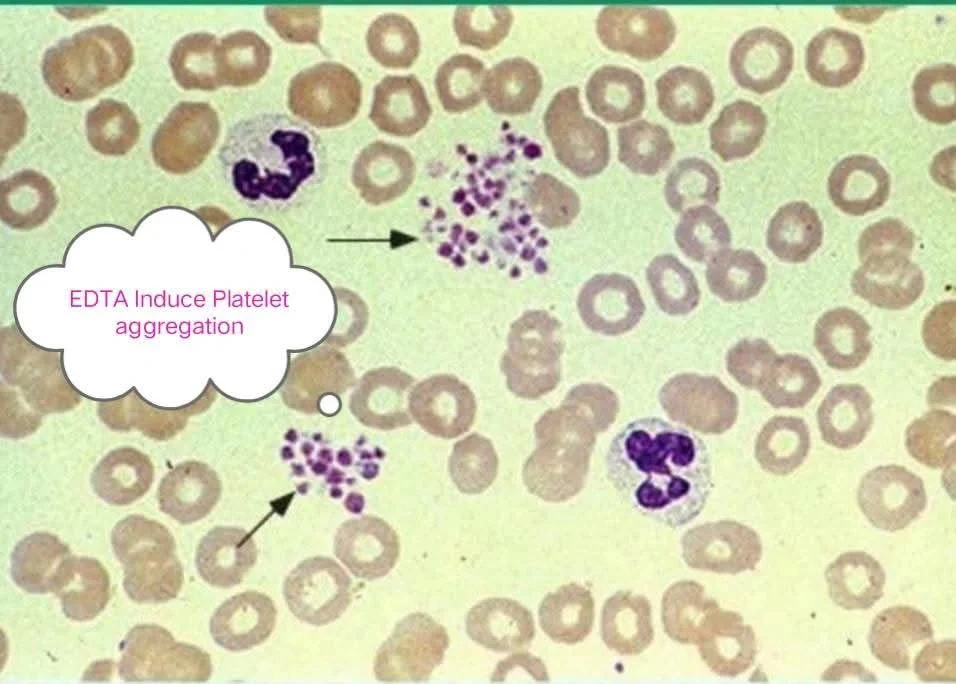
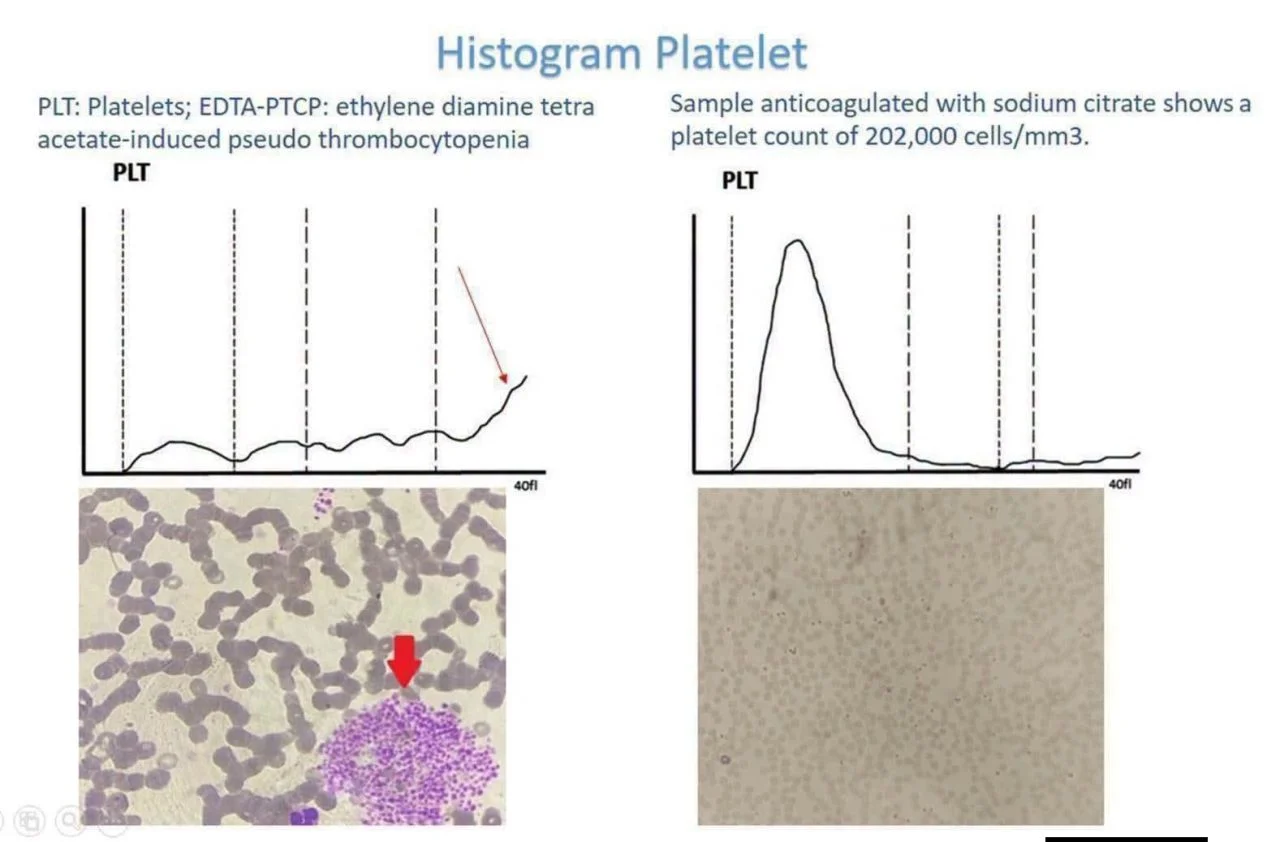
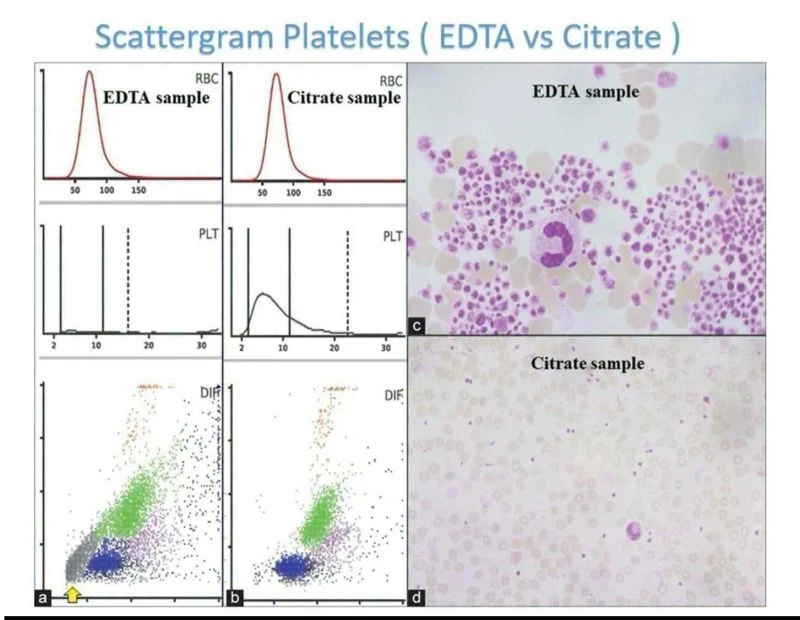
This condition occurs when platelets aggregate after blood collection in an EDTA tube. EDTA, the anticoagulant, can trigger antibodies to bind to platelet surface antigens, leading to platelet aggregation.
As a result, the platelet count appears falsely low, a phenomenon known as pseudothrombocytopenia.
Effects:
- Automated hematology analyzers may report a falsely low platelet count because aggregated platelets are not counted properly.
- The CBC result may show thrombocytopenia, even though the patient’s true platelet count is normal.
Corrective Actions and Confirmation:
Examine a peripheral blood smear
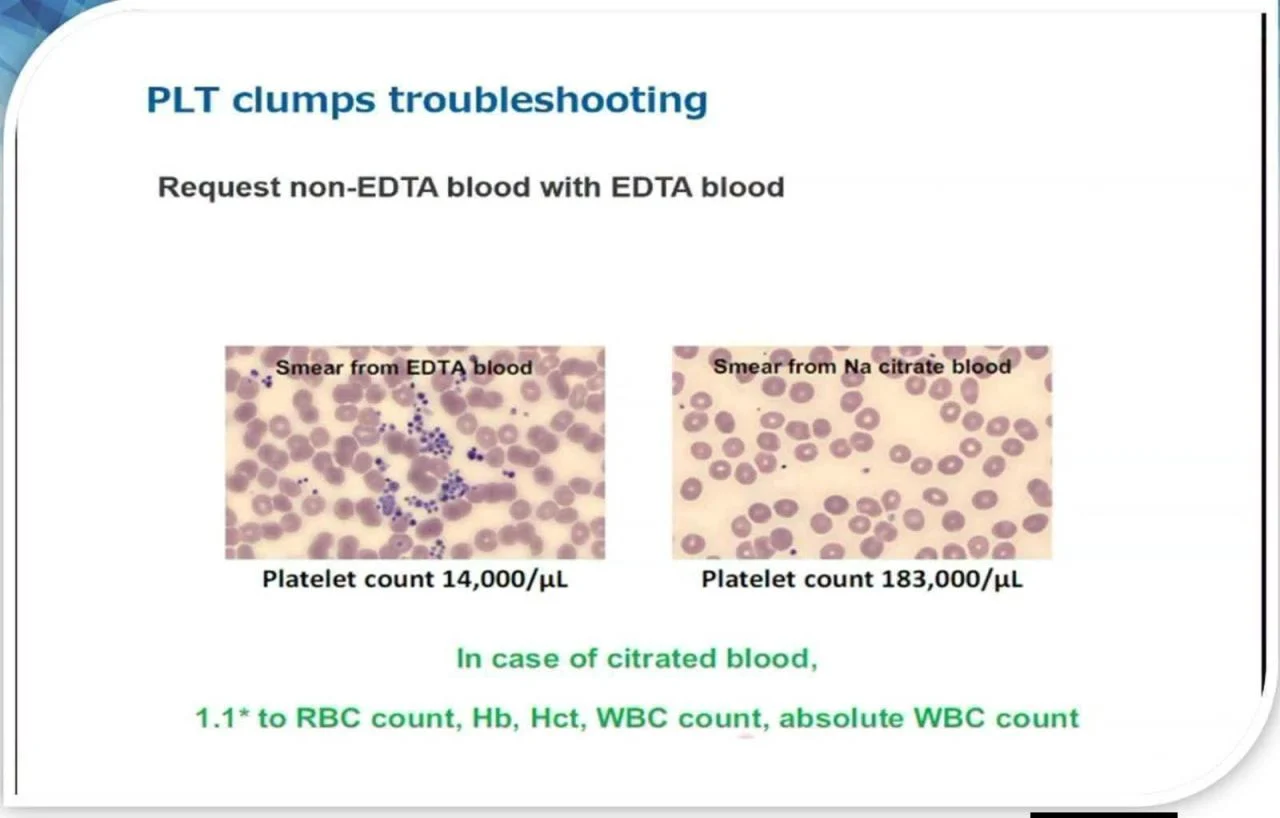
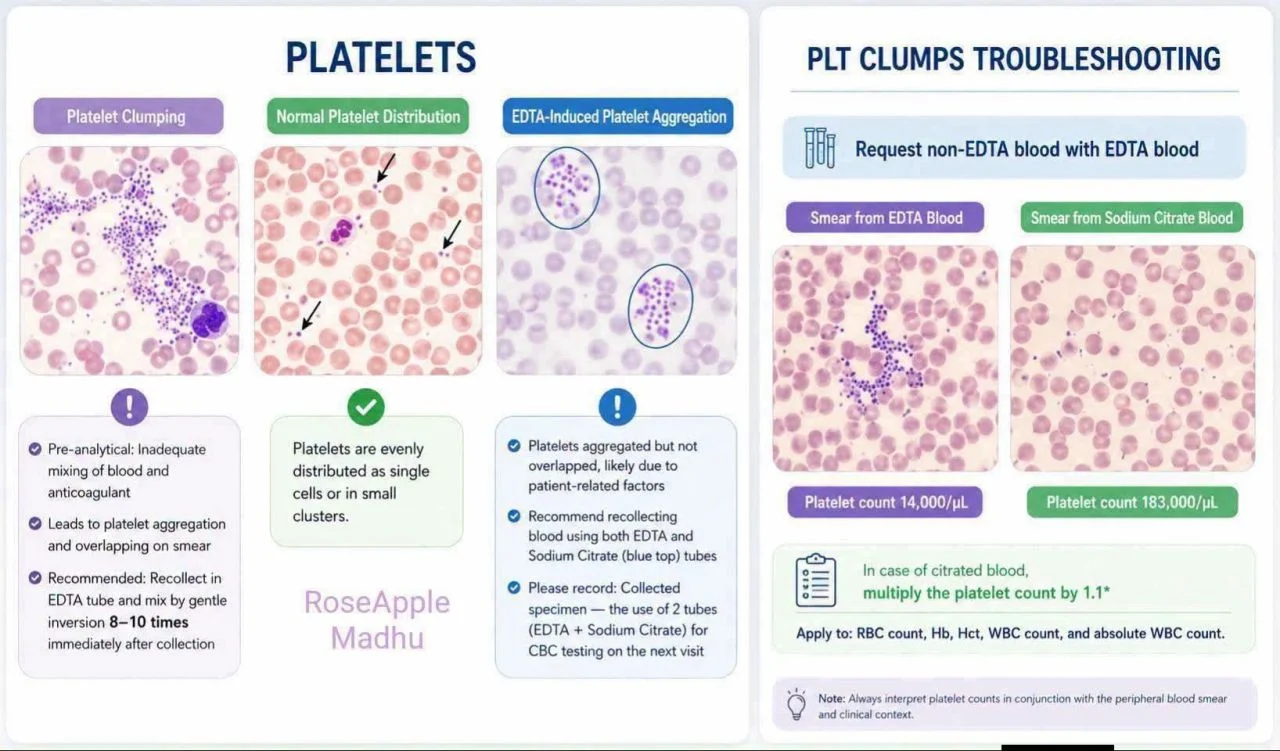
Platelet clumping (platelet aggregation) will be observed.
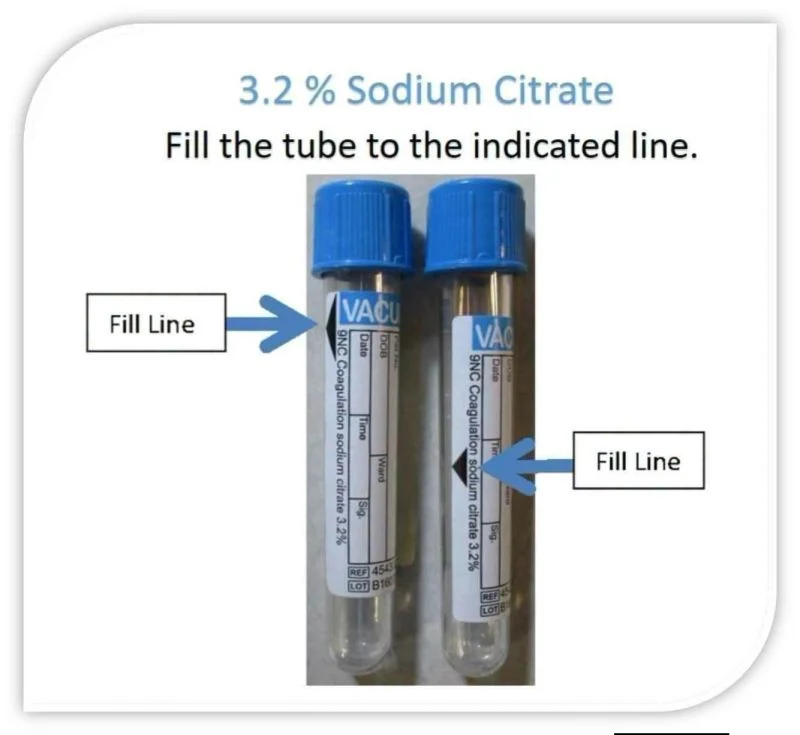
Recollect blood in a sodium citrate tube (blue top)
- This helps reduce or prevent EDTA-induced platelet aggregation.
- The sample should be analyzed for platelet count only.
- The reported platelet count must then be multiplied by 1.1 to obtain the true value.
Why multiply by 1.1?
When blood is collected in a sodium citrate tube, the anticoagulant causes dilution of the blood sample.
The standard ratio is:
‘Blood-to-sodium citrate ratio is 9 : 1’
Therefore, the measured platelet count is approximately 10% lower than the true value.
To correct for this dilution effect:
Corrected platelet count is measured platelet count multiplied by 1.1″
Stay updated with Hemostasis Today.
-
Nov 13, 2026, 23:32Evi Loos: Can PRP Improve Pain in Thumb Base Osteoarthritis?
-
Nov 13, 2026, 23:10Cesar de Almeida Neto: Digital Connectivity Can Transform Plateletpheresis Practice
-
Nov 13, 2026, 23:10Chien-Wen Liew: Where PRP Actually Sits in the Evidence
-
Nov 13, 2026, 23:08Erika Koppers: Continuing the Collaborative Journey Towards Equitable Haemophilia Care in South Africa
-
Nov 13, 2026, 23:06Büşra Ece Günaydın: A New Approach to Factor VIII Gene Insertion for Hemophilia A
-
Nov 13, 2026, 22:57Rolf Bekendam: Moderating a Conversation With Experts on Rare Bleeding Disorders
-
Nov 13, 2026, 16:17Shailendra Singh: Bombay Hospital Jaipur Inaugurates New Facility with Voluntary Blood Donation Camp
-
Nov 13, 2026, 16:10Minka Zivkovic: UMC Utrecht Announces Research Analyst Vacancy in Thrombosis and Haemostasis
-
Nov 13, 2026, 16:02Rounak Dubey: Elsevier’s Upcoming Handbook Explores Digitalization in Transfusion Medicine