

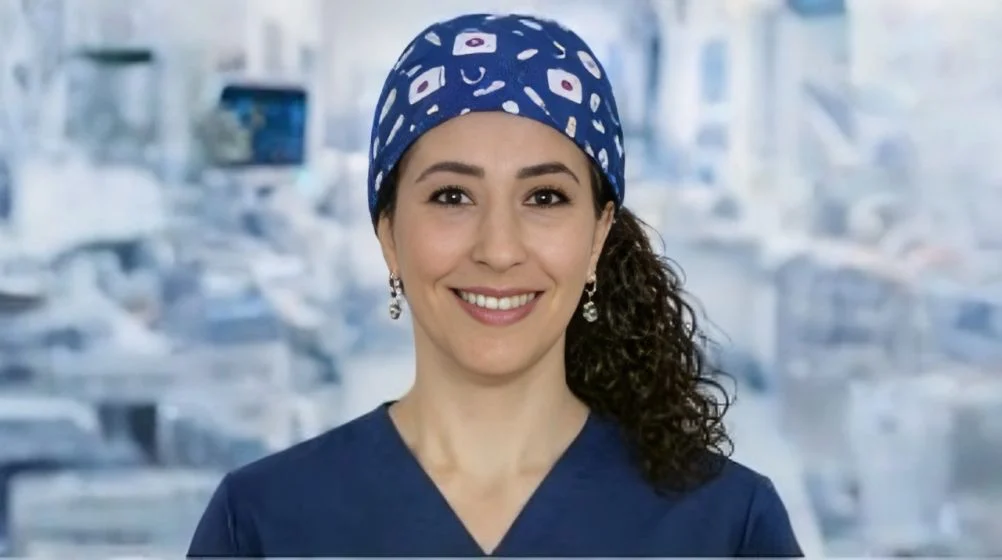
Ameneh Eshghinejad: The First 72 Hours After SAH Are Critical for Balancing the Risks of Rebleeding and Thromboembolism
Ameneh Eshghinejad, Intensive Care Nurse at Milad hospital, shared a post on LinkedIn:
”The 72-Hour Rule After SAH… is not just a timeline. It’s a decision that can change a life.
In the ICU, we live in the space between two risks:
Rebleeding… versus Thromboembolism
After an aneurysmal subarachnoid hemorrhage (SAH), the question isn’t if anticoagulation is needed – it’s when it becomes safe enough.
And that’s where many clinicians hesitate.
Here’s the practical bedside approach:
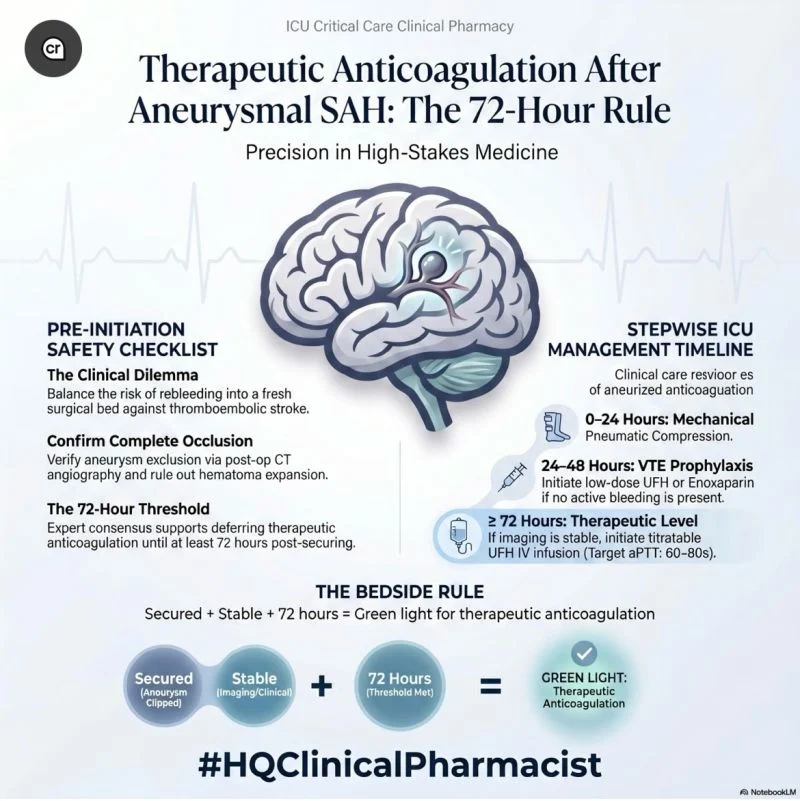
0–24 hours:
No anticoagulation.
Mechanical prophylaxis only (IPC).
Your priority equals protect the brain.
24–48 hours:
Start VTE prophylaxis (low-dose heparin or enoxaparin)
Only if:
- No active bleeding
- Imaging is stable
Greater than or equal to 72 hours:
Now we reassess everything.
If the patient is:
- Aneurysm secured (clipped/coiled)
- Clinically and radiologically stable
- No hematoma expansion
This is your green light for therapeutic anticoagulation.
The Bedside Rule you should never forget:
Secured plus Stable plus 72 hours equals Go (carefully)
But here’s the part we don’t always talk about…
I once cared for a patient post-SAH—young, previously healthy.
We delayed anticoagulation, fearing rebleeding.
On day 4, everything looked ‘stable.’
But before escalation… they developed a massive pulmonary embolism.
That moment stays with you.
Because in critical care, waiting is also a decision.
And sometimes… it costs more than acting.
This is why precision matters.
Not just protocols. Not just guidelines.
But clinical judgment, timing, and courage to reassess.”
Stay updated with Hemostasis Today.
-
Sep 23, 2026, 16:04Monia Ezzalfani: Advancing Patient-Centered Care in Hemophilia A and B
-
Sep 23, 2026, 15:49Bilge Başak: How Activated PRP Modulates Osteoarthritic Chondrocyte Function
-
Sep 23, 2026, 14:50Mbonjo Bitsie Dora: Strengthening Sickle Cell Care Through Education, Awareness and Innovation
-
Sep 23, 2026, 13:58The New B12 Diagnostic Algorithm: From Serum Cobalamin to Functional Deficiency
-
Sep 23, 2026, 13:56Noha Soror: Preparing for Hematology and Medical Oncology Board Certification
-
Sep 23, 2026, 13:46Ugochi Ogu: What Can Platelet Proteomics Reveal about Pain and Neurocognitive Vulnerability in Sickle Cell Disease?
-
Sep 23, 2026, 13:42Melissa Hollo: Connecting Obesity and Anemia for Earlier Maternal Risk Intervention
-
Sep 23, 2026, 13:16Beverley Hunt: Advances in Haemostatic Management of Postpartum Haemorrhage
-
Sep 23, 2026, 13:13Ioanna Mela: Recruiting a Research Associate on DNA nanotechnology