


Aryabhatta Sadhu: Intrauterine Red-Cell and Platelet Transfusion in Fetal Medicine
Aryabhatta Sadhu, Attending Consultant and Head of Transfusion Medicine at Fortis Hospital Shalimar Bagh, New Delhi, Member of AABB, Member International Society of Blood Transfusion (ISBT), shared a post on LinkedIn:
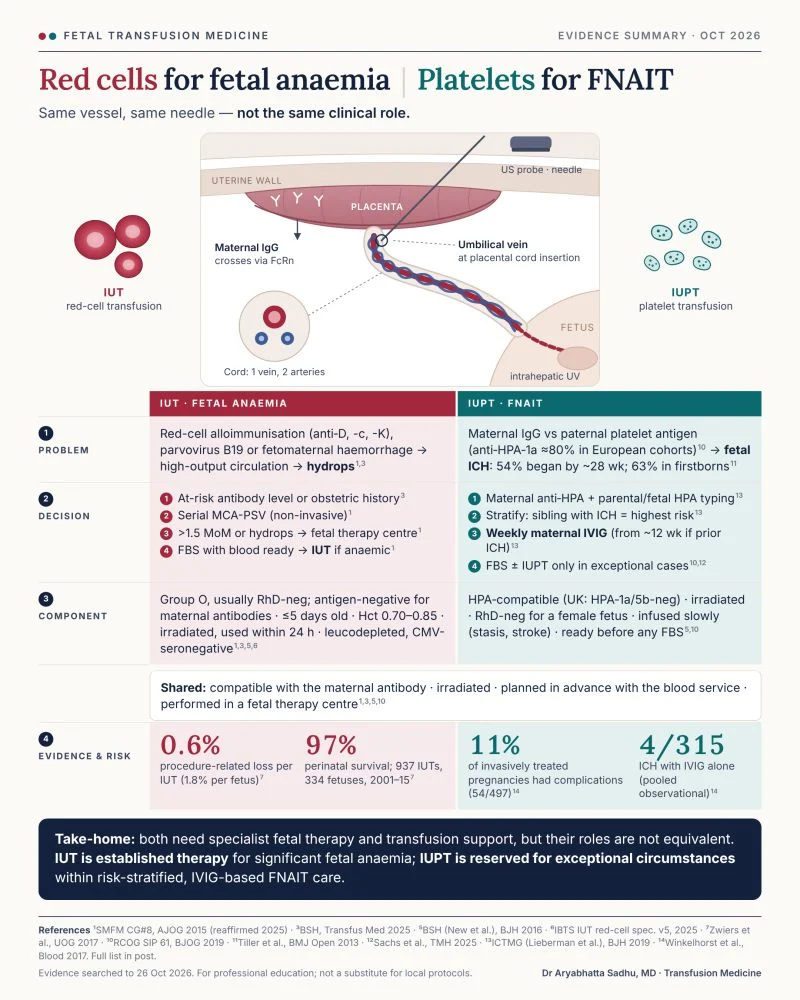
”Fetal transfusion medicine: same vessel, same needle — not the same clinical role.
Intrauterine red-cell transfusion (IUT) and intrauterine platelet transfusion (IUPT) both reach the fetus through the umbilical vein, at the placental cord insertion or its intrahepatic segment. Their places in contemporary practice are very different.
IUT for fetal anaemia
- Serial middle cerebral artery peak systolic velocity (MCA-PSV) is the primary non-invasive test. A value above 1.5 multiples of the median (MoM), or hydrops, prompts referral and fetal blood sampling with blood ready — a referral threshold, not a transfusion trigger.
- Red cells: compatible with fetal and maternal blood (usually RhD-negative), negative for all antigens corresponding to maternal antibodies, no more than 10 days old, leukocyte-depleted, irradiated and used within 24 hours, with a haematocrit of 75 to 85 percent.
- In a large single-centre series involving 937 IUT procedures in 334 fetuses between 2001 and 2015, procedure-related perinatal loss was 0.6 percent per procedure. The risk is higher before 20 weeks of gestation.
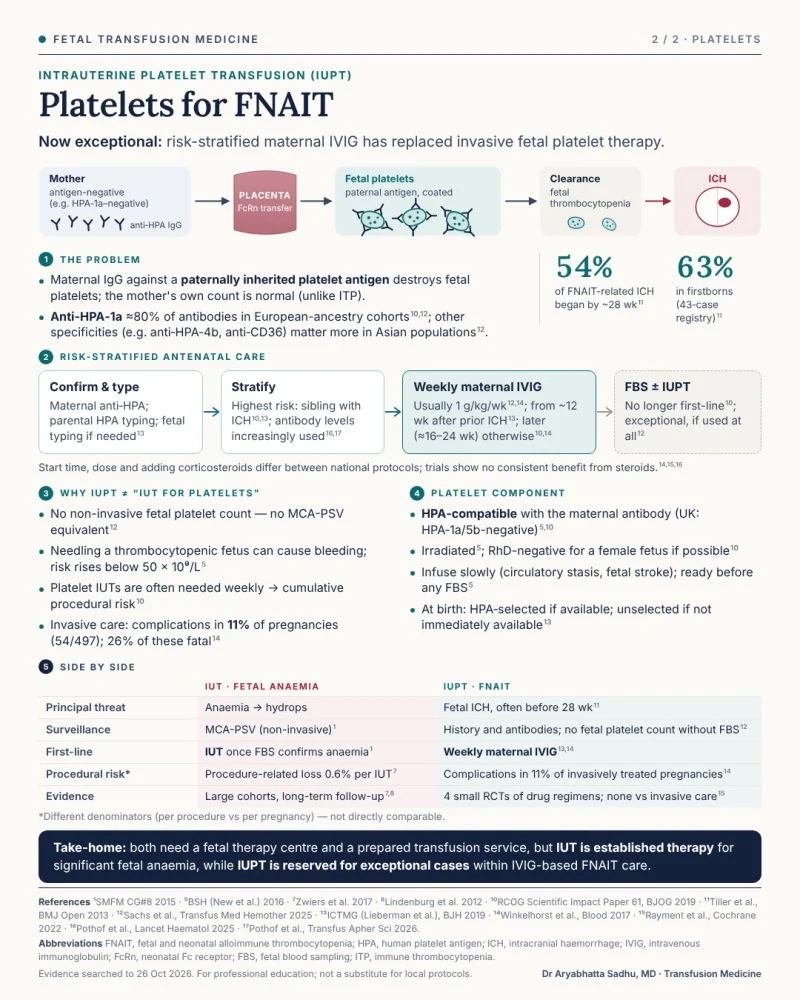
IUPT in fetal and neonatal alloimmune thrombocytopenia (FNAIT)
- FNAIT-related intracranial haemorrhage (ICH) often begins before 28 weeks of gestation and frequently affects first pregnancies.
- Weekly maternal intravenous immunoglobulin (IVIG), started earlier when there has been a previous pregnancy affected by intracranial haemorrhage, is first-line treatment. Fetal blood sampling followed by platelet transfusion is no longer first-line and is reserved for exceptional cases, if used at all.
- In a systematic review, invasive strategies were associated with procedure-related complications in 11 percent of treated pregnancies.
Take-home: both procedures require a fetal therapy centre and a prepared transfusion service, but IUT is an established treatment for significant fetal anaemia, whereas IUPT is reserved for exceptional circumstances within IVIG-based FNAIT care.”
Other posts featuring Aryabhatta Sadhu on Hemsotasis Today.
-
Oct 26, 2026, 15:37Sally Mandour: The Paradox of Lupus Anticoagulant
-
Oct 26, 2026, 15:25Christine Tunkl: Telestroke – Expanding Access to Evidence-Based Stroke Care
-
Oct 26, 2026, 15:13Heghine Khachatryan: Approaching Thrombocytopenia Through Mechanism and Clinical Context
-
Oct 26, 2026, 15:03Quentin Eichbaum։ AABB 2026 Annual Meeting Personal Highlights
-
Oct 26, 2026, 14:57A Father’s Marathon Journey Inspired by His Son – National Bleeding Disorders Foundation
-
Oct 26, 2026, 14:48Fran Huelsmeyer: The Clinical Importance of Blood Donation in Maternal Care
-
Oct 26, 2026, 14:45Maria Elisa Mancuso: Shaping the Future of Hemophilia Care with Patients
-
Oct 26, 2026, 14:35Choosing the Right VTE Risk Assessment Model for Clinical Practice
-
Oct 26, 2026, 14:29Ilenia Calcaterra: HEMOPLATE Explores Biological Factors Behind Bleeding Variability in Haemophilia A