


Ashkan Forouzani/LinkedIn
Oct 20, 2026, 14:01
Ashkan Forouzani։ Warfarin or DOACs in Protein C and S Deficiency?
Ashkan Forouzani, Cardiologist at Rajaie Cardiovascular, Medical and Research Institute, shared a post on LinkedIn։
“I recently had a 58 years old female patient with Hx of unprovoked DVT due to protein C and S deficiency. She wanted to discontinue Warfarin and switch to DOACs.
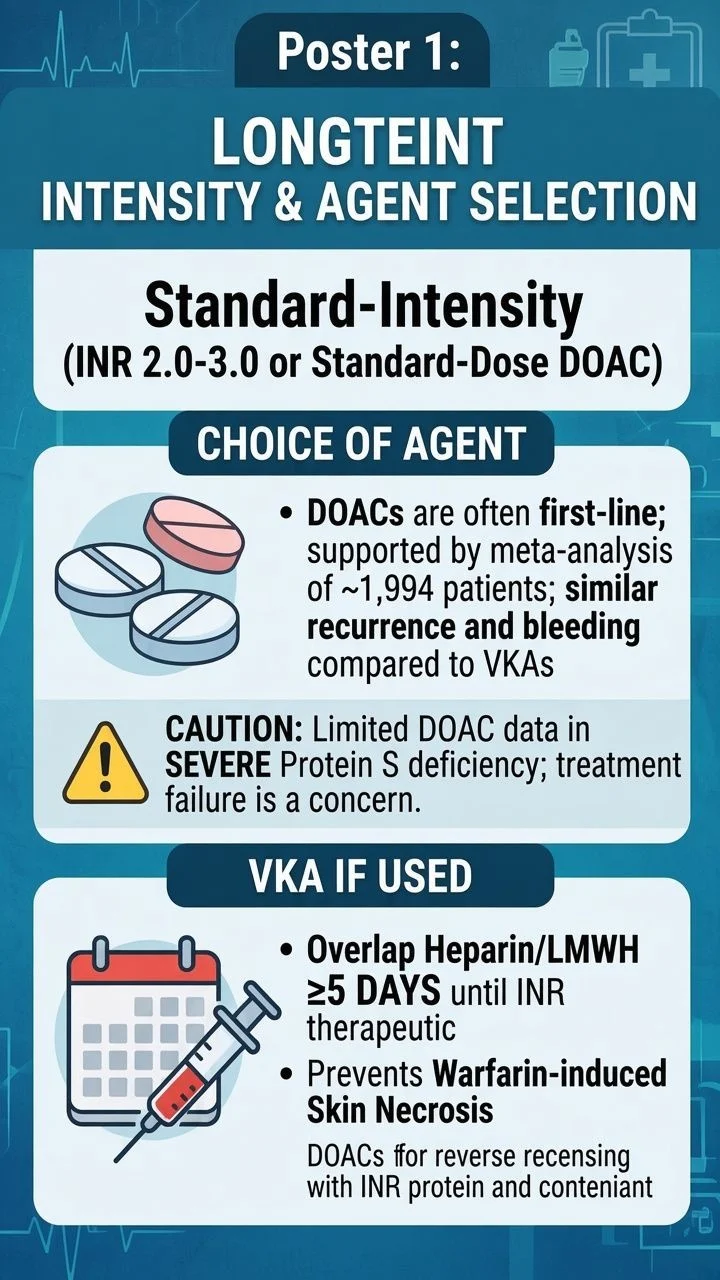
In such patients standard-intensity anticoagulation, with duration driven by whether the DVT was provoked or unprovoked rather than by the deficiency itself, is the core of long-term management for protein C or protein S deficiency.
There is no evidence that these patients require more intense anticoagulation, and a target INR of 2.0–3.0 (or a standard-dose DOAC) is appropriate.
Choice of agent:
- DOACs are a reasonable first-line option for most patients. No RCTs have tested DOACs specifically in protein C/S deficiency, but they are routinely used, and a 2019 meta-analysis of approx. 1,994 thrombophilia patients found similar VTE recurrence (RR 0.70, 95% CI 0.34–1.44) and bleeding (RR 0.92, 95% CI 0.62–1.36) versus VKAs. The international RIETE registry found DOACs equally safe and effective in inherited thrombophilia, with lower major bleeding than standard therapy. The 2026 ACC statement concludes DOACs are a good option for most thrombophilia patients when anticoagulation is indicated.
- Caution in severe deficiency. The 2024 ISTH SSC communication notes DOAC data are limited to cohort/single-center studies and highlights greater treatment failure in severe protein S deficiency.
- If a VKA is used, overlap with heparin/LMWH at least 5 days until INR is therapeutic, because VKAs transiently lower the already-reduced protein C/S levels and can precipitate warfarin-induced skin necrosis — rare but characteristic in these deficiencies. Starting a DOAC avoids this, and both rivaroxaban and dabigatran have been used to reverse warfarin-induced skin necrosis in severe protein C/S deficiency.
Duration:
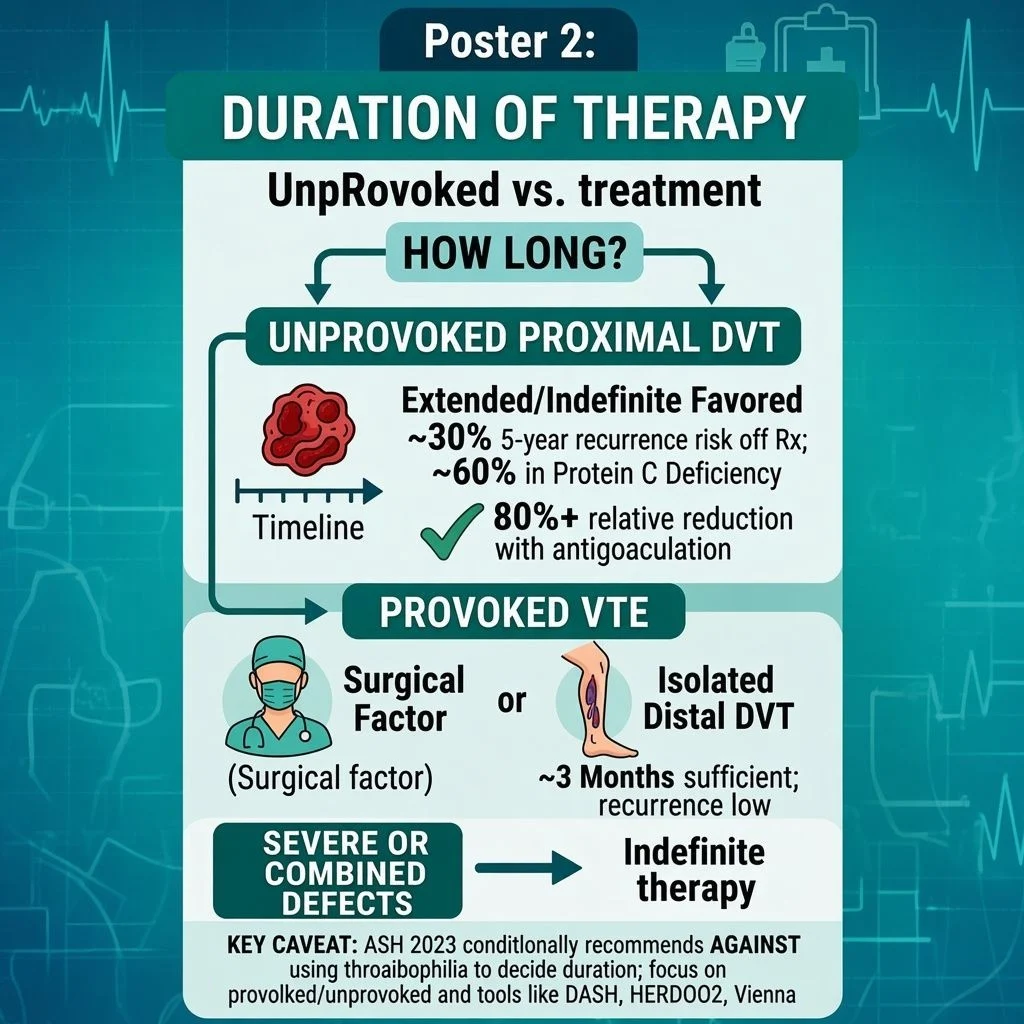
- First unprovoked proximal DVT: extended/indefinite anticoagulation is generally favored if bleeding risk is not high, given a approx. 30% 5-year recurrence risk off treatment and an 80%+ relative reduction with continued anticoagulation. Protein C deficiency in particular may carry recurrence risk up to approx. 60%.
- Provoked by a major transient (surgical) factor, or isolated distal DVT: approx. 3 months is usually sufficient – even with a documented deficiency, recurrence after strongly provoked VTE is low, and lifelong therapy is not required.
- Severe or combined defects (homozygous/compound, or protein C/S plus another thrombophilia) push toward indefinite therapy.
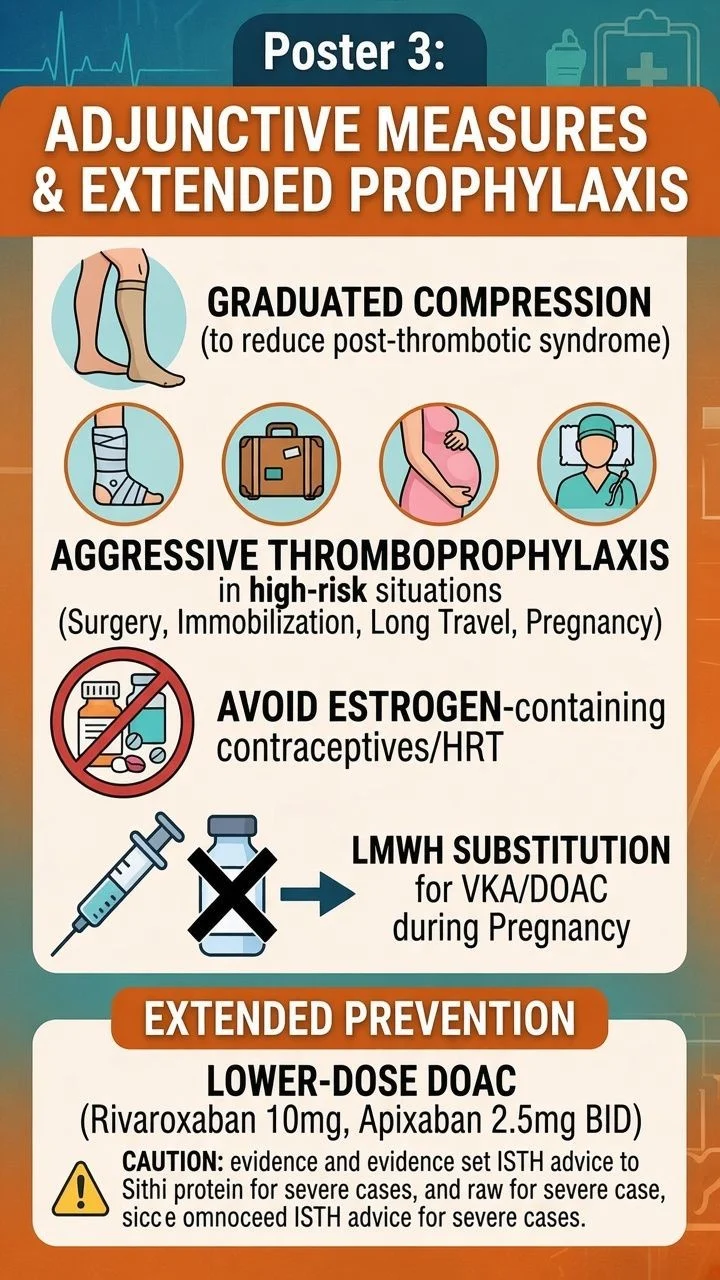
- Lower-dose extended DOAC (rivaroxaban 10 mg daily or apixaban 2.5 mg twice daily) appears as effective as full dose for extended prevention in the general VTE population, though evidence specifically in severe thrombophilia is lacking and the ISTH advises caution with low-dose DOACs here.
Stay updated with Hemostatis today.
-
Oct 20, 2026, 13:20The Global Blood Crisis – Are We Solving the Wrong Problem?
-
Oct 20, 2026, 06:45Grant Garcia: Why Does a Blood Clot Diagnosis Immediately End an Athlete’s Season?
-
Oct 20, 2026, 06:35Parag Tamhankar: Landmark Study Reveals Genetic Spectrum and Targeted Therapies for ALPS in the Indian Population
-
Oct 20, 2026, 06:26Nina Houben: Neonatal Blood Transfusion Symposium and PhD Defense
-
Oct 20, 2026, 05:46Jan T. Kielstein: DNP Poisoning and Hemoadsorption The Limits of Rescue Therapy
-
Oct 20, 2026, 05:33Giulia Di Paolo: Connecting Plasma Donation to the Patients Who Depend on It
-
Oct 20, 2026, 05:20James Knowles: Exploring Plasma Manufacturing and Strengthening Industry Collaboration
-
Oct 20, 2026, 05:11Giuseppe Lippi։ Understanding Liver Test Abnormalities After AAV Gene Therapy
-
Oct 20, 2026, 05:02Sanam Loghavi: Test Your Hematology Knowledge at ASH 2026!