

Berkan Kurt: The Role of Biomarkers in Cardiovascular Prevention
Berkan Kurt, Clinician Scientist and Resident Physician in Cardiology and Internal Medicine at Uniklinik RWTH Aachen, shared a post on LinkedIn:
”Biomarkers, Inflammation and Prevention
A biomarker session across cardiology:
The session ‘Practical Use of Biomarkers for Risk Stratification’, chaired by Prof. Tanja Zeller and Prof. Tienush Rassaf, dealt with heart failure and CHD to arrhythmias to acute diagnostics and AI.
As an ambassador for prevention at the Heart Days of the Deutsche Gesellschaft für Kardiologie – Herz- und Kreislaufforschung e.V. (DGK) particularly interesting: inflammation, hsCRP and inflammatory risk were encountered again and again.
My takeaways:
- Heart failure: Not just natriuretic peptides. Prof. Philipp Wild discussed how different biomarkers can map different dimensions of ‘heart stress’ – from inflammation to cardiorenal dysfunction. In the future, biomarker signatures and proteomics could enable more differentiated risk stratification than individual markers.
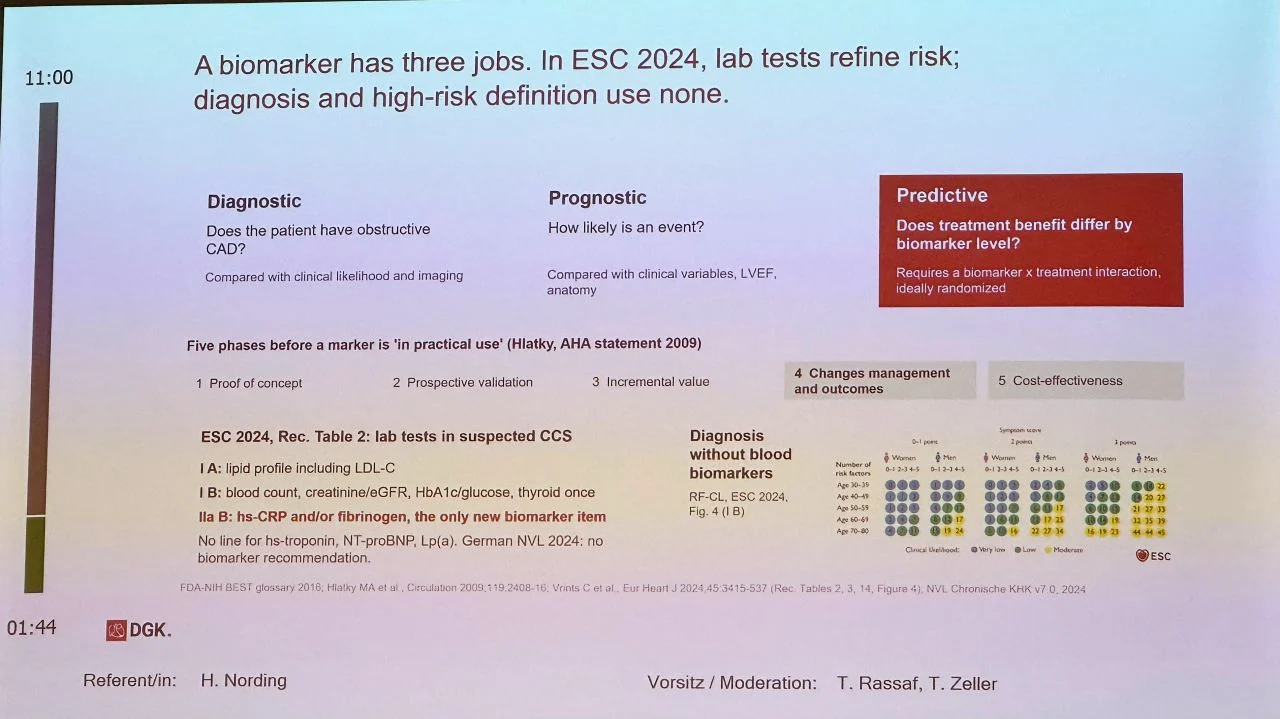
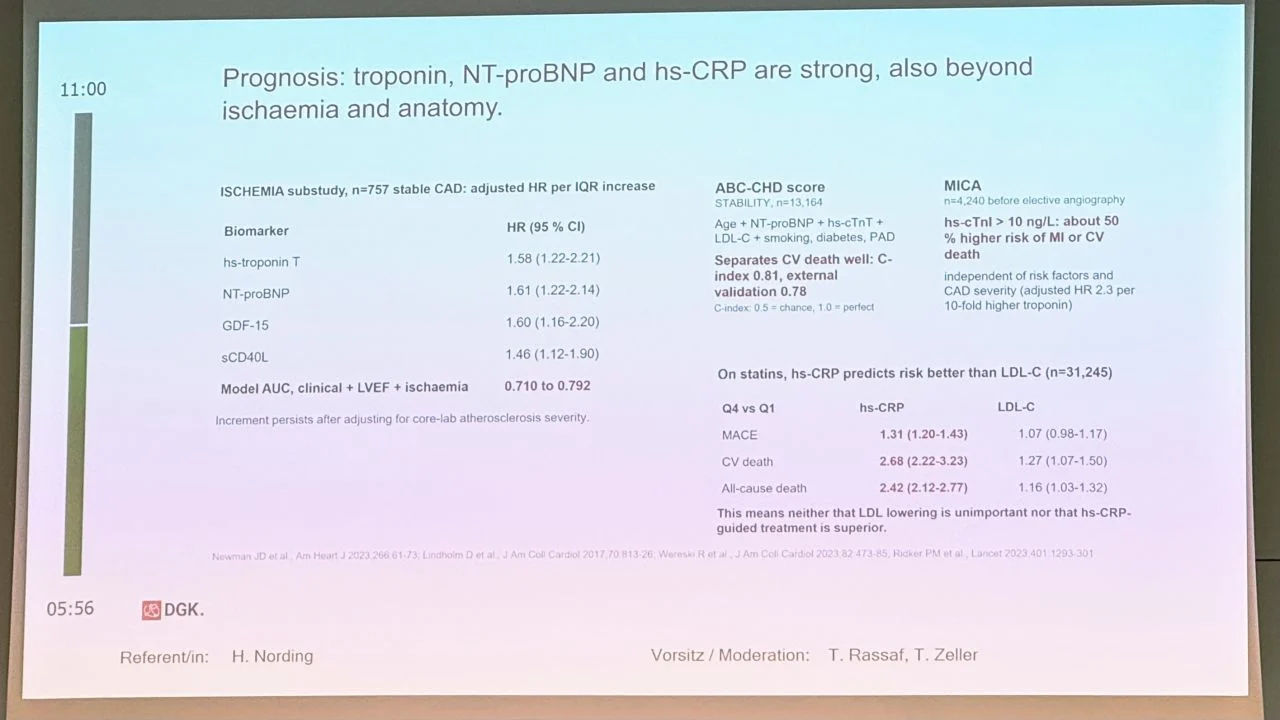
- CHD and prevention: Prof. Henry Nording showed the broad spectrum of diagnostic, prognostic and predictive biomarkers in CHD: from established markers such as troponin and NT-proBNP to hsCRP and other new biomarkers. Particularly exciting for prevention: Biomarkers can map different aspects of individual risk, including inflammatory risk.
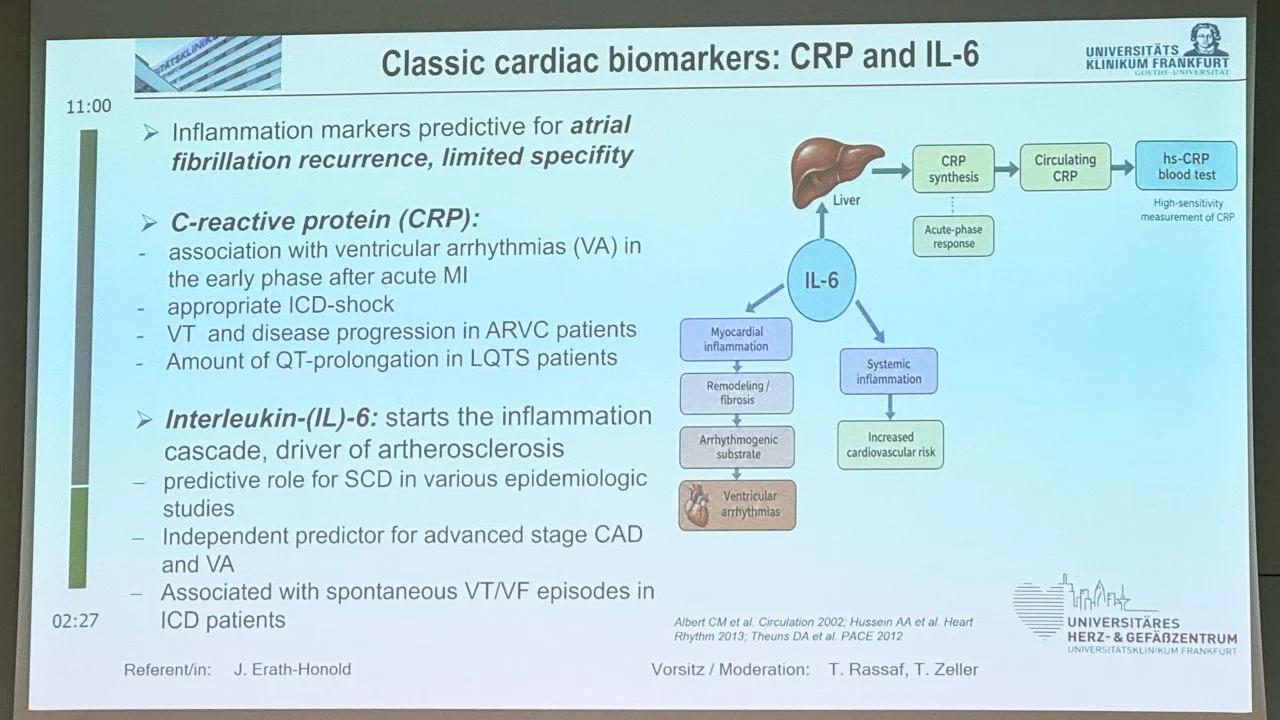
- Arrhythmias: Julia Erath-Honold showed how biomarkers can also complement risk prediction in rhythmology. In the case of atrial fibrillation, they can improve risk assessment, and in ventricular arrhythmias and sudden cardiac death, NT-proBNP in particular provides additional prognostic information. Exciting from a prevention point of view: Inflammation with hsCRP and IL-6 can also be found here as another risk axis.
- Acute diagnosis: Prof. Evangelos Giannitsis showed how hs-troponin and fast 0/1h and 0/2h algorithms enable rapid rule-out and rule-in of myocardial infarction today. Exciting outlook: Dual-marker strategies, for example with copeptin or cardiac myosin-binding protein C, could further complement early diagnostics in the future.
- AI: Prof. Johannes Neumann showed the potential of AI-supported approaches in the diagnosis of myocardial infarction. The combination of biomarkers, clinical information and data-based models opens up new possibilities for faster and more precise diagnostic classification.
In addition, a very good discussion with perspectives from the auditorium, including Natalie Arnold on the role of inflammatory biomarkers in CHD.
For prevention, the following remains: Cardiovascular risk has several dimensions.
In addition to lipids, blood pressure, metabolism and kidney function, inflammation is also becoming increasingly important in risk prediction.
The fact that hsCRP appears again and again, even in a broad-based biomarker session, is a good example of this.”
Stay updated with Hemostasis Today.
-
Sep 26, 2026, 15:21Consuela Albright: Five Concrete Ways Steps to Advocate for Sickle Cell Disease
-
Sep 26, 2026, 15:09New ASH Funding Opportunities for Hematology Researchers
-
Sep 26, 2026, 14:54Khaled Musallam: TIF Guidelines Advance Emergency Care for Blood-Disorders
-
Sep 26, 2026, 14:47GUMBIT Study Investigating Microbiome Links to ITP – ITP Support Association
-
Sep 26, 2026, 14:41Understanding Recovery After Pulmonary Embolism – ISTH
-
Sep 26, 2026, 14:36Biplab K Saha: Updating the Clinical Approach to IPH
-
Sep 26, 2026, 14:24Andre W. Bourgoyne: Patient Blood Management Before Transfusion
-
Sep 26, 2026, 14:21Damon Race: Transgene Biology and Durability in Hemophilia Gene Therapy
-
Sep 26, 2026, 14:01Chandra Viswanathan: Building a Stronger Blood and Plasma Ecosystem for India