


Chaza Alaji: DVT in Early Pregnancy – Why Anticoagulation Decisions Matter
Chaza Alaji, Medical Laboratory Specialist and Supervisor at Privat University-Private Laboratory-General Hospital, shared a post on LinkedIn:
“Deep Vein Thrombosis in Early Pregnancy: Why Anticoagulation Decisions Matter
Deep vein thrombosis (DVT) during the first trimester is a potentially serious condition requiring prompt diagnosis and
treatment to protect maternal health and reduce the risk of pulmonary embolism (PE).
Why does pregnancy increase thrombosis risk?
Pregnancy promotes hypercoagulability through Virchow’s triad:
Hypercoagulability: Increased fibrinogen and clotting factors VII, VIII and X, reduced Protein S activity, and decreased fibrinolysis.
Venous stasis: Hormonal changes reduce venous return; later, the enlarging uterus may compress pelvic veins.
Vascular changes: Pregnancy-related changes may contribute to coagulation activation.
VTE risk is highest during the postpartum period, particularly the first six weeks.
Major risk factors
- Previous VTE or inherited thrombophilia, including Factor V Leiden, Prothrombin G20210A, and deficiencies of Antithrombin, Protein C or Protein S.
- Antiphospholipid syndrome (APS).
- Obesity, maternal age over 35, and cancer.
- Immobility, hospitalization, and systemic infection.
- Assisted reproductive technology (IVF/ART).
- Ovarian hyperstimulation syndrome (OHSS), severe hyperemesis, and dehydration.
- Conditions such as SLE and nephrotic syndrome.
Treatment: Why is LMWH preferred?
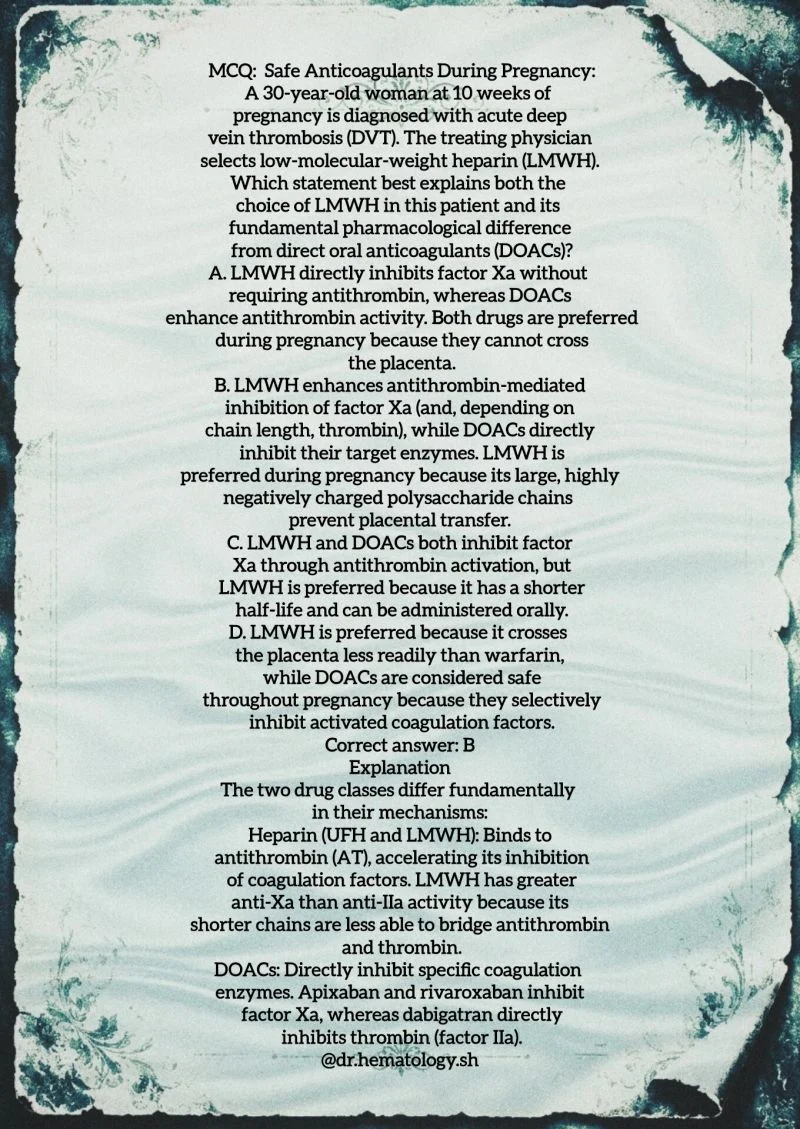
According to the 2025 ESC pregnancy guidelines, low-molecular-weight heparin (LMWH), such as enoxaparin, is the preferred treatment for acute VTE during pregnancy.
Key advantages:
Does not cross the placenta.
Has predictable pharmacokinetics.
Carries lower risks of heparin-induced thrombocytopenia (HIT) and osteoporosis than unfractionated heparin (UFH).
Therapeutic dosing is based on the mother’s early-pregnancy body weight and may be given once or twice daily. Routine anti-Xa monitoring is not required for most patients, but may be considered in selected cases, such as renal impairment or extreme obesity.
Which anticoagulants should be avoided?
- Warfarin: Crosses the placenta and may cause fetal embryopathy, bleeding, and other complications.
- Direct oral anticoagulants (DOACs): Not recommended because placental transfer is possible and fetal safety data remain insufficient.
Diagnosis and duration of treatment
Compression duplex ultrasound is the first-line investigation. If the initial scan is negative but clinical suspicion remains high, repeat imaging or further assessment may be necessary.
Treatment should continue throughout pregnancy and for at least 6 weeks postpartum, with a minimum total treatment duration of 3 months.
Clinical take-home message
- DVT in early pregnancy requires prompt recognition, individualized risk assessment, and appropriate anticoagulation.
- LMWH remains the preferred treatment, with coordinated care involving obstetric and hematology teams.
- Early diagnosis and appropriate anticoagulation are essential for maternal and fetal safety.”
Other posts featuring Chaza Alaji on Hemostatis Today.
-
Nov 21, 2026, 12:06Salih Ehsan: Why Iron Therapy May Not Work
-
Nov 21, 2026, 11:59Edward Lee Carter: DOACs vs Warfarin for LV Thrombus – Are We Getting Closer to an Answer?
-
Nov 21, 2026, 11:50Abdul Mannan: When G6PD Testing Misleads During Acute Hemolysis
-
Nov 21, 2026, 11:36Emma Copperwaite: Transforming the Transfusion Pathway Through Digital Innovation
-
Nov 21, 2026, 11:28Nathan Connell: Rethinking the Role of Factor V in Hemostasis
-
Nov 21, 2026, 11:16Jecko Thachil: Optimizing Corticosteroid Therapy in ITP
-
Nov 21, 2026, 08:36Sangwan Sim: ASH 2026 to Highlight Research into PU.1-Related Neutrophil Dysfunction
-
Nov 21, 2026, 08:29Liz Tate: First Percutaneous LAAO Procedure Performed at The Park Hospital for Stroke Prevention
-
Nov 21, 2026, 08:26Robert Sidonio: WFH Webinar to Address Key Challenges in Rare Bleeding Disorders Care