


Edward Lee Carter: Factor Xla Inhibition Enters Clinical Practice – FDA Approval of Asundexian
Edward Lee Carter, Clinical Pharmacist Practitioner at U.S. Department of Veterans Affairs, shared a post on LinkedIn:
“Factor XIa inhibition has reached clinical practice.
But the indication matters.
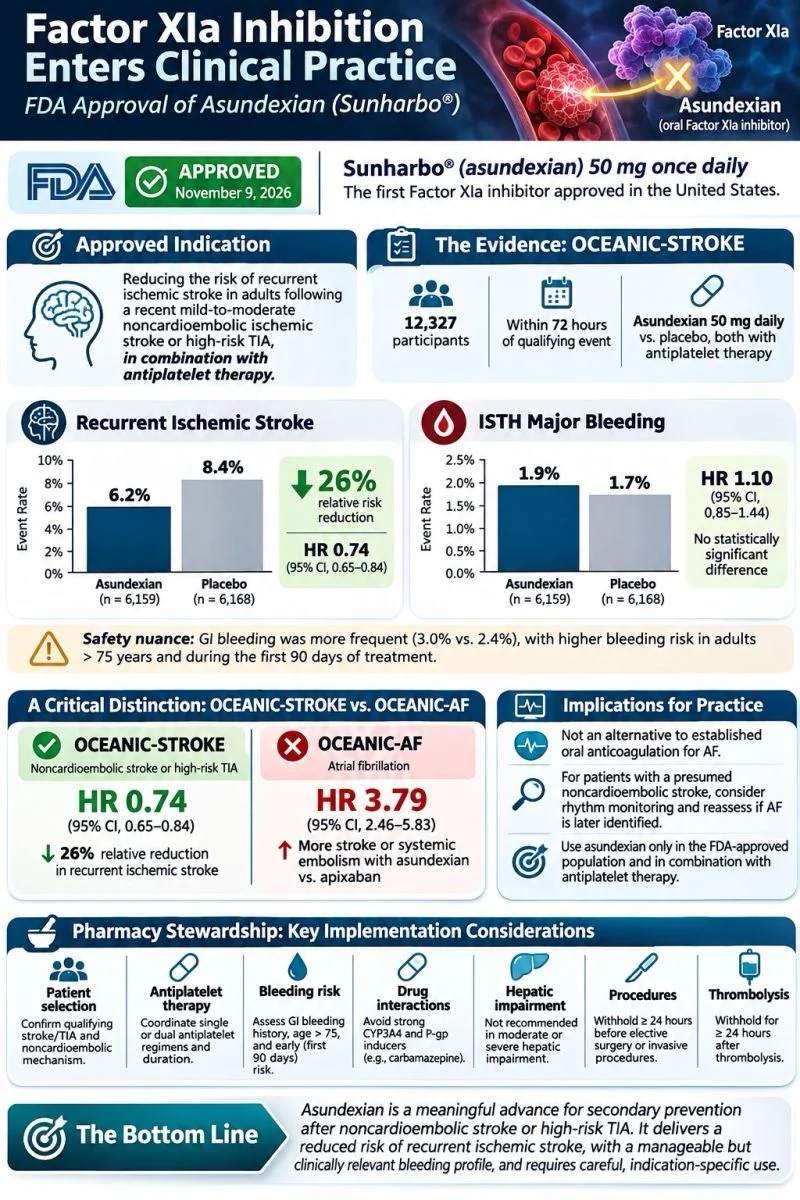
On November 9, 2026, the FDA approved Sunharbo (asundexian) 50 mg once daily, the first Factor XIa inhibitor authorized in the United States.
The indication is specific: secondary stroke prevention following recent mild-to-moderate noncardioembolic ischemic stroke or high-risk TIA, in combination with antiplatelet therapy.
The pivotal OCEANIC-STROKE trial randomized 12,327 patients.
Recurrent ischemic stroke:
- Asundexian: 6.2%
- Placebo: 8.4%
- HR 0.74 (95% CI 0.65–0.84)
A 26% relative reduction in the hazard of ischemic stroke.
ISTH major bleeding:
- Asundexian: 1.9%
- Placebo: 1.7%
- HR 1.10 (95% CI 0.85–1.44)
The overall difference was not statistically significant.
However, GI bleeding was more frequent, and the FDA identified bleeding concerns in older adults and early treatment.
An important electrophysiology distinction:
OCEANIC-AF previously demonstrated substantially more stroke or systemic embolism with asundexian than apixaban in patients with atrial fibrillation (HR 3.79).
That trial was terminated early.
The new approval does not change those findings.
Asundexian is not an alternative to established oral anticoagulation for AF-related stroke prevention.
For patients whose stroke mechanism remains uncertain, rhythm monitoring and reassessment for occult AF remain essential.
The stewardship challenge now shifts to implementation:
- Confirm the qualifying stroke mechanism and labeled population.
- Coordinate asundexian with appropriate single or dual antiplatelet therapy.
- Evaluate bleeding risk, particularly GI bleeding and advanced age.
- Review drug interactions, hepatic impairment, and procedural plans.
- Reassess antithrombotic therapy when AF or another cardioembolic source is identified.
The broader lesson is important:
A successful antithrombotic mechanism in one clinical setting does not establish efficacy in another.
OCEANIC-STROKE represents a meaningful advance in secondary stroke prevention.
OCEANIC-AF reminds us why indication-specific evidence and careful medication stewardship remain indispensable.
What do you see as the greatest implementation challenge: patient selection, antiplatelet coordination, or reassessment when AF is detected?”
More posts featuring Edward Lee Carter on Hemostasis Today.
-
Nov 11, 2026, 14:45ITP Is More Than a Platelet Count: Why Patient Perspectives Matter – ITP Australia and New Zealand
-
Nov 11, 2026, 14:27Aswin K Mohan։ Intravenous Iron in Heart Failure and Infection Risk
-
Nov 11, 2026, 14:12Thomas Lund: Advancing Home Treatment in Hematology Across Borders
-
Nov 11, 2026, 14:06Ahmed Alotaibi: The Hidden Iron Deficiency Behind a Normal Haemoglobin
-
Nov 11, 2026, 14:03Zain Khalpey: How Chronic Hypertension Reshapes the Heart
-
Nov 11, 2026, 13:52Vera Ignjatović: The Changing Balance of Hemostasis Across Childhood
-
Nov 11, 2026, 13:52Sariya Banday: Optimizing BCMA CAR-T Cells to Improve Persistence and Reduce Exhaustion
-
Nov 11, 2026, 13:46Danny Gaskin: Recognising Iron Deficiency Before Anaemia
-
Nov 11, 2026, 13:46James P. Crowley: Newborn Vitamin K Refusal a 347% Surge in Life-Threatening Bleeding