

ESO/LinkedIn
Jul 21, 2026, 03:19
Where Does Stroke Treatment Go Next on The Latest ESOC 2026 TV Studio Session – ESO
European Stroke Organisation shared on LinkedIn:
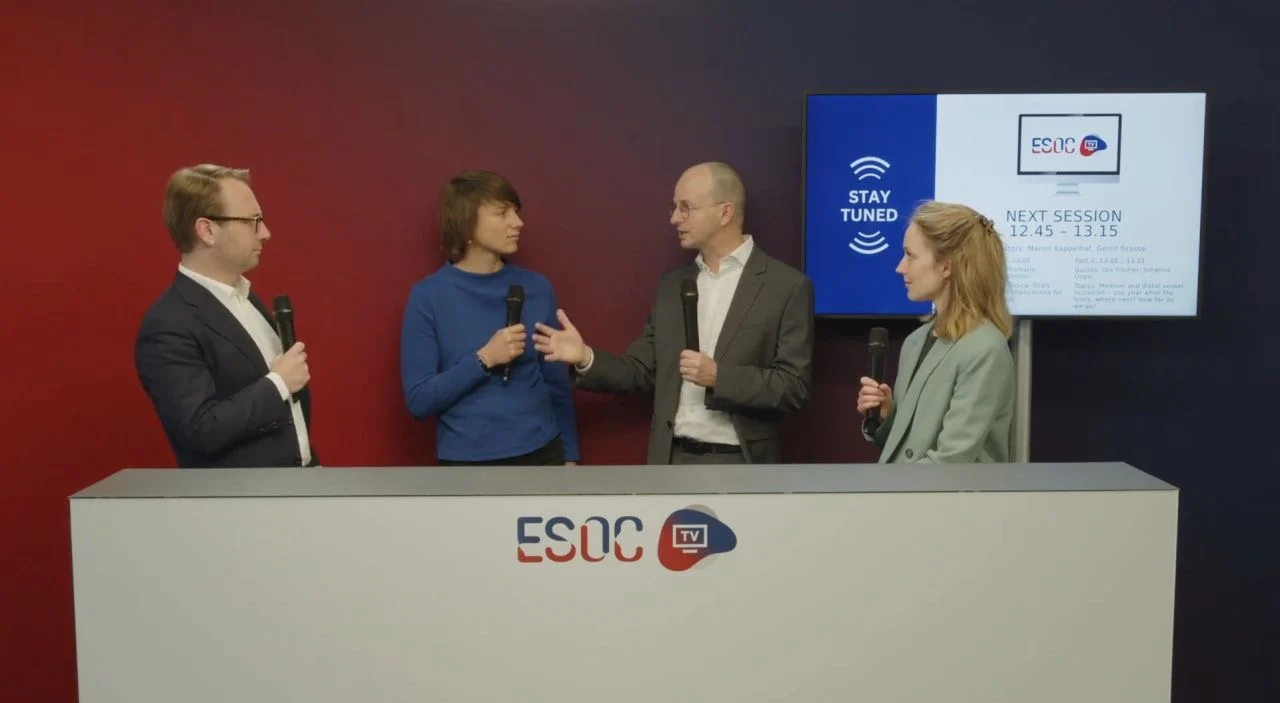
”In this ESOC 2026 TV Studio session, anchors Manon Kappelhof and Gerrit M. Große are joined by Urs Fischer and Johanna Ospel to reflect on the latest evidence surrounding medium and distal vessel occlusions and their implications for the future of stroke treatment.
Key themes include:
- Why improved reperfusion rates have not consistently translated into better clinical outcomes
- Whether specific patient subgroups, particularly those with more severe neurological deficits, may still benefit from endovascular treatment
- How future studies can optimise patient selection, outcome measures and trial design to better evaluate treatment effects”
Stay updated with Hemostasis Today.
-
Oct 19, 2026, 03:54Jennifer Trowbridge: How Mutant Blood Stem Cells Use Inflammation to Drive Their Own Expansion
-
Oct 19, 2026, 03:39Wyenona Hicks: Catching Up With Old Friends and New Colleagues at AABB 2026
-
Oct 19, 2026, 03:33Developing a Non-Invasive Treatment for Life-Threatening PE – University of Michigan College of Engineering
-
Oct 19, 2026, 03:28Jim Hoffman: How NETs Contribute to Gallstone Formation and Growth
-
Oct 19, 2026, 03:28Nicolas Hubacz: The Organized Chaos of Mitochondria
-
Oct 19, 2026, 03:02Neda Horvacki: Using ROTEM to Refine Transfusion Decisions in Acute Trauma
-
Oct 19, 2026, 02:45Diego Escarraman Martinez: MATTERs Study – When a Cohort Gave Us Major Clues about TXA in Trauma
-
Oct 19, 2026, 02:35Brian O Mahony: Promoting Physical Activity and Sport in Haemophilia Care
-
Oct 19, 2026, 02:35Malusi Mtetwa: Tranexamic Acid – What Does the Evidence Tell Us?