

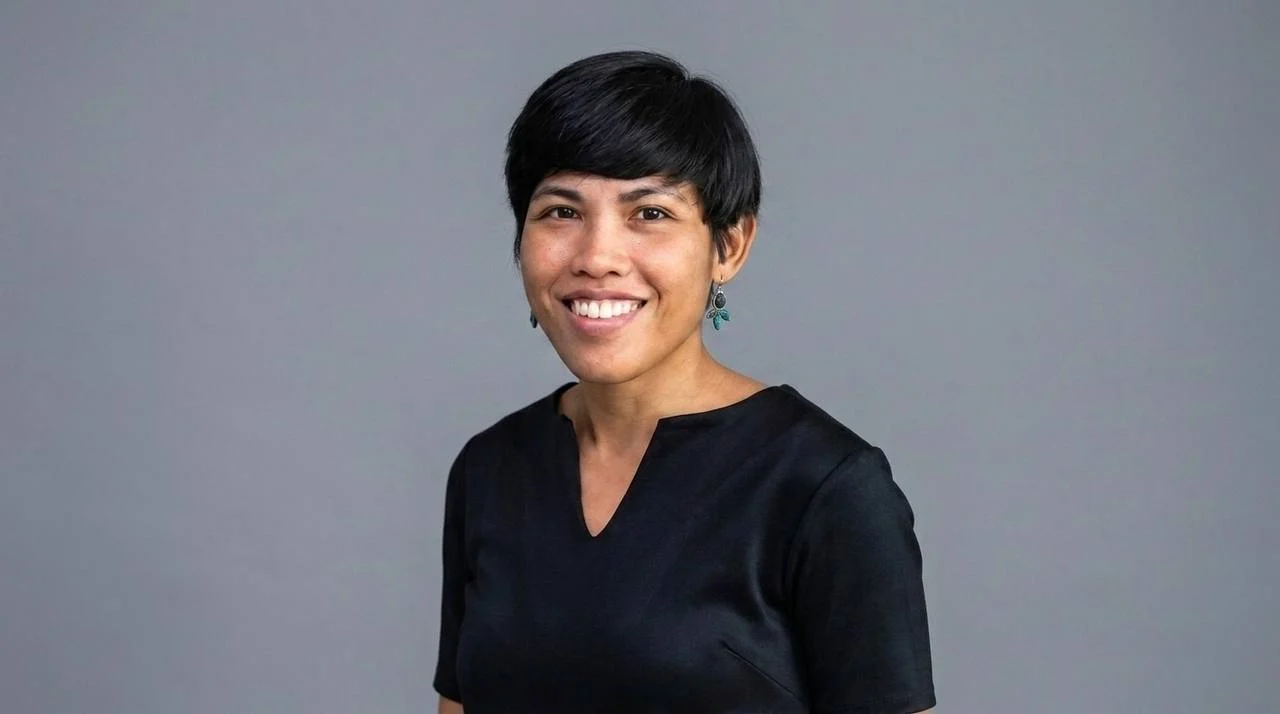
Filza Aslam: What Does a Patient Journey Partner Actually Do in Bleeding Disorders?
Filza Aslam, Patient Journey Partner at Roche, shared a post on LinkedIn:
” ‘What does a Patient Journey Partner actually do?’
It kept coming up since my last post, so here’s my answer.
The simplest way I can put it is that it’s a role about connecting all the pieces, so that an innovative treatment actually reaches the people who need it.
That means working across the whole ecosystem, from clinicians to patient advocates, so that those who decide what gets funded can see the value of investing in something that genuinely changes lives.
It’s customer-facing and strategic. But at its heart, it’s about closing the gap between what medicine can offer and what patients are actually able to access.
It never felt as real as it did at my first World Federation of Hemophilia congress last month in Kuala Lumpur.
I met a man with hemophilia who teared up a little when he saw a football at the Roche booth.
Growing up in Mauritania, football was the one thing he could never have.
He wasn’t emotional for his own sake, but because he wanted the next generation to grow up feeling differently.
That has stayed with me more than almost anything else from the week.
It wasn’t the only moment.
James, from the Hemophilia Association of Davao, gave a talk called ‘I Would Walk 500 Miles,’ a literal description of what patients in rural Philippines do just to reach care.
And Tatiana, a mother of a child with a rare bleeding disorder, shared something that’s been living rent-free in my head: rare needs data, data needs voices, and voices need courage.
That’s what this role is really about.
My job is to empower that chain, making sure the distance between where patients are and where care reaches keeps getting smaller.
May your June bring a little more courage, and stronger voices for those who need them.”

Stay updated with Hemostasis Today.
-
Oct 16, 2026, 18:12Adil Nawaz: Extended Dual Antiplatelet Therapy After Coronary Stenting
-
Oct 16, 2026, 17:50Elad Asher։ STORM-PE Shows Functional Benefits of Thrombectomy
-
Oct 16, 2026, 17:32Shruthi Narayan: STORM-PE and STRIKE-PE Studies Advance Understanding of Recovery After Pulmonary Embolism
-
Oct 16, 2026, 17:22Wolfgang Miesbach։ What a Near-Perfect FISH Score Fails to See
-
Oct 16, 2026, 17:06Troels Wienecke: Connecting Myeloproliferative Disease and Ischemic Stroke
-
Oct 16, 2026, 17:03Only 5 Days Left to Submit Your Research for EAHAD 2027
-
Oct 16, 2026, 16:48Abdul Rahman: Reticulocyte Count and Bone Marrow Activity
-
Oct 16, 2026, 16:44DOAC Adherence in Stroke Patients With Atrial Fibrillation – International Journal of Stroke
-
Oct 16, 2026, 16:22Shannon Farmer: Driving Patient Blood Management Forward in Australia and New Zealand